










Non Destructive Testing (NDT) 2025 - 2026







Click on the
octopus to return to
the top of the page

Authors: Mohammadebrahim Bajgholi, Gilles Rousseau,
Denis Thibault, Simon Francoeur.
This study evaluates advanced Non-Destructive Testing
(NDT) techniques for detecting flaws in welded repairs of
martensitic stainless steel plates, focusing on Francis
turbine runners. Phased Array Ultrasonic Testing (PAUT),
Total Focusing Method (TFM), and Eddy Current Array
(ECA) technologies were examined to assess repair
integrity and identify flaws such as lack of fusion (LOF).
The findings highlight the necessity of integrating
advanced NDT techniques to ensure the structural
integrity of critical components, particularly in high-stress
applications such as turbine runners.

06 - Advanced Non-Destructive Testing Techniques for Welded
Joint Repairs: A Case Study on Improving Inspection Reliability
and Structural Integrity Assessment
Authors: Luca Paterlini, Andrea Marinelli, Andrea Brenna
and Marco Ormellese
This document proposes a risk map to manage
phenomena linked to the fact that carbon steel structures
that transport hydrocarbons have systems to prevent
corrosion, including cathodic protection and insulating
coatings, and that electrical interference, both AC and DC,
can cause corrosion even with protection applied.
07 - Protection Criteria of Cathodically Protected Pipelines Under AC
Interference.

08 - Natural van der Waals canalization lens for non-destructive
nanoelectronic circuit imaging and inspection
Authors: Qingdong Ou, Shuwen Xue, Weiliang Ma,
Jiong Yang, Guangyuan Si , Lu Liu, Gang
Zhong, Jingying Liu, Zongyuan Xie, Ying Xiao,
Kourosh Kalantar-Zadeh, Xiang Qi, Peining Li,
Zhigao Dai, Huanyang Chen, Qiaoliang Bao
Optical inspection is important in semiconductor wafer
manufacturing for analyzing surfaces and defects.
Traditional methods struggle with resolution and
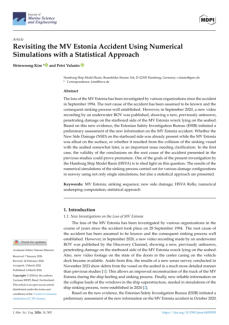
detecting buried structures. The authors suggest a new
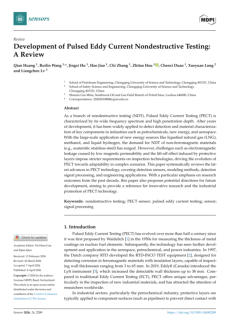
approach using a van der Waals canalization lens from a-
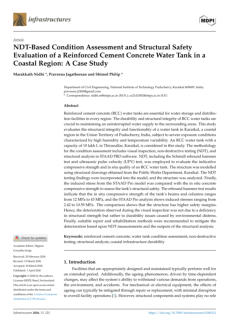
MoO 3 crystals, achieving 15 nm resolution for both
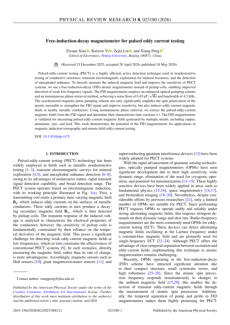
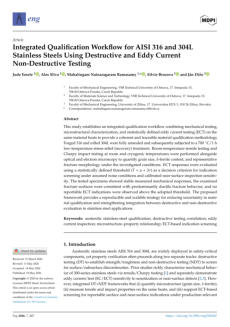
surface and buried imaging. This method offers better
imaging without the issues faced by other lenses,
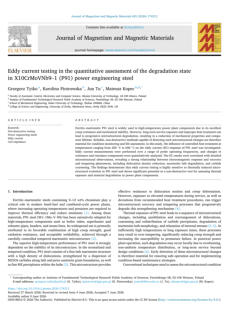
enabling high-resolution inspection of buried nanoscale
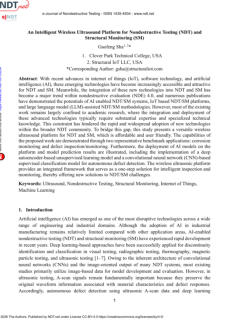
circuits, crucial for future semiconductor manufacturing.

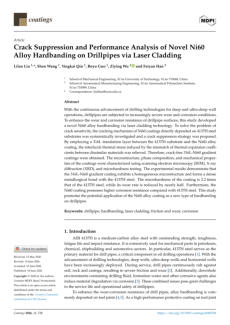
Authors: Andrzej Katunin, Krzysztof Dragan, Marko
Nagode, Krzysztof Lis, Kamil Joszko, Adam
Cholewa, Jernej Klemenc, Simon Oman, Paweł
Zak, Piotr Synaszko
Hidden corrosion, if not found quickly, can greatly
impact the strength and safety of aircraft. Enhancing
non-destructive testing (NDT) methods is crucial for safe
aircraft operation. The D-Sight technique is commonly
used for detecting this corrosion, valued in the
aerospace industry for its fast and low-cost inspections.
One of the drawbacks
09 - Towards quantification of hidden corrosion using D-Sight non
destructive testing technique
Authors: Yomi Femi, Ademola Romke
Smart pipeline monitoring systems, integrating advanced
technologies like sensors and AI, offer continuous,
proactive monitoring of pipeline systems. These systems
enable early detection of potential issues, enhance
operational efficiency, and minimize environmental risks.
They reduce downtime and repair costs, improve safety,
and offer predictive maintenance, transforming pipeline
infrastructure management in a sustainable and cost-
effective manner.

01 - Smart Pipeline Monitoring System: Revolutionizing Pipeline
Management
Authors: Maxime Fauconnier, Bhuvaneshwari
Karunakaran, Alex Drago-González, William S. Y.
Wong, Robin H. A. Ras, & Heikki J. Nieminen
This study introduces waves propagating on an
underwater superhydrophobic surface, allowing for the
stabilization of a microscale gas layer called a plastron. The
acoustic radiation force triggers kHz "plastronic waves"
with a high propagation speed of up to 45 times faster
than conventional deep water capillary waves. These
waves are useful for non-destructive monitoring of
plastron stability and spontaneous air diffusion in gas-
undersaturated or supersaturated water conditions.
05 - Fast capillary waves on an underwater superhydrophobic
surface

Authors: Qian Liu, Bin Xu, Xinhai Zhu, Ronglin Chen, and
Hanbin Ge
This study validated an interface debonding defect
detection and localization approach for scaled
underwater grouting jacket connections (GJCs) using
surface wave measurements with piezoelectric lead
zirconate titanate (PZT) actuation and sensing technology.
The approach was tested and showed that the mimicked
interface debonding defect was successfully detected, and
the region of debonding was determined by intersecting
abnormal wave propagation paths, providing a novel
non-destructive debonding defect detection method for
offshore wind turbine structures.
13 - Experimental Study on Interface Debonding Defect Detection
and Localization in Underwater Grouting Jacket Connections
with Surface Wave Measurements

Authors: Xianfeng Zeng, Wenji Ai, Zongchao Liu, and
Xianling Wang
This paper introduces an unsupervised enhancement
framework for restoring underwater images with
structural cracks. It combines physical modeling of
underwater light transmission with a deep image
translation architecture. The approach includes a multi-
scale feature integration module and region-focused
discriminator. Validated on a real-world dataset, it shows
substantial improvements in visual quality and crack
boundaries preservation.
14 - Unsupervised Restoration of Underwater Structural Crack
Images via Physics-Constrained Image Translation and Multi-
Scale Feature Retention
Authors: Renan Favarão da Silva, Edilson Gabriel Veruz,
Alécio Julio Silva, Miguel Angelo de Carvalho
Michalski, Gilberto Francisco Martha de Souza,
Anderson Takehiro Oshiro
This paper proposes a method for planning underwater
inspections based on reliability and decision-making
techniques. It identifies inspection needs, determines
when to inspect, and selects the appropriate method. The
method is demonstrated in a case study on a Brazilian
FPSO platform, supporting maintenance planning and
reliability.
15 - Underwater Inspection Planning Based on Reliability and
Decision-Making techniques: An FPSO Platform Case Study.
10 - Helium Leak Testing Requirements in Fabrication of Cryogenic
Storage Tanks
Authors: Kamal Dhandha, Bharat Joshi, Kamlesh Mistry,
Manish Mishra, and Bhavesh Limbada
The article discusses the significance and technological
considerations surrounding the use of liquefied gases in
various industrial applications. It emphasizes the
importance of thermal insulation and specialized
equipment for transporting and storing cryogenic liquids
at extremely low temperatures. The article outlines the
design, operation, and maintenance of cryogenic storage
tanks, highlighting non-destructive testing methods,
particularly helium leak detection, as crucial for ensuring
the integrity and safety of cryogenic systems.

Authors: Li Jiaqing, Song Fei, Xiao Zidong, Zhu Longji,
Chen Lan, Wei Zheliang
This article discusses the growing concern of fatigue
damage in steel bridge decks due to increased traffic loads
and extended service life. Traditional detection methods
are often ineffective, leading to the development of a
novel approach that combines K-singular value
decomposition (K-SVD) dictionary learning with
convolutional neural networks (CNN) for better acoustic
emission (AE) signal processing. The K-SVD algorithm
filters out noise and improves signal clarity, allowing CNNs
to classify AE signals with high accuracy (up to 95.32%).
The integration of these methods provides a scalable and
real-time solution for accurate crack detection.
11 - Investigation into fatigue micro-crack identification of steel
bridge decks based on acoustic emission detection technology
12 - LBA-YOLO: A novel lightweight approach for detecting micro-
cracks in building structures
Authors: Wenhao Ren, & Zuowei Zhong
This article presents a new algorithm designed for the
detection of building cracks, specifically targeting micro-
cracks, which are vital for maintaining structural integrity
and safety. The model utilizes YOLOv8n and introduces
two key components, AC-LayeringNetV2 and RAK-Conv,
aimed at enhancing feature extraction and improving
performance in complex backgrounds. Experimental
results show notable improvements in precision, recall,
and mean average precision while also reducing the
model’s size and computational complexity, underscoring
the algorithm’s effectiveness in real-time crack detection.

16 - A Review on the Advances in Underwater Inspection of Subsea
Infrastructure: Tools, Technologies, and Applications
Authors: Dulo Chukwemeka Wegner
The article discusses the growing importance of subsea
infrastructure for various sectors, including energy,
telecommunications, and environmental monitoring. It
highlights the increasing number of offshore installations
and the need for effective inspection methods. The
limitations of traditional diver-based inspection methods
are contrasted with modern approaches such as
Remotely Operated Vehicles (ROVs), Autonomous
Underwater Vehicles (AUVs), and semi-autonomous
ROVs. The paper further explores advanced inspection
tools and technologies, analyzing their principles,
applications, effectiveness, and the challenges posed by
underwater environments.
19 - Design of Control System for Underwater Inspection Robot in
Hydropower Dam Structures
Authors: Bing Zhao, Shuo Li, Xiangbin Wang, Mingyu
Yang, Xin Yu, Zhaoxu Meng, and Gang Wan
This article presents a comprehensive robotic control
system designed for the inspection of underwater
structural surfaces of hydropower dams. By addressing
the challenges posed by harsh hydraulic conditions, the
system aims to enhance operational efficiency and safety
through innovative hardware and software components.
Key findings from field tests validate the system’s precision
and stability in real-world scenarios, significantly improving
inspection capabilities for critical infrastructure
20 - Edge-Enhanced CrackNet for Underwater Crack Detection in
Concrete Dams
Authors: Xiaobian Wu, Weibo Zhang, Guangze Shen,
and Jinbao Sheng
This article presents a novel dual-stage underwater crack
detection method, termed Edge-Enhanced Underwater
CrackNet (E²UCN), designed to address the challenges of
detecting cracks in dam structures submerged
underwater. Traditional crack detection approaches
struggle due to environmental factors like water
disturbances and poor visibility. The proposed method
employs an advanced Cycle-GAN for image
enhancement, focusing on retaining edge clarity and
high-frequency textures specific to cracks, followed by a
YOLOv11 model for precise object detection. The results
indicate a significant improvement in detection accuracy
compared to conventional methods.
21 - Deep Learning for Underwater Crack Detection: Integrating
Physical Models and Uncertainty-Aware Semantic Segmentation
Authors: Wenji Ai, Zongchao Liu, Shuai Teng, Shaodi
Wang, and Yinghou He
This article discusses the significance of underwater crack
detection for the safety of submerged infrastructures and
introduces a novel deep learning framework designed to
overcome existing challenges such as image degradation,
limited data, and model generalization. The proposed
framework enhances detection accuracy by integrating
physics-based image enhancement, a dual-branch
segmentation network for precise crack outline
delineation, and an uncertainty-aware Transformer
module to assess prediction confidence. Experimental
results indicate that this approach outperforms current
methods in turbid water and uneven lighting conditions,
achieving notable performance metrics.
22 - Deep Learning Approaches for Fault Detection in Subsea Oil
and Gas Pipelines: A Focus on Leak Detection Using Visual Data
Authors: Viviane F. da Silva, Theodoro A. Netto, and Bessie
A. Ribeiro
The article presents a study focused on enhancing leak
detection methods in subsea oil and gas pipelines
through a deep learning-based framework. By addressing
the shortcomings of traditional leak detection methods,
the study exploits a dataset generated from controlled
experiments that simulate underwater leak conditions.
Different Convolutional Neural Network architectures
were analyzed for their efficiency in detecting gas and
liquid leaks, achieving impressive performance metrics.
The work notably contributes a novel dataset for the
research community, promoting reproducibility and
further advancements in automated subsea inspection
technologies.
23 - Next-Gen Nondestructive Testing for Marine Concrete:
AI-Enabled Inspection, Prognostics, and Digital Twins
Authors: Taehwi Lee, and Min Ook Kim
The article reviews recent developments in Artificial
Intelligence-integrated Non-Destructive Testing (AI-NDT)
technologies for marine concrete structures, emphasizing
their enhanced performance and practical applicability. It
highlights the limitations of traditional NDT methods in
detecting early damage due to challenging marine
environments and noise interference. A systematic
comparison between vision-based and signal-based AI-
NDT techniques reveals significant improvements in
detection accuracy, showcasing the effectiveness of AI in
mitigating environmental distortions. The study concludes
that AI-NDT not only automates data analysis but also
supports the transition from traditional maintenance
strategies to more proactive, data-driven approaches.
24 - Dynamic Illumination and Visual Enhancement of Surface
Inspection Images of Turbid Underwater Concrete Structures
Authors: Xiaoyan Xu, Jie Yang, Lin Cheng, Chunhui Ma,
Fei Tong, Mingzhe Gao, and Xiangyu Cao
This article introduces a novel underwater image
enhancement algorithm called DIVE (Dynamic
Illumination and Vision Enhancement), which utilizes a
framework for decoupling illumination and scattering
effects. The DIVE algorithm effectively corrects luminance
unevenness and color deviations, allowing for real-time
processing of high-resolution images. Performance tests
demonstrate significant improvements in image quality,
particularly in environments with elevated sediment
concentrations.
25 - Visual Crack Detection in Steel Structures with Convolutional
Neural Networks
Authors: Andrii Kompanets, Davide Leonetti, (Bert) Snijder
As many bridges near the end of their design lifespan,
accurate and efficient inspections are vital. This article
explores the integration of drones, crawling robots, and
image processing techniques to automate bridge
inspections. The focus is on automated crack
segmentation using Convolutional Neural Networks
(CNN), specifically combining the ConvNext network with
an encoder-decoder network for improved segmentation.
The study tests the methodology on a dataset of steel
bridge images with pixel-wise crack annotations, revealing
that false positives are prevalent due to complex
backgrounds in the images.

26 - Enabling scalable inspection of offshore mooring systems using
cost-effective autonomous underwater drones
Authors: Dong Trong Nguyen, Christian Lindahl Elseth,
Jakob Rude Øvstaas, Nikolai Arntzen, Geir
Hamre, and Dag-Børre Lillestøl
The article discusses the pressing need for improved and
cost-effective inspection methods in aquaculture as it
expands to meet global food demands. It proposes an
autonomous inspection framework utilizing a modular,
vision-based pipeline built on the open-source Robot
Operating System 2 (ROS 2) and implemented on a
Blueye X3 underwater drone. This framework enhances
safety, scalability, and regulatory compliance by
integrating real-time image enhancement, object
detection, and visual servoing for mooring inspection,
while significantly reducing inspection costs compared to
traditional methods.
27 - Optimization of the Number of Accelerometer Placements for
Dynamic Identifi cation of a Historical Masonry Bridge
Authors: Cristiano Giuseppe Coviello, Fabio Rizzo, and
Maria Francesca Sabbà
This article discusses the optimization of accelerometer
placement for dynamic identification of a historical three-
arch masonry bridge in Bitonto, Italy. Through operational
modal analysis (OMA), the study demonstrates that fewer
accelerometers can effectively capture the bridge’s
dynamic characteristics. This approach not only
streamlines monitoring processes but also helps reduce
costs and logistical challenges.
Authors: Xing Du, Yongfu Sun, Yupeng Song, Wanqing
Chi, Zongxiang Xiu, Xiaolong Zhao, & Dong
Wang
This study addresses the challenge of maintaining
submarine pipeline stability under dynamic conditions like
waves and seismic events, focusing on buried pipelines
vulnerable to sediment liquefaction. By combining finite
element analysis with machine learning, it enables rapid
and accurate prediction of liquefaction risks from wave-
current interactions. Findings reveal that pipelines
influence sediment liquefaction direction and extent, with
sides being more susceptible than tops or bottoms, while
also stabilizing surrounding seabed sediments. The
integrated model enhances assessment speed without
sacrificing precision.
04 - A novel strategy for fast liquefaction detection around marine
pipelines: a finite element-machine learning approach

28 - Enhancing Structural Integrity Assessment Through Non-
Destructive Evaluation
Authors: Wael Zatar, Felipe Mota Ruiz, and Hien Nghiem
This study develops a non-destructive testing method
using ground-penetrating radar (GPR) to estimate
reinforcement bar diameter in concrete structures. The
key innovation is the normalized amplitude-diameter-
depth (NADD) relationship, which uses an exponential
attenuation model to connect reflected electromagnetic
wave amplitude to rebar diameter and cover depth.
Normalization eliminates variations in signal energy and
antenna coupling, enabling reliable amplitude
comparisons across different depths.

29 - Real-Time Flange Bolt Loosening Detection with Improved
YOLOv8 and Robust Angle Estimation
Authors: Yingning Gao, Sizhu Zhou, and Meiqiu Li
This paper proposes a lightweight, integrated deep
learning framework for flange bolt loosening detection
and rotation angle estimation, critical for safety in civil,
mechanical, and aerospace infrastructure. To overcome
limitations of conventional methods (e.g., missed
detections, poor feature representation, weak multi-scale
fusion), it employs a Mobile Vision Transformer
(MobileViT) backbone for balanced local-global feature
extraction. Key innovations include large separable
convolutions with channel-spatial attention in spatial
pyramid pooling, content-aware upsampling, and
bidirectional multi-scale fusion, enabling accurate, real-
time detection of small, low-contrast bolts.
34 - A lightweight underwater image and video enhancement
method based on multi-scale feature fusion
Authors: Gaosheng Luo, Haiyang Li, Huanhuan Wang,
Hengshou Sui, Xuewen Zhang, Rongjun Zhang,
Bocheng Chen, and Zhe Jiang
Underwater image degradation significantly impacts
autonomous underwater vehicles (AUVs), subsea
inspections, and marine monitoring. This paper introduces
UIVE, a lightweight enhancement algorithm that
addresses these issues. UIVE's innovation lies in a dynamic
multi-scale jump connection that combines
downsampling and upsampling features, preserving multi-
scale details. By replacing batch normalization layers with
residual blocks, UIVE reduces computational complexity
while improving feature migration. An adaptive brightness
correction module compensates for brightness reduction
after nonlinear mapping.
35 - Mixed reality based in-pipe inspection
Authors: Almat Dalabekov, Dias Akimbay, Tolegen
Akhmetov, Darkhan Zholtayev, and Azamat
Yeshmukhametov
Pipelines are vital for resource transport, but their
expansion presents inspection and maintenance
challenges. This study introduces a novel pre-maintenance
approach using Meta Quest Pro mixed reality (MR)
technology. This method allows for detailed visualization
and analysis of in-pipe defects before physical
intervention, improving maintenance planning by
providing engineers with comprehensive defect insights
and enabling them to select the most appropriate tools
and procedures.
Author: V Nolting
Conventional eddy current testing is limited to detecting
surface defects due to shallow penetration depth. The
paper introduces motion-induced eddy current testing,
which uses relative motion between a permanent magnet
and the test object to generate Lorentz forces and
measure electron flow disturbances caused by defects.
This method achieves penetration depths two orders of
magnitude greater than conventional techniques,
enabling detection of deep-lying defects and significantly
improving non-destructive evaluation.
02 - A Theoretical Investigation of the Penetration Depth in Motion
Induced Eddy Current Testing
Authors: Jiuhao Ge, Fei Xu, Jia Chen, Weiyu Jiang, and
Zhiyong Deng
Nuclear fuel claddings act as the primary barrier against
fission products, with eddy current testing used to
measure chromium/oxide layer thickness. This paper
develops a validated analytical model based on second-
order vector potential for coils outside multilayer pipes,
analyzes probe parameters on nuclear cladding models,
and provides a design flowchart using resonance
frequency and quality factor. The new probe shows
superior sensitivity.
03 - Design of eddy current testing probe for thickness evaluation of
multilayers on nuclear fuel claddings
17 - Comparative Evaluation of Ultrasonic, Radiographic, and Eddy
Current Testing for Defect Detection in Pressure Vessels
Authors: Ayuns luz, Stephen Eteng, Jayson Paul
This research quantitatively compares UT, RT, and ECT for
assessing pressure vessel integrity, aiming to identify
optimal techniques for planar flaws, volumetric inclusions,
and wall thinning to support RBI strategies. Using
simulated PoD curves for advanced methods, findings
show UT excels for planar defects like cracks, RT for
volumetric flaws like porosity, and PECT as the sole non-
intrusive option for CUI and thinning. No single modality
is universally superior; effective management requires a
complementary multimodal NDT protocol tailored to
material, environment, and defect type.
18 - Non-Destructive Eddy Current Testing System Based on Discrete
Wavelet Transform
Authors: Zhengtao Xia, and Jia Jia
This paper introduces an eddy current testing (ECT)
system using the Discrete Wavelet Transform (DWT) to
detect surface micro-damage in metal components,
addressing limitations of conventional frequency-domain
methods. The system features a DDS-generated 1 MHz
excitation signal, an IQ demodulator, and a 24-bit ADC for
precise signal acquisition. Haar wavelet-based single-level
decomposition isolates defect responses in high-frequency
detail coefficients. Experimental results show a 3.64 dB
improvement in SNR for a 1 mm notch, outperforming
time-domain processing by 0.36 dB.
30 - Editorial: Artificial intelligence in visual inspection
Authors: Yanlong Cao, Zhijie Xu, Wenhan Zeng, and
Yuanping Xu
AI is revolutionizing visual inspection by surpassing human
limitations in accuracy, efficiency, and scalability across
fields like manufacturing, medicine, and public safety. This
research explores solutions to key challenges, robustness
in harsh conditions, real-world applicability, and precision
in critical domains like healthcare. Two highlighted studies
demonstrate this progress: Liu et al. developed a parallel
joint encoding network that enhances low-light drone
imagery while detecting objects, improving performance
in dark environments for surveillance and rescue missions;
Deshpande et al. created an automated rider helmet
violation detection system using a hybrid pipeline,
achieving high accuracy.
31 - Next-Gen Nondestructive Testing for Marine Concrete:
AI-Enabled Inspection, Prognostics, and Digital Twins
Authors: Taehwi Lee, and Min Ook Kim
This study reviews recent advances in Artificial Intelligence-
integrated Non-Destructive Testing (AI-NDT) for marine
concrete, highlighting improvements in detection
accuracy and practical applicability. AI integration
improves detection accuracy by 17–25% compared to
traditional methods and compensates for environmental
distortions and standardizes data interpretation.
AI-NDT automates data interpretation and supports
predictive maintenance frameworks by linking data
acquisition, digital twin-based prediction, and lifecycle
monitoring, transforming reactive maintenance strategies
into sustainable, intelligence-driven management for
marine infrastructure.
32 - Pipeline External Defect Detection Based on Magnetically
Focused Eddy Current Testing System
Authors: Zihao Gao, and Huaguang Zhang
Eddy current testing is widely used for pipeline inspection
but faces challenges with ferromagnetic materials due to
reduced penetration depth and noise interference. This
paper proposes a magnetically focused eddy current
testing (MFECT) system that improves signal-to-noise ratio,
mitigates the skin effect, and increases penetration depth
in ferromagnetic pipes. The study includes comparative
analyses of penetration depth with and without magnetic
focusing, determines optimal excitation frequencies
through simulation, and validates the method
experimentally.
33 - Invariant in eddy current testing via dimentional analysis
Authors: Vincento Mottola, Alessandro Sardellitti, Philippo
Milano, Luigi Ferrigno, Marco Larascca,
Antonello Tamburrino
The Buckingham's π theorem has been applied in Non-
destructive Testing & Evaluation (NdT&E) to develop
methods for multi-parameter estimation using dimensional
analysis. This approach reduces the number of parameters
affecting measurements by forming dimensionless π-
groups. The focus is often on estimating a subset of
variables, such as thickness, electrical conductivity, and lift-
off, while isolating signals from uncertain parameters. The
paper introduces a systematic method to derive invariant
transformations for frequency domain Eddy Current
Testing data, which is validated through experiments.
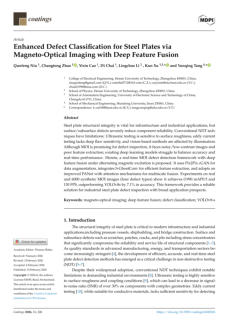
36 - Enhanced Defect Classification for Steel Plates via Magneto-
Optical Imaging with Deep Feature Fusion
Authors: Qunfeng Niu, Changtong Zhao, Yixin Cao, Di
Chai, Lingchao Li, Kun Xu, and Yunqing Tang
Steel plate integrity is vital for infrastructure, but defects
can cause failures. Traditional nondestructive testing
methods have limitations, such as ultrasonic testing being
affected by surface roughness and eddy current testing
missing deep flaws. Magnetic optical imaging (MOI) is
promising but faces challenges like noisy images and
ineffective feature extraction. This work presents a new
real-time MOI defect detection system using deep feature
fusion. It achieved high accuracy and speed, making it a
strong solution for inspecting steel plate defects in
industry.
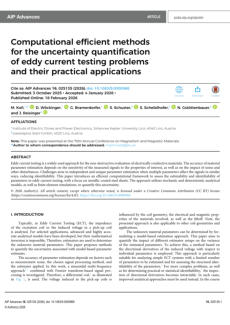
37 - Computational efficient methods for the uncertainty
quantification of eddy current testing problems and their
practical applications
Authors: M. Koll, D. Wöckinger, G. Bramerdorfer, S.
Schuster, S. Scheiblhofer, N. Gstöttenbauer, and
J. Reisinger
Eddy current testing evaluates electrically conductive
materials non-destructively. Accurate material parameter
estimation depends on signal sensitivity and noise
resistance. A key challenge is that multiple parameters can
affect signals similarly, complicating unique identification.
This paper presents a computational framework using
stochastic, deterministic, and finite element models to
assess parameter estimability and identifiability in eddy
current testing of metallic coated steel sheets.
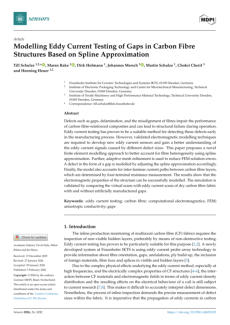
38 - Modelling Eddy Current Testing of Gaps in Carbon Fibre
Structures Based on Spline Approximation
Authors: Till Schulze, Maren Rake, Dirk Hofmann,
Johannes Mersch, Martin Schulze, Chokri Cherif,
and Henning Heuer
Defects like gaps and fibre misalignment impair carbon
fibre composites, risking failure. Eddy current testing
detects them early but needs validated EM models. This
paper proposes novel FEM using spline approximation for
fibre heterogeneity, adaptive mesh refinement, gap
modeling, and inter-laminar currents from resistance
measurements. Validation compares virtual scans with real
eddy current scans of dry fabric with/without gaps.
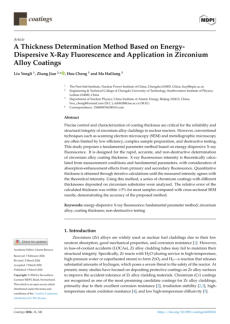
39 - A Thickness Determination Method Based on Energy-Dispersive
X-Ray Fluorescence and Application in Zirconium Alloy Coatings
Authors: Liu Yongli, Zhang Jian, Hou Cheng, and Ma
Hailiang
Accurate coating thickness measurement is vital for
zirconium alloy nuclear fuel claddings, but conventional
methods like SEM are slow, destructive, and require
complex sample preparation. This study introduces a non-
destructive, rapid, and accurate fundamental parameter
method based on energy-dispersive X-ray fluorescence
(EDXRF). It calculates theoretical X-ray fluorescence
intensity, including absorption and enhancement effects,
and iteratively determines coating thickness by matching it
to measured intensity. Validated on chromium coatings
on zirconium substrates, the method achieves ≤±5%
relative error versus cross-sectional SEM, confirming its
reliability.

40 - Revisiting the MV Estonia Accident Using Numerical Simulations
with a Statistical Approach
Authors: Shinwoong Kim, and Petri Valanto
Since the 1994 sinking of the MV Estonia, the root cause
of the accident has been studied, but a new ROV video
from 2020 revealed unknown damage on the starboard
side, prompting the Estonian Safety Investigation Bureau
(ESIB) to reassess. The Hamburg Ship Model Basin (HSVA)
aims to determine if this damage occurred while the ship
was afloat or during the sinking. Clarifying this is crucial, as
it may challenge previous conclusions on the accident's
cause. Numerical simulations and statistical analyses are
used to explore various damage scenarios in sea
conditions.
41 - Development of Pulsed Eddy Current Nondestructive Testing:
A Review
Authors: Qian Huang, Ruilin Wang, Jingxi Hu, Hao Jiao,
Chi Zhang, Zhitao Hou, Chenxi Duan, Xueyuan
Long, and Liangchen Lv
Pulsed Eddy Current Testing (PECT) is a nondestructive
testing method used for finding defects and
characterizing materials in industries like petrochemicals,
new energy, and aerospace. The rise in new energy
sources has led to a higher need for inspecting non-
ferromagnetic materials, such as austenitic stainless steel.
However, challenges like electromagnetic leakage and lift-
off effects require improvements in PECT technology. This
paper reviews recent advances in PECT, including sensors,
modeling, signal processing, and applications.
42 - NDT-Based Condition Assessment and Structural Safety
Evaluation of a Reinforced Cement Concrete Water Tank in a
Coastal Region: A Case Study
Authors: Marakkath Nidhi, Praveena Jagatheesan, and
Shimol Philip
This study assesses the structural integrity of a 10 lakh L
RCC water tank in Thirunallar, Karaikal, under severe
coastal exposure. Methods included visual inspection,
NDT (Schmidt rebound hammer and UPV tests) for
compressive strength and quality, plus STAAD Pro
modeling using PWD drawings. Results showed in situ
strength of 12-43 MPa exceeding induced stresses of 2.42-
10.59 MPa, confirming adequate safety margins.
Deterioration observed was due to environmental
durability issues, not structural deficiency. Suitable repair
and rehabilitation methods are recommended based on
NDT and analysis outputs.
43 - Free-induction-decay magnetometer for pulsed eddy current
testing
Authors: Zixuan Xiao, Kaiwen Yi, Zejia Lin, and Xiang Peng
The Buckingham's π theorem has been applied in Non-
Pulsed-eddy-current testing (PECT) enables nondestructive
evaluation of conductors, mineral exploration, and UXO
detection. Replacing pickup coils with a free-induction-
decay (FID) atomic magnetometer improves sensitivity to
weak low-frequency signals. Using enhanced optical
pumping and instantaneous phase retrieval, the device
reaches 0.45 pT/√Hz noise and 4.2 kHz bandwidth. The
synchronized pumping amplifies spin polarization while
inducing eddy-current fields, from which the characteristic
time constant τ is extracted. Validation on copper,
aluminum, zinc, and lead demonstrates applicability to
magnetic induction tomography and remote-field eddy-
current testing.
44 - Integrated Qualification Workflow for AINSI 316 and 304L
Stainless Steels Using Destructive and Eddy Current Non-
Destructive Testing
Authors: Jude Emele, Ales Sliva, Mahalingam
Nainaragaram Ramasamy, Silvie Brozova, and
Ján Dižo
This study creates a qualification process that combines
mechanical testing, microstructural analysis, and eddy
current testing on the same materials. It involves forged
316 and rolled 304L stainless steels that were treated at
700°C. Mechanical tests included tensile and Charpy
impact tests at different temperatures, along with
microscopy for grain size and fracture analysis. The results
showed stable mechanical properties and no significant
ECT indications.
45 - Eddy current testing in the quantitative assessment of the
degradation state in X10CrMoVNb9 – 1 (P91) power
engineering steel
Authors: Grzegorz Tytko, Karolina Piotrowska, Jun Tu,
Mateusz Kopec
Ferritic–martensitic P91 steel is commonly used in high-
temperature power plants for its good resistance to creep
and stability. However, long-term use and poor heat
treatment can harm its microstructure, weakening the
steel and reducing its lifespan. This study looked at how
controlled heat treatments from 200°C to 600°C affected
the eddy current response of P91 steel. The findings
showed a strong link between the electromagnetic
response and changes in microstructure, proving that
eddy current testing is effective for monitoring P91 steel's
condition.
46 - An Intelligent Wireless Ultrasound Platform for Nondestructive
Testing (NDT) and Structural Monitoring (SM)
Author: Gaofeng Sha
Recent advancements in IoT, software, and AI have made
these technologies attractive for NDT and SM, driving a
trend called NDE 4.0. While research demonstrates their
potential, most solutions remain academic due to high
complexity, limiting broader adoption. This study
addresses this gap by introducing an affordable, user-
friendly wireless ultrasound platform for NDT and SM.
Demonstrated through corrosion monitoring and defect
inspection, the platform integrates AI models—including
an autoencoder for unsupervised learning and a CNN for
supervised defect detection—offering a unified, intelligent
solution for inspection and monitoring challenges.
47 - Crack Suppression and Performance Analysis of Novel Ni60 Alloy
Hardbanding on Drillpipes via Laser Cladding
Author: Lilan Liu, Shen Wang, Yingkai Qin, Boyu Guo,
Ziying Wu, and Feiyan Han
To address severe wear and corrosion in deep/ultra-deep
well drillpipes, this study developed a crack-free Ni60 alloy
hardbanding via laser cladding. Direct Ni60 deposition on
4137H steel caused cracking due to thermal expansion
mismatch; introducing a 316L interlayer relieved interfacial
thermal stress, enabling a dense, metallurgically bonded
316L-Ni60 gradient coating. Characterization (SEM, XRD,
microhardness) confirmed a homogeneous
microstructure, microhardness 2.2× higher than 4137H
steel, ~50% lower wear rate, and superior corrosion
resistance, demonstrating strong potential for Ni60-based
hardbanding in demanding drilling applications.
48 - Non-Contact Ultrasonic Assessment of Corrosion in Steel
Specimens
Author: Lukas Peterson, Andrei Zagrai, ThankGod
Nwokocha, and T. David Burleigh
Ultrasonic thickness resonance using Electro-Magnetic
Acoustic Transducers (EMATs) detects and measures
corrosion in thin-walled steel structures like nuclear waste
containers. EMATs operate without contact, but need
high-power equipment due to low efficiency. Tests
showed frequency shifts linked to corrosion levels, with
notable effects on resonant peak characteristics. This
method is effective for monitoring corrosion.
49 - AI-driven Prediction of Structural Steel Mechanical Properties
Using Ultrasound and Eddy Current Testing
Author: Zaki Bin Muhammad Sham, Shagea Alqawzai,
Haris Sufyan Bin Mohamad, Thi Qui Nguyen,
Mingshan Zhao, and Zhang Linyun
Reusing structural steel can lower embodied carbon but
requires accurate knowledge of reclaimed members'
mechanical properties. Conventional destructive tensile
tests are impractical due to high costs and time demands.
This study explores ultrasound testing (UT) and eddy
current testing (ECT) combined with data-driven models
(e.g., Random Forest) to predict mechanical properties
and classify strength grades of salvaged steel. ECT
achieved 92% classification accuracy, while UT reached
82%. UT-based yield strength prediction had a 5.86%
mean absolute error, enabling reasonably accurate
estimations without prior steel grade knowledge.