










Underwater archeology - Papers 2022 & 2023









Authors:
James Hunter, Kieran Hosty
On Thursday 3 February 2022, the museum’s Director Kevin
Sumption PSM hosted a press conference in which he
stated that HMB Endeavour had been
found in Newport Harbor, Rhode Island, USA. This was the
culmination of more than two decades of research by the
museum and the Rhode Island Marine
Archaeology Project. The museum’s maritime archaeologists
Kieran Hosty and Dr James Hunter set out the evidence.


Authors: Kieran Hosty & James Hunter
In February 2022, the Australian National Maritime Museum
made two significant announcements relating to its
maritime archaeology program. The first was the statement
from the museum’s former Director and CEO, Kevin
Sumption, that the site of James Cook’s famous vessel, His
Majesty’s Bark Endeavour, had been positively identified
following a 22-year program of fieldwork and research in
Newport Harbor, Rhode Island.
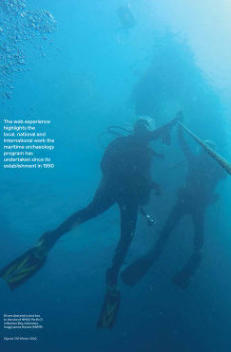
The second major announcement was the launch of an
innovative new web experience by The Hon Paul Fletcher
MP, Minister for Communications, Urban Infrastructure,
Cities and the Arts.


Authors: Andrew Viduka and Grant Luckman
This article briefly outlines underwater cultural heritage
artifact management in Australia from an unregulated
collecting environment in the 1940s – 1960s to the
increasingly regulated environment of the present. In 1993,
in conjunction with new legislation, an amnesty was
declared in order to inventory artifacts collected from now-
protected historic shipwrecks that were in private hands.
The amnesty period concluded with approximately 20,000
artifacts noticed at a time when information was being
stored in a range of formats and to different
standards


Authors:
David A. Plecher, Leonard Keil, Guy Kost, Max Fiederling,
Christian Eichhorn, and Gudrun Klinker
Virtual Reality (VR) technology is becoming an increasingly
helpful tool for entertainment and education. Its potential to
simulate hard-to-reach environments and emulate unique
experiences believably is of great interest for the scientific
study of Underwater Cultural Heritage (UCH), particularly
for the simulation of real-world dives. Virtual Reality enriched
with techniques from immersive Serious Games (SG)
provides an authentic way to enjoy Underwater Cultural
Heritage (UCH). This paper focuses on exploring the wreck
of a Roman merchant ship from the 5th century AD, which
was found near Veliki Piruzi (Croatia).


Authors:
Rachel D. Moseley, Justyna J. Hampel, Rachel L. Mugge and
Leila J. Hamdan
The objective of this work was to investigate how historic
wooden-hulled shipwrecks impact the dispersal of wood-
colonizing microbial Biofilms. The study addressed how
proximity to wooden shipwrecks shapes diversity, richness,
and community composition in the surrounding
environment. Study sites included two historic shipwrecks in
the northern Gulf of Mexico identified as wooden-hulled
sailing vessels dating back to the late 19th century.


Authors:
Tomas Fernandez-Montblanc, Manuel Bethencourt, and
Alfredo Izquierdo
This paper presents a novel Underwater Cultural Heritage
(HCH) risk assessment methodology to quantitatively assess
the impact of wave-induced hazards on UCH in coastal
environments at a local level and the screening of UCH sites
at risk. The UCH risk is calculated as a function of
vulnerability (depending on archaeological materials, slope,
and seabed type), hazard (decontextualization, scouring,
and erosive wear), and exposure, computed for the UCH
sites registered in an archaeological database.


Authors:
David A. Plecher, Leonard Keil, Guy Kost, Max Fiederling,
Christian Eichhorn, and Gudrun Klinker
Virtual Reality (VR) enriched with techniques from
immersive Serious Games (SG) provides an authentic way
to enjoy Underwater Cultural Heritage (UCH) and the sport
of diving from the comfort of the user ’ s home or as a
museum exhibit. This paper focuses on the exploration of
the wreck of a Roman merchant ship from the 5th century
AD, which was found near Veliki Piruzi (Croatia).


Author: Xianglong Chen
This paper presents an overview of the history of the
radiocarbon dating technique and its significant
applications in Chinese archeology, focusing on the
transition from B-decay counting to accelerator mass
spectrometry.


Authors:
David A. Plecher, Leonard Keil, Guy Kost, Max Fiederling,
Christian Eichhorn, and Gudrun Klinker
In this paper, we are focusing on the exploration of the
wreck of a Roman merchant ship from the 5th century AD,
which was found near Veliki Piruzi (Croatia). The images
taken by the underwater archaeologists enable a 3D
reconstruction of the excavation site. The modular structure
of the application makes it very easy to transfer the
techniques presented to other excavation sites, including
information and objects.


Authors: Tomas Fernandez-Montblanc, Manuel
Bethencourt, and Alfredo Izquierdo
Coastal areas are characterized by high-energy conditions
associated to the wave transformation process and by
numerous underwater cultural heritage (UCH) sites whose
preservation is crucial, given their cultural and economic
value. UCH management requires a decision support
system to prioritize interventions and actions for the long-
term preservation. This paper presents a novel UCH risk
assessment methodology to quantitatively assess the impact
of wave-induced hazards on UCH in coastal environments
at a local level and the screening of UCH sites at risk.


Author: Jean-Pierre Féral
Occupational Scientific Diving is science-led diving that is
needed to support professional research and education and
for the protection, conservation, and monitoring of the
natural and cultural heritage environment.
It is not recreational or commercial diving.
Scientific Diving exists in a health and safety framework that
involves certified scientific divers, diving officers, hyperbaric
physicians, scientific project leaders, heads of laboratories,
administrators, and legislators.

Publisher: National Aeronautics and Space
Administration (NASA) - USA
The purpose of these Scientific Diving Standards is to ensure
that all scientific diving is conducted in a manner that will
maximize rotection of scientific divers from accidental injury
and/or illness, and to set forth standards for training and
certification that will allow for working reciprocity between
scientific agencies. Fulfillment of these purposes shall be
consistent with the furtherance of research and safety.


Author: William Gomez Pretel
Roncador Cay, located in the western Caribbean within
Colombia's maritime area, is notorious for its treacherous
waters that have caused numerous shipwrecks, including
the USS Kearsarge on February 2, 1894. Both the United
States and Colombia consider the wreck a crucial part of
underwater cultural heritage, even though its precise
location remains unknown. This study aims to determine the
location of the wreck by utilizing diverse data and mapping
tools, while also examining the environmental and cultural
aspects of the area.


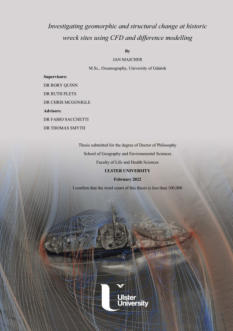
Authors: Jan Majcher
This paper investigates how sediment and water movement
affect the preservation of historic underwater wreck sites.
Multibeam echosounder (MBES) data from ten metal
shipwrecks in the Irish Sea, at depths ranging from 26 to 84
metres, was used alongside data from seabed samples,
shallow seismic surveys, and an oceanographic model. The
authors combined these data types in three studies to
achieve their research objectives.


Authors: Evangelia Tzavela, Anastasia Pournou
In September 2020, researchers discovered 50 coal cubes at
a Roman shipwreck near Kasos, Greece. They examined the
materials and conditions of the cubes to determine how to
preserve them and learn more about their origin and usage.


Authors: William Gomez Pretel, Andres Carvajal Diaz, and
Moonsoo Jeong
This study should be linked to the document titled “An
Interdisciplinary Study on the Wreck of the USS Kearsarge in
Roncador Cay” by the same author.


Author: Marco Milanese
The paper discusses the significance of studying shipwrecks
from the post-Middle Ages, particularly when accompanied
by old records. It sheds light on the tin-glazed tableware
production in Montelupo, near Florence. The Mortella II
shipwreck serves as a valuable example because
pinpointing the sinking date helps to revise the timeline for
the production of specific ceramics. The popularity of
Montelupo ceramics across Europe, the Americas, and
Africa highlights the global impact of updating their
historical narrative on archaeological research.

Authors: Curt D. Peterson, Scott Williams, & Craig Andes
This article discusses how rocks covering old shipwrecks
help to determine when and where rockslides happen on
underwater cliffs and hills. Based on what happens during
big winter storms, it also examines how remains from
wrecks may be transported around headlands and
ultimately end up in coves.


Authors: Mihkel Tammet, Priit Lätti, Raija Katarina Heikkilä
During the construction of an office building in Tallinn in
the spring and early summer of 2022, workers discovered a
medieval shipwreck that measures 24.5 meters in length
and 9 meters in width, making it one of the largest of its
kind ever discovered in Northern Europe. Believed to be a
cargo ship from the mid-14th century, the wreck contained
numerous artifacts and ecofacts, making it highly valuable
for scientific research.



Click on the
octopus to return to
the top of the page

Authors: William Gomez Pretel
This study focused on estimating the location of the USS
Kearsarge wreck site at Roncador Cay, within Colombia's
maritime territory, combining qualitative and quantitative
data to understand the environmental and socio-cultural
context of the shipwreck. It also addressed the limitations of
geographical isolation, ambiguous information, and legal
confidentiality. In addition, the research aimed to contribute
to international cooperation and capacity building among
maritime researchers, emphasizing the importance of
interdisciplinary research and fieldwork in the identification
and protection of underwater cultural heritage.


Author: Ivar Treffner
This thesis focused on a well-preserved flute wreck found in
the Gulf of Finland. It provides historical context about the
significance of the Baltic Sea for trade, the importance of the
Dutch flute ship, and the role of maritime archaeology in
understanding these historical artifacts. It also details the
author's involvement in the research and fieldwork related
to the wreck and sets forth the main goals of the thesis,
which include analyzing the wreck in relation to current
knowledge, offering explanations for new findings,
addressing challenges in deep-water archaeology, and
providing a written account for future research.

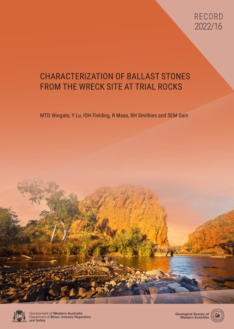
Authors: MTD Wingate, Y Lu, IOH Fielding, R Maas, RH
Smithies and SEM Gain)
This geological analysis aims to determine the origin of
ballast stones recovered from a shipwreck, possibly the Trial,
which sank off the northwest coast of Western Australia in
1622. The analysis involves comparing the characteristics of
the ballast stones with sedimentary rocks from various
locations, particularly in southwestern England, to ascertain
their provenance. The study discusses geological and
isotopic data, including U-Pb geochronology and Sm-Nd
isotope results, to support the hypothesis that the ballast
stones likely originated from the Plymouth area or nearby
regions in southwestern England.


Authors:
Javier Prieto, Fabio Bruno, Antonio Lagudi, Michela Ricca,
Mauro Francesco La Russa, George Papatheodorou, and
Nikola Miškovic
The document intends to inform and highlight the
importance of underwater cultural heritage (UCH) and the
challenges associated with its documentation, preservation,
and dissemination. It emphasizes the field's interdisciplinary
nature, involving collaboration among experts from various
disciplines. It also introduces a special issue that presents
original research articles and technical notes on innovative
methodologies, applications, and technological solutions
related to underwater materials. Specific studies and projects
are mentioned to illustrate advancements and potential
benefits in this field.

Author:
William Gomez Pretel, Moonsoo Jeong, Camilo Ernesto
Rodríguez-Gutiérrez, & Agustin Ortiz JR
This study examines the legal challenges of preserving
sunken military vessels as Underwater Cultural Heritage
(UCH) in Colombia. It addresses issues such as limited
international cooperation, lack of legal recognition under
domestic law, and the complexities of managing UCH. It
also focuses on specific cases like the USS Kearsarge and
analyzes legal frameworks in Colombia and the United
States. The ultimate goal is to highlight the need for a more
comprehensive legal framework and greater international
cooperation to preserve and protect these underwater
cultural assets.


Authors: Tilde de Caro, Fiammetta Susanna, Mauro
Francesco La Russa, & Andrea Macchia
This study analyzed the corrosion processes affecting nine
coins found in an underwater wreck. Various analytical
techniques, such as optical microscopy, micro-Raman
spectroscopy, X-ray diffractometry, and scanning electron
microscopy with energy-dispersive X-ray spectroscopy, were
employed to investigate the nature and microstructure of
the corrosion patina on the coins. That allowed the authors
to understand the complex corrosion processes and the role
of different chemical and physical parameters in the
degradation of bronze artifacts in underwater
environments.

The Rebreather Forum 4 conference, held in April 2024,
aimed to address various aspects of rebreather diving,
including safety, physiology, technology, training, and
knowledge gaps. The primary objectives were to
consolidate and transfer knowledge and to promote best
practices within the diving community. Organized by
Michael Menduno, the program committee included John
Clarke, Simon Mitchell, Neal Pollock, and Frauke Tillmans.
The proceedings document contains thematic papers
presented at the forum, along with question-and-answer
exchanges and consensus discussions.


Authors:
Anna Gebruk, J Murray Roberts, Lea-Anne Henry, Arne
Biastoch, Tobias Schulzki, Maria Rakka, Beverly
McClenaghan, Mehrdad Hajibabaei, Steve W. Ross, Jasmine
Eggleton, Claire Cardy
This presentation provides a detailed overview of the
scientific research and objectives related to the study of the
Titanic wreck site. It outlines past research efforts, the
importance of studying the site's biology, and the specific
science objectives of a 2022 expedition to highlight the
significance of understanding deep-sea biodiversity, the
impacts of human debris, and the development of deep-sea
organisms over time.


Authors:
Carlotta Sacco Perasso, Federica Antonelli, Barbara Calcinai,
Edoardo Casoli, Maria Flavia Gravina, and Sandra Ricci
Bioerosion is the breakdown of hard surfaces caused by
living organisms, important for coastal ecosystems. Many
species can damage these surfaces, contributing to
sediment production. Most studies focus on tropical areas,
especially coral reefs. This review looks at bioerosion of
archaeological artifacts in the Mediterranean, detailing
affected sites, organisms involved, and conservation
strategies.

Authors:
Kaixuan Ma, Yu Wang, Xinyu Yang, Cen Wang, Yeqing Han,
Xinduo Huang, Peifeng Guo, Jing Du, Yue Chen, and
Jiao Pan
After the recovery of the Nanhai No. 1 Ancient Shipwreck in
2007, it is now exposed to air. Airborne microorganisms
settle on wooden shipwrecks, leading to damage. A survey
was conducted on these microorganisms at the site.
Different microbial communities were found over time, with
Acinetobacter being dominant in 2020, which can degrade
wood. This study offers important data for the ship's future
conservation.


Authors: Daniel Berger, Kai Kaniuth, Gerhard Brügmann,
and Ernst Pernicka
Tin was essential in prehistory for making bronze, and
understanding its origins helps reveal trade networks and
cultural ties. However, many questions about where tin
came from remain. A recent study analyzed tin ingots from
the Uluburun shipwreck, important for Late Bronze Age
trade. It suggested that the tin came from Central Asia and
Anatolia. However, this article argues that the study's
conclusions may not be supported and highlights similarities
with tin ingots from Israel and Britain, suggesting southwest
England or possibly Afghanistan as potential sources.


Authors: Lucas C. F. Domingos, Paulo E. Santos, Phillip S. M.
Skelton, Russell S. A. Brinkworth, and Karl Sammu
This paper provides an overview of deep-learning methods
for automatic object classification of underwater sonar data
for shoreline surveillance. It focuses on vessel classification
and object identification from active sonar. The authors
identify five main ingredients in its development:
convolutional layers, biologically inspired feature-extraction
filters, frequency and time-frequency analysis, machine
learning, and transfer learning methods.


Authors: Rachel D. Moseley, Justyna J. Hampel, Rachel L.
Mugge and Leila J. Hamdan
This study investigates the impact of historic wooden-hulled
shipwrecks on the dispersal of wood-colonizing microbial
biofilms in the deep sea. Two historic shipwrecks in the
northern Gulf of Mexico were studied, using two
experimental microbial recruitment arrays containing pine
and oak samples. The results showed that wood type was
the most significant factor shaping bacterial composition,
but not archaeal or fungal composition, and that proximity
to shipwrecks also had a significant influence on bacterial
and archaeal composition and alpha diversity, but not on
fungal communities.

Author: Artur Grzadzie
This article presents the results of remote sensing surveys at
a newly discovered wreck site in the Baltic Sea, Poland.
Remote sensing techniques provide a detailed overview of
the wreckage area, reducing ground truthing time. The
findings, combined with archival documentation, allowed
for the identification of a Junkers Ju-88, a World War II
bomber.

Authors: Christian Bräuer-Burchardt, Christoph Munkelt,
Michael Bleier, Matthias Heinze, Ingo Gebhart,
Peter Kühmstedt, and Gunther Notni
This study introduces a 3D scanning system for underwater
archeological sites and shipwrecks, utilizing structured
illumination for cultural heritage documentation and
measurement tasks. It includes monochrome cameras, a
projection unit, flashlights, a color camera, an inertial
measurement unit, and an electronic control box. It can be
used for topographic documentation and generating
detailed 3D models, including texture and color information
for underwater objects.


34 - Comparison between the Employment of a Multibeam
Echosounder on an Unmanned Surface Vehicle and Traditional
Photogrammetry as Techniques for Documentation and
Monitoring of Shallow-Water Cultural Heritage Sites: A Case
Study in the Bay of Algeciras
- Published by MDPI - Journal of Marine Science and Engineering
Authors: Soledad Solana Rubio, Alberto Salas Romero,
Felipe Cerezo Andreo, Raúl González Gallero,
Juan Rengel, Luis Rioja, Joaquín Callejo, and
Manuel Bethencourt
The article discusses the urgent need to document
submerged cultural heritage in the Bay of Algeciras,
highlighting the risks posed by climatic and environmental
factors. It examines two different techniques:
photogrammetry and multibeam echosounding, used to
document a shipwreck, concluding that while each
method serves distinct purposes, their combination
enhances the accuracy of conservation and management
efforts.
41 - Quick bathymetry mapping of a Roman archaeological site
using RTK UAS-based photogrammetry
- Published by Frontiers
Authors: Davide Mazza, Luigi Parente, Daniele Cifaldi,
Agostino Meo, Maria Rosaria Senatore,
Francesco Maria Guadagno, and Paola Revellino
This article discusses the use of drone-based Structure-from-
Motion (SfM) photogrammetry in geoscientific research,
particularly for surveying underwater archaeological sites.
Conducted as part of the GeoArchaeo Sites Project, the
study compares the performance of two drones, the
Phantom 4 RTK and the budget-friendly Mavic Mini 2,
alongside an underwater camera, to assess their ability to
produce high-resolution topographic models and
bathymetric data in shallow waters. The findings highlight
the potential of these technologies to effectively define
submerged topography

Author: Jessica W. Cook Hale, Dylan S. Davis, and Matthew
C. Sanger
This study uses bathymetric LiDAR surveys in Florida's
Apalachee Bay to detect submerged archaeological sites,
including previously recorded and new cultural deposits at
shallow depths, aiding SCUBA surveys. Unlike prior studies
focused on shipwrecks, this research demonstrates LiDAR's
ability to identify Holocene and Pleistocene era sites, offering
insights into early coastal human adaptations to lower sea
levels. The findings highlight the potential of remote sensing
for studying submerged landscapes and enhancing
understanding of human-environment interactions during
sea level changes.

Authors: Shohei Hotta, Yusuke Mitsui, Mizuki Suka, Norimitsu
Sakagami, and Sadao Kawamura
This paper presents the development of a 35 kg lightweight
underwater robot designed for underwater archaeological
excavation. Unlike conventional methods requiring
manipulators, this robot uses its thrusters to remove
sediment from seabeds or lake bottoms. Equipped with
eight redundant thrusters, it compensates for reaction forces
while enabling precise maneuvering. Preliminary
experiments validated the sediment-removal capability of
water flow from thrusters, followed by the robot's design
and integration of high-definition cameras. Field tests
confirmed its sediment removal performance and
practicality for archaeological surveys.

Authors: Kieran Westley, Julia Nikolaus, Ahmad Emrage, Nic
Flemming, Andrew Cooper
Coastal erosion in Cyrenaica (Eastern Libya) poses a
significant challenge for archaeology and heritage
management due to its numerous archaeological sites and
vulnerable coastlines. This study assesses erosion through
two approaches: a broad area assessment using medium-
resolution Landsat imagery and a detailed assessment with
high-resolution satellite imagery. Results reveal significant
erosion around key sites like Apollonia and Ptolemais, with
increased rates linked to human activities. Predictions for the
next 20 years indicate potential damage to archaeological
features, highlighting the need for greater awareness and
thorough documentation efforts.


Authors: Gaspard Pagès, Philippe Dillmann, Enrique Vega,
Marion Berranger, Sylvain Bauvais, Luc Long,
Philippe Fluzin
From the 2nd century BC, Roman expansion spurred
exponential growth in iron production and trade across
north-western Europe, necessitating broader study of long-
distance exchanges. Archaeological and
archaeometallurgical advances now allow this. Analysis of
slag inclusions in iron bars from 23 wrecks off Saintes-Maries-
de-la-Mer (France) reveals that ships transported iron down
the Rhône from Wallonia (Belgium) and up the river from
Montagne Noire (France), based on trace element
comparisons with regional smelting sites.


Authors: James P. Delgado, Michael L. Brennan
A wooden shipwreck from the early nineteenth century in
the Gulf of Mexico was studied in 2022. The sparse artifacts
suggest prior salvage operations. The site's distinctive feature
is an unusually configured iron camboose (ship's stove) that
may indicate a whaling vessel. This evidence supports a
working hypothesis that the wreck could be the whaling
brig Industry, lost nearby in 1836 after a storm, though this
remains unproven.

Authors: Douglas Jones
The U.S. offshore oil and gas industry expanded significantly
after World War II, becoming a major economic driver
under the U.S. Department of the Interior's regulation. The
Gulf of Mexico, a key source of domestic offshore supply,
has also yielded most underwater archaeological discoveries
in the region. Since federal archaeologists began overseeing
offshore activities in the 1970s, technological advancements
have enabled deeper exploration and better identification of
submerged archaeological resources. Collaborative efforts
have documented dozens of shipwrecks eligible for the
National Register of Historic Places, deepening our
understanding of Gulf of Mexico and U.S. maritime history.
This partnership is expected to continue yielding significant
discoveries.