











LASER scanners and LiDARs for underwater operations:
A resource guide (Page 2 of 3)
Bibliography
Authors: Thomas Scholz, Martin Laurenzis and Frank
ChristnacherSiermontowski,
This article discusses the evolution of underwater laser-
based imaging systems and data-processing techniques,
focusing on civil and naval applications in underwater
laser scanning (ULS) and laser gated viewing (LGV). It
emphasizes the importance of environmental conditions,
such as local and seasonal turbidity, and presents
advanced techniques for 3D laser oblique scanning (LOS)
and contrast enhancements for gated viewing based on
tank and sea experiments.


01 - Laser-based imaging applications in turbid waters

Authors: Miquel Massot-Campos, and Gabriel Oliver-
Codina
This paper presents a survey on optical sensors and
methods for 3D reconstruction in underwater
environments. The techniques to obtain range data have
been listed and explained, together with the different
sensor hardware that makes them possible. The literature
has been reviewed, and a classifcation has been proposed
for the existing solutions. New developments, commercial
solutions and previous reviews in this topic have also been
gathered and considered.


Authors: Ricard Campos, Rafael Garcia
This paper compares airborne lidar and underwater glider
estimates of optical backscattering from ocean particles,
both offering denser sampling than ship surveys. A
moderate correlation (R = 0.28) was found, with
discrepancies attributed to sampling mismatches, particle
composition variability, and lidar errors. Two scattering
regimes were identified: below 0.001 m-¹, lidar values were
typically higher than glider values, while above this
threshold, lidar values were generally lower. Despite
differences, the findings indicate that airborne lidar and
gliders provide comparable and complementary data on
optical particulate backscattering.

Authors: JungHwan Moon and Minwoo Jung
This study presents a compact LiDAR sensor operating at
905 nm, designed for field deployment during oil spill
incidents. A custom algorithm successfully distinguishes oil
from seawater, and experiments demonstrate detection of
three oil types (light crude, bunker A, bunker C) across
volumes from 1 to 50 mL. The sensor reliably identified oil
coverage (exceeding 50% of the detected area) and
reflected viscosity differences—e.g., bunker C’s high
viscosity (~73%). Oil films were predominantly 1–2 mm
thick, confirming expected geometric behavior. Future
work should quantify oil slick thickness accuracy and
validate system performance in real-world pollution
scenarios.


Authors: César Debeunne, and Damien Vivet
Autonomous navigation relies on precise and robust
mapping and localization, where Simultaneous
Localization and Mapping (SLAM) is a key solution. While
visual and visual-IMU SLAM are well-developed, LiDAR-
SLAM methods have seen little advancement in recent
decades. Research on vision-LiDAR fusion remains limited
despite its potential benefits, such as improved
performance in challenging conditions like aggressive
motion, low light, or sparse visual features. This study
surveys visual-LiDAR SLAM, reviewing foundational
concepts, state-of-the-art advancements, and fusion-based
approaches.

Authors: Simon Collings, Tara J. Martin, Emili Hernandez,
Stuart Edwards, Andrew Filisetti, Gavin Catt,
Andreas Marouchos, Matt Boyd, and Carl Embry
Underwater LiDAR, traditionally used in the oil and gas
industry for precise seabed measurements, was tested on
a moving platform alongside a multibeam echosounder
(MBES) at Kingston Reef, Australia. The study compared
their accuracy and potential synergies for benthic habitat
mapping and underwater SLAM for AUVs. Results showed
that LiDAR reflectivity and MBES backscatter complement
each other in habitat discrimination. While SLAM aids
navigation with both technologies, it significantly improves
LiDAR data consistency even when GNSS is available,
unlike multibeam data.


Author: Pawel Tysiac
This study evaluates an airborne bathymetric LiDAR system
for coastal monitoring in the Baltic Sea, addressing
ongoing erosion despite existing surveillance. It
innovatively integrates topographic and bathymetric
data—rarely combined in geotechnical analyses—to assess
erosion drivers, including underwater geomorphological
changes. To overcome LiDAR limitations in shallow water,
the CANUPO point cloud classification method was
applied. The research represents the first interdisciplinary
approach merging geotechnical computations with
remote sensing for coastal hazard assessment, enhancing
understanding of climate- and human-induced
environmental processes.


Authors: Chang Yuan, Shusheng Bi, Jun Cheng,
Dongsheng Yang, and Wei Wang
This paper addresses the significant error in 3D point
clouds generated by rotating 2D lidars due to
misalignment with the motor's rotation. Existing methods
require expensive angular sensors for synchronization. The
proposed low-cost calibration method eliminates this error
without sensors. It first optimizes the lidar-motor sequence
to correct shape errors, then uses a triangular plate to
eliminate attitude errors. Finally, the Levenberg-Marquardt
method calibrates the plate's installation. Experimental
results show this method ensures accuracy for 3D
mapping in indoor autonomous mobile robots, even with
a standard lidar, while significantly reducing costs.

Authors: Dandi Wang, Shuai Xing, Yan He, Jiayong Yu,
Qing Xu, and Pengcheng
This study introduces and evaluates a lightweight, dual-
wavelength UAV-mounted airborne LiDAR bathymetry
(ALB) system for shallow water mapping, tested at
Dazhou Island, China. Using water surface points (fitted
planes) and multibeam echosounder data as references,
the system achieves decimeter-level precision: 0.1227 m
for water surface fitting and 0.1268 m absolute bottom
accuracy. It successfully identifies a 1m cube and resolves
the rough shape of a 2 m cube on the seafloor at 12 m
depth, demonstrating strong potential for flexible, high-
resolution shallow-water mapping and underwater object
detection.


Authors: Hongbo Yang, Zhizun Xu, and Baozhu Jia
Underwater positioning is challenging due to
electromagnetic wave attenuation, environmental
disturbances, and terrain complexity. Acoustic methods
suffer from low update rates, poor resolution, and noise
sensitivity, while vision-based approaches struggle with
sparse features, variable lighting, and light scattering. To
address these issues, this paper proposes a novel visual-
inertial-LiDAR system: a LiDAR camera provides robust
depth maps via laser scanning, and an inertial
measurement unit (IMU) supplies altitude data. Sensor
fusion enables UUV position prediction, refined further
using Bundle Adjustment to optimize rotation and
translation estimates.

Authors: Gang Yang, Zhaoshuo Tian, Zongjie Bi, Zihao
Cui, and Qingcao Liu
In underwater LiDAR imaging, the conventional constant
threshold adjacent frame difference (AFD) method loses
target distance information due to the Gaussian
distribution of laser light intensity, causing
inhomogeneous intensity in images acquired by intensity
charge-coupled devices (ICCD). To address this, the paper
proposes the novel dynamic threshold adjacent frame
difference (DTAFD) method, which adjusts the intensity
threshold according to pixel intensities across different
parts of a single frame ICCD image.


12 - LiDAR Intensity Completion: Fully Exploiting the Message from
LiDAR Sensors
Authors: Weichen Dai, Shenzhou Chen, Zhaoyang
Huang, Yan Xu, and Da Kong
LiDAR sensors provide illumination-robust depth and
intensity data via pulsed lasers, but their sparse, non-
camera-like intensity maps are underutilized. This work
introduces LiDAR-Net, an end-to-end CNN that jointly
completes sparse intensity and depth maps by leveraging
their correlation. A novel intensity fusion method
generates ground truth for training. Experiments show
intensity–depth fusion improves completion performance,
and downstream lane segmentation on completed
intensity maps retains ambient-light robustness, enabling
broader real-world LiDAR applications.

Authors:
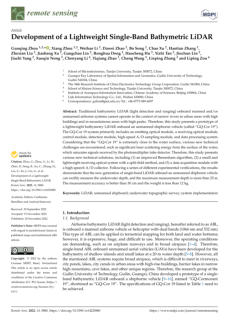
Guoqing Zhou, Xiang Zhou, Weihao Li, Dawei Zhao, Bo
Song, Chao Xu, Haotian Zhang, Zhexian Liu, Jiasheng Xu,
Gangchao Lin, Ronghua Deng, Haocheng Hu, Yizhi Tan,
Jinchun Lin, Jiazhi Yang, Xueqin Nong, Chenyang Li,
Yiqiang Zhao, Cheng Wang, Lieping Zhang, & Liping Zou
This study introduces a lightweight bathymetry LiDAR
prototype mounted on an unmanned shipborne vehicle
to overcome limitations of traditional airborne LiDAR in
narrow urban rivers and mountainous areas. The system
includes key modules like emitting/receiving optics,
control, and high-speed data processing.


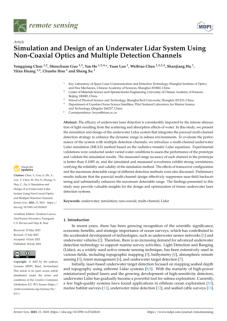
Authors: Bin Hu, Yiqiang Zhao, Guoqing Zhou, Jiaji He,
Changlong Liu,, Qiang Liu, Mao Ye, and Yao Li
Underwater laser detection is hindered by light
attenuation from scattering and absorption in water. This
study designs an underwater Lidar system using a paraxial
multi-channel detection strategy to improve dynamic
range in subsea environments. A multi-channel
underwater Lidar simulation (MULS) method based on
radiative transfer Lidar equations was developed and
validated through experiments under varied water
conditions. The prototype achieved range accuracy better
than 0.1085 m, with strong correlations between
simulated and measured waveforms, confirming the
simulation method's reliability.
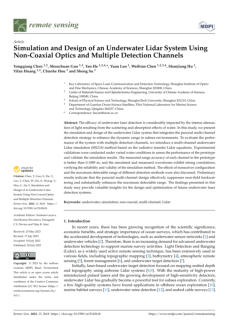
15 - Simulation and Design of an Underwater LiDAR System Using
Non-Coaxial Optics and Multiple Detection Channels
Authors: Yongqiang Chen, Shouchuan Guo, Yan He,
Yuan Luo, Weibiao Chen, Shanjiang Hu, Yifan
Huang, Chunhe Hou, and Sheng Su
Underwater laser detection is hindered by light
attenuation from scattering and absorption in water. This
study introduces an underwater Lidar system using a
paraxial multi-channel detection strategy to improve
dynamic range in subsea environments. A multi-channel
underwater Lidar simulation (MULS) method, based on
radiative transfer Lidar equations, was developed and
validated through experiments under varied water
conditions. The prototype achieved range accuracy better
than 0.1085 m per channel, with strong agreement
between simulated and measured waveforms, confirming
the simulation's reliability.

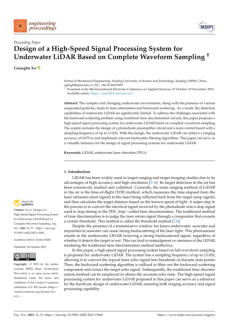
Author: Guangbo Xu
Underwater LiDAR performance is hindered by laser
attenuation and backscattering from suspended particles.
To overcome these limitations, this paper presents a high-
speed signal processing system for underwater LiDAR
utilizing complete waveform sampling. The system
features a photodiode preamplifier and a 2 GHz sampling
frequency main control board, enabling a ranging
accuracy of 0.075 m and backscatter filtering. This work
offers a valuable reference for underwater LiDAR signal
processing system design.

Authors: Xudong Liu, Liping Zhang, Xiaoyu Zhai, Liye Li,
Qingji Zhou, Xue Chen, and Xiaobo Li
Polarization lidar (P-lidar) advances traditional lidar by
incorporating polarization properties (degree, angle,
ellipticity) alongside backscattering intensity and spectrum.
This expands detected physical information, enhancing
analysis for atmospheric, oceanic, and terrestrial remote
sensing. This review introduces P-lidar principles and
systems, surveys its applications across these domains, and
proposes future research directions to stimulate further
development.
Authors: Anna Marshall, Ryan R. Morrison, Brady Jones,
Shayla Triantafillou, Ellen Wohl
Wood accumulations significantly affect geomorphic,
hydraulic, and ecological processes in river corridors, yet
accurately characterizing them remains challenging. This
study assesses the effectiveness of handheld lidar
scanners, specifically the fourth-generation iPad Pro, in
collecting 3D wood accumulation data for measuring
volume, porosity, complexity, and roughness. Findings
indicate that handheld lidar offers a cost-effective
alternative to traditional field methods by providing user-
friendly data collection and visualization, enabling
accurate temporal volume comparisons, aiding porosity
measurements, and supporting hydraulic and
morphodynamic modeling.

19 - Design of Scanning Units for the Underwater Circumferential-
Scanning LiDAR Based on Pyramidal-Shaped Refl ectors and a
Rapid Detection Method for Target Orientation
Authors: Bingting Zha, Guangbo Xu, Zhuo Chen, Yayun
Tan, Jianxin Qin, and He Zhang
Traditional underwater LiDAR faces challenges balancing
detection range and sealing. This paper proposes a
solution using a pyramidal-shaped reflector in a new
scanning unit, alongside a magneto–electric detection
module with Hall switches and magnetic rings for precise
target orientation. A rapid FPGA-based orientation coding
method achieves a 20 ns delay and 15° resolution.
Prototype tests confirm reliable scanning, orientation
detection, and signal reception through glass into water.
20 - An Evaluation of Low-Cost Terrestrial Lidar Sensors for Assessing
Hydrogeomorphic Change
- Published by AGU - Advancing earth and space sciences
Authors: M. T. Perks, S. J. Pitman, R. Bainbridge, A. Díaz-
Moreno, and S. A. Dunning
Accurate topographic data is crucial for geomorphic
research, with advances in remote sensing enabling high-
resolution surveys. Small-form-factor (SFF) 3D lidar sensors,
deployable on mobile and fixed systems, show potential
for geomorphic studies, though their use in fixed
installations remains unassessed. In a 3-month fluvial
channel change study, SFF lidar sensors produced
change detection results comparable to conventional lidar
and small median differences in eroding zones (0.02–0.04
m). The data enabled precise analysis of river channels,
assessment of bank retreat, and extraction of water
surface elevations.

21 - An Optimal Denoising Method for Spaceborne Photon-
Counting LiDAR Based on a Multiscale Quadtree
- Published by MDPI
Authors: Baichuan Zhang, Yanxiong Liu, Zhipeng Dong,
Jie Li, Yilan Chen, Qiuhua Tang, Guoan Huang,
and Junlin Tao
IIce, Cloud, and Land Elevation Satellite-2 (ICESat-2) has
great potential for gathering water depth information
around islands and reefs. A new method is proposed for
denoising photon-counting lidar data by using techniques
like DBSCAN and multiscale quadtree analysis. This
involves preprocessing point cloud data with kernel
density estimation, setting thresholds to remove noise,
and using quadtree segmentation for fine denoising. Tests
show this method significantly improves accuracy,
achieving a determination coefficient of 94.59% and an
RMSE of 1.01 m, enhancing underwater terrain mapping.
22 - The Impact of LIDAR- Assisted Pitch Control on Floating
Offshore Wind Operational Expenditure
Authors: Andrew J. Russell, Jade McMorland, Maurizio
Collu, Alasdair S. McDonald, Philipp R. Thies,
Aidan Keane, Alexander R. Quayle, David
McMillan, James Carroll, Andrea Coraddu
Floating offshore wind (FOW) is critical for climate action
and sustainability but faces higher operational costs due to
deep-water deployment challenges. LIDAR-assisted pitch
control, leveraging nacelle-mounted LIDAR for wind
measurements, offers potential cost savings by reducing
structural load variations. A study translating feedforward
pitch control results to future ScotWind sites predicts up to
5% OpEx reduction (11% with workability constraints),
with greater benefits at sites farther offshore. This
approach could lower the levelized cost of energy for
future FOW projects.
23 - Coastline Bathymetry Retrieval Based on the Combination of
LiDAR and Remote Sensing Camera
- Published by MDPI
Authors: Yicheng Liu, Tong Wang, Qiubao Hu,
Tuanchong Huang, Anmin Zhang, and Mingwei
Di
This paper introduces the Compact Integrated
Water–Land Survey System (CIWS), which combines a
remote sensing camera and a LiDAR module to propose
an innovative technique for underwater topography
retrieval. The method uses high-precision LiDAR-derived
water-depth points as control points, integrated with
grayscale values from aerial photogrammetry images, to
construct a bathymetry retrieval model capable of large-
scale shallow-water mapping. Experimental validation
successfully generated 3D seabed topographic maps,
demonstrating the feasibility and accuracy of this
integrated scanning method.

24 - Sequential Multimodal Underwater Single-Photon Lidar Adaptive
Target Reconstruction Algorithm Based on Spatiotemporal
Sequence Fusion
Authors: Tian Rong, Yuhang Wang, Qiguang Zhu,
Chenxu Wang, Yanchao Zhang, Jianfeng Li,
Zhiquan Zhou, and Qinghua Luo
This paper presents a sequential multimodal underwater
single-photon LiDAR adaptive target reconstruction
algorithm based on spatiotemporal sequence fusion,
designed for long-range, high-resolution imaging of slow-
moving small underwater targets. The method comprises
three stages: data preprocessing, sequence-optimized
extreme value inference filtering, and collaborative
variation–based image optimization—enabling robust
extraction of depth and reflectivity from sparse, noisy
photon echoes.
25 - How Accurate Can 2D LiDAR Be? A Comparison of the
Characteristics of Calibrated 2D LiDAR Systems
Authors: Adam Ziebinski, and Piotr Biernacki
2D LiDAR measurements often lack the precision required
to accurately determine the motion range or recalibrate
the position of Autonomous Guided Vehicles (AGVs). To
address this, this article proposes a multi-sectional
calibration (MSC) method with median filtration (MF) to
improve measurement accuracy. By dividing the
measurement range into sections and optimizing the MF
window width, the method enhances sensitivity to
deviations and improves distance measurement accuracy
by up to 89%. Experiments confirm its significant impact
on the precision and accuracy of 2D LiDAR systems.
26 - Empirical Quantification of Topobathymetric Lidar System
Resolution Using Modulation Transfer Function
Author: K. W. Sacca, and J. P. Thayer
Topobathymetric scanning lidar on unmanned aircraft
systems enables high-resolution mapping of terrain and
underwater interfaces but lacks standardized empirical
resolution validation methods. Theoretical models often
fail to account for instrument, platform, or environmental
uncertainties, particularly in bathymetry where water
conditions significantly impact performance. To address
this, the study extends modulation transfer function (MTF)
methods, traditionally used for passive imaging, to active
scanning lidar by employing compact retroreflectors as
calibration targets. These targets facilitate empirical
resolution assessment using height data alone,
independent of intensity measurements.
27 - Hyperspectral LiDAR for Subsea Exploration: System Design
and Performance Evaluation Method
Authors: Huijing Zhang, Linsheng Chen, Haohao Wu, Mei
Zhou, Jiuying Chen, Zhichao Chen, Jian Hu,
Yuwei Chen, Jinhu Wang, Yifang Niu, Meisong
Liao, Xiaoxing Wang, Wanqiu Xu, Tianxing
Wang, and Shizi Yu
his study introduces an advanced underwater
hyperspectral LiDAR (UDHSL) system operating from
450–700 nm, with adjustable spectral bandwidth
(10–300 nm) and repetition rate (50 kHz–1 MHz). It
achieves high precision (≤1 mrad divergence, 7 ns pulse
width, 7.5 µJ energy, 1.13 cm ranging resolution, 1.02 m
accuracy at 27 m).
28 - Enhancing Underwater LiDAR Accuracy Through a Multi-
Scattering Model for Pulsed Laser Echoes
Authors: Ruichun Dong, Xin Fang, Xiangqian Meng,
Chengyun Yang, & Tao Li
This study introduces a Monte Carlo-based mathematical
model for airborne LiDAR bathymetry to address the
inaccuracy caused by neglecting multiple scattering
events in conventional processing. The model simulates
laser propagation through water, accounting for these
scattering events using the Beer-Lambert law and the H-G
phase function. Unlike existing research that focuses on
laser emission, this work analyzes the probability of light
reception in LiDAR returns. Results show that
incorporating three or more scattering events significantly
improves detection accuracy: by approximately 7% at 10m
depth and 15-33% at 50m depth, thereby enhancing the
efficiency of experimental systems.
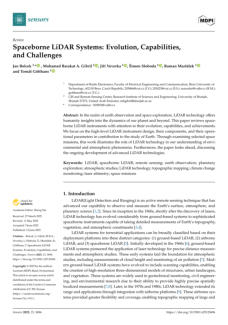
29 - Spaceborne LiDAR Systems: Evolution, Capabilities, and
Challenges
Authors: Jan Bolcek, Mohamed Barakat A. Gibril, Jirí
Veverka, Šimon Sloboda, Roman Maršálek, and
Tomáš Götthans
This paper reviews space-borne LiDAR instruments,
highlighting their evolution, capabilities, and contributions
to Earth observation. It examines high-level LiDAR design,
components, and operational parameters, and illustrates
their role in studying environmental and atmospheric
phenomena through select space missions. The paper
also explores the ongoing development of advanced
LiDAR technologies for future applications.
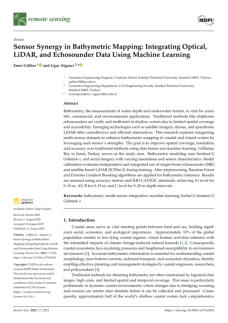
30 - Sensor Synergy in Bathymetric Mapping: Integrating Optical,
LiDAR, and Echosounder Data Using Machine Learning
Authors: Emre Gülher, and Ugur Alganci
This study integrates multi-sensor datasets to improve
bathymetric mapping in coastal and inland waters,
leveraging sensor strengths via data fusion and machine
learning for better spatial coverage, resolution, and
accuracy.
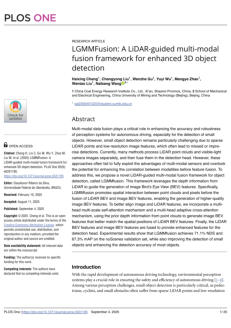
31 - LGMMFusion: A LiDAR-guided multi-modal fusion framework for
enhanced 3D object detection
Authors: Haixing Cheng, Chengyong Liu, Wenzhe Gu,
Yuyi Wu, Mengye Zhao, Wentao Liu, Naibang
Wang
LGMMfusion is a novel LiDAR-guided multimodal fusion
framework for autonomous driving object detection,
designed to improve small-object detection by addressing
limitations of sparse LiDAR points and low-resolution
image features. Unlike conventional methods that fuse
LiDAR and camera features only at the detection head,
LGMMfusion leverages LiDAR depth priors to guide the
generation of higher-quality image Bird’s Eye View (BEV)
features before fusion. It enables early spatial interaction
between point clouds and pixels via multi-head, multi-
scale self-attention and adaptive cross-attention
mechanisms, thereby ensuring better alignment
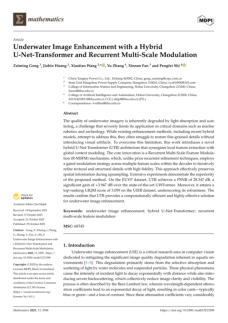
32 - Detection of Submerged Targets Beyond Eyes' Observation
Using Satellite LiDAR and Multispectral Data
Authors: Hao Liu, Jian Yang, Yue Ma, Yao Li, and Xiao Hua
Wang
Underwater image quality is degraded by light absorption
and scattering, hindering applications in marine robotics
and archaeology. Existing enhancement methods often
fail to recover fine details without artifacts. This work
proposes a hybrid U-Net-Transformer (UTR) architecture
that combines local feature extraction with global context
modeling. Its key innovation is the Recurrent Multi-Scale
Feature Modulation (R-MSFM) mechanism, a gated, multi-
scale iterative refinement strategy in the decoder that
preserves spatial fidelity during upsampling.
33 - Applying Deep Learning to Bathymetric LiDAR Point Cloud
Data for Classifying Submerged Environments
Authors: Nabila Tabassum, Henri Giudici, Vimala
Nunavath, and Ivar Oveland
Subsea environments are crucial for biodiversity, climate
regulation, and human activities like fishing and resource
extraction, necessitating accurate mapping for sustainable
management. Airborne LiDAR bathymetry (ALB) offers
high-resolution underwater data but generates large,
complex datasets that challenge efficient analysis. This
study applies deep learning models, Long Short-Term
Memory (LSTM) and Bidirectional LSTM (BiLSTM), to multi-
class classification of ALB waveform data. A preprocessing
pipeline extracted and labeled waveform peaks into five
classes: sea surface, water, vegetation, seabed, and noise.
Experiments on two datasets showed high classification
accuracy:
34 - Mapping River Bed Topography in Whitewater Rapids
Using Bathymetric LiDAR
Authors: Jan Rhomberg-Kauer, Theresa Himmelsbach,
Florian Pöppl, Lucas Dammert,
Martin Pfennigbauer, Gottfried Mandlburger
Bathymetric LiDAR struggles to detect riverbeds in
turbulent whitewater rapids of mountain rivers. This study
introduces a novel full-waveform processing method that
uses curve fitting to model and subtract the water column
signal, isolates residual energy, and applies peak detection
to recover previously undetected bottom returns.
Validated across three rivers using total station ground
truthing, the method reduces median vertical errors from
20.6 cm to 9.2 cm and from 40.4 cm to 22.5 cm,
significantly filling data gaps in whitewater zones.
35 - A Review of Solid-State LiDAR Principles and Metasurface-Based
LiDAR Sensors
Authors: Elif Demirbas, Braden Boucher, Matthew Baker,
Joshua Andrews, William Cruz, Sara Mueller, and
Samuel Serna-Otalvaro
LiDAR is a promising technology for autonomous vehicles,
with solid-state alternatives like microelectromechanical
systems (MEMS) and optical phased arrays (OPAs) offering
compact and robust solutions compared to traditional
mechanical LiDAR systems with rotating mirrors. Two-
dimensional optical metasurfaces enable beam steering
by shifting the phase of incoming light; static metasurfaces
are suitable for fixed beam directions, while dynamic
(tunable) metasurfaces are essential for real-time beam
scanning. Metasurface-based LiDAR provides advantages
such as flat optics design, robustness, and absence of
moving parts.
36 - Robust Localization of Flange Interface for LNG Tanker Loading
and Unloading Under Variable Illumination a Fusion Approach
of Monocular Vision and LiDAR
Authors: Mingqin Liu, Han Zhang, Jingquan Zhu, Yuming
Zhang and Kun Zhu
This paper addresses the challenge of accurately localizing
flange interfaces in LNG tankers under extreme
illumination conditions. While monocular vision fails in
glare or low light, and LiDAR lacks texture information, the
authors propose a vision-LiDAR fusion method with three
key innovations: an illumination-adaptive framework that
dynamically adjusts parameters based on grayscale
evaluation, a multi-constraint flange detection strategy
using physical constraints and K-means clustering, and a
customized fusion pipeline combining ROI extraction,
plane fitting, and 3D circle solving to compensate for
individual sensor limitations.

37 - Analysis of Underwater Single-Photon LiDAR Signals: A
Comprehensive Study on Multi-Parameter Coupling Effects
Authors: Ceyuan Wang, Shijie Liu, Shouzheng Zhu,
Wenhang Yang, Chenhui Hu, Yuwei Chen,
Chunlai Li, and Jianyu Wang
Underwater laser signal attenuation poses challenges for
conventional detection, but single-photon LiDAR (SPL)
with high sensitivity offers a promising solution. Prior
studies mainly examined isolated parameters, leaving the
coupled effects of environmental and system factors
underexplored. This research developed a 532 nm
underwater SPL system to systematically investigate multi-
parameter coupling in laboratory water tanks, varying
turbidity, detection distances, laser energy levels,
integration times, and target types.

Authors: Kai Zhang, Fanlin Yang, Hande Zhang, Dianpeng
Su, and QianQian Li
Recent studies have identified a correlation between
seafloor morphological features and biological complexity.
This research developed a standard deviation (STD)-based
method to quantitatively characterize terrain complexity,
incorporating robust estimation to correct for irregular
bathymetry and calibration for depth-dependent
measurement noise. Airborne lidar and shipborne sonar
bathymetry data from Yuanzhi Island, South China Sea,
were merged to create seamless, high-resolution coverage
from shoreline to deep water. Applying the new algorithm
generated quantitative terrain complexity maps, which
showed a significant correlation with in situ video
observations of coral abundance.

39 - Coastal Ecosystem Investigations with LiDAR (Light Detection
and Ranging) and Bottom Reflectance: Lake Superior Reef
Threatened by Migrating Tailings
Authors: W. Charles Kerfoot, Martin M. Hobmeier, Sarah A.
Green, Foad Yousef, Colin N. Brooks, Robert
Shuchman, Mike Sayers, Lihwa Lin, Phu Luong,
Earl Hayter, and Molly Reif
Over a century ago, two stamp mills released 22.7 million
metric tons of copper-rich tailings into Grand Traverse Bay,
which differ in properties from natural bedrock and quartz
sands. LiDAR surveys from 2008 to 2016, along with
ground sampling and bottom reflectance studies, showed
how tailings have spread. They are now moving onto
Buffalo Reef, affecting fish production. Predictions suggest
60% reef coverage in 10 years, with CASI imaging
estimating 25–35% tailings coverage.
40 - Habitat Classification of Temperate Marine Macroalgal
Communities Using Bathymetric LiDAR
Authors: Richard Zavalas, Daniel Ierodiaconou, David
Ryan, Alex Rattray, and Jacquomo Monk
This study evaluated bathymetric LiDAR's potential for
characterizing shallow water (<30 m) benthic habitats in
high-energy subtidal coastal environments. Habitat
classification of benthic substrata and macroalgal
communities was achieved by combining LiDAR data,
underwater video groundtruthing, and automated
classification techniques using the Quick Unbiased
Efficient Statistical Tree (QUEST) decision tree algorithm.
Bathymetry and reflectance datasets were used to
produce secondary terrain derivatives that influence
benthic patterns. The resulting habitat maps showed
overall accuracy exceeding 70%.

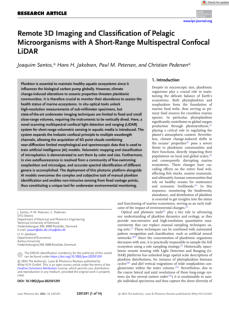
Authors: Joaquim Santos, Hans H. Jakobsen, Paul M.
Petersen, and Christian Pedersen
Plankton is vital for aquatic ecosystems by contributing to
the biological carbon pump, yet climate change threatens
these communities, necessitating their monitoring for
ecosystem health assessment. Existing underwater
imaging techniques are limited to small, fixed volumes,
prompting the development of a novel scanning
multispectral confocal LiDAR system. This system captures
high-resolution 4D morphological and spectroscopic data,
enabling AI models to classify microplastics by color and
size and identify zooplankton and microalgae genera
through in vivo autofluorescence.
.

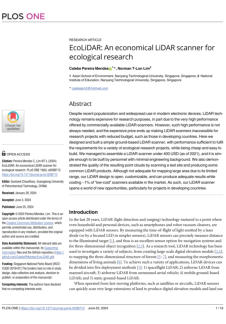
Authors: Calebe Pereira Mendes, Norman T-Lon Lim
Commercially available LiDAR scanners are expensive,
limiting their use in research, especially in developing
countries. To address this, a simple, affordable ground-
based LiDAR scanner was designed and built costing
under $400 (USD, 2021), which is easy to assemble with
minimal engineering expertise. This scanner provides
sufficient performance for various ecological research
projects and produces quality point clouds for common
LiDAR products. While its range is limited for large-scale
mapping, the open-source, customizable design costs
approximately 1% of market "low-cost" scanners, making
LiDAR accessible for budget-constrained projects and
opening new opportunities, particularly in developing
nations.
.
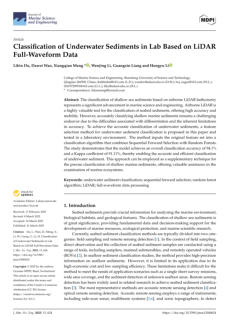
43 - Classification of Underwater Sediments in Lab Based on LiDAR
Full-Waveform Data
Authors: Libin Du, Dawei Wan, Xiangqian Meng, Wenjing
Li, Guangxin Liang and Hongyu Li
The classification of shallow sea sediments using airborne
LiDAR bathymetry represents a significant advancement in
marine science and engineering, providing high accuracy
and mobility. Despite its value, accurately classifying
shallow marine sediments remains challenging due to
differentiation difficulties and accuracy limitations. This
paper proposes a feature selection method combining
Sequential Forward Selection with Random Forests, tested
in a laboratory setting. The model achieved 94.1% overall
classification accuracy and a Kappa coefficient of 91.11%,
enabling precise and efficient underwater sediment
classification.

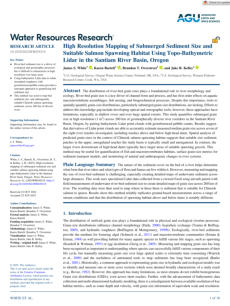
44 - High Resolution Mapping of Submerged Sediment Size and
Suitable Salmon Spawning Habitat Using Topo-Bathymetric
LiDAR in the Santiam River Basin, Oregon
Authors: James S. White, Karen Bartelt, Brandon T.
Overstreet, and Jake R. Kelley
River-bed grain size plays a critical role in river
morphology, ecology, and aquatic habitats, influencing
channel form, macroinvertebrate assemblages, fish
nesting, and biogeochemical processes. Existing tools to
spatially quantify submerged grain-size distributions are
limited, especially in shallow rivers and over large spatial
extents. This study addresses this gap by combining
bathymetric Lidar point clouds with georeferenced
pebble counts to measure submerged grain size at high
resolution (1 m²) across 260 km of geomorphically diverse
river corridors in Oregon's Santiam River Basin.

45 - Elastic and inelastic LiDAR pulse return phenomenology in
coastal underwater biological substrates
Author: Matthieu Huot, Fraser Dalgleish, Michel Piché,
and Philippe Archambault
Developing innovative underwater substrate detection,
classification, and imaging methods at large spatial scales
is crucial for monitoring and understanding climate-
related environmental changes in coastal ocean areas.
These methods help map the distribution and abundance
of marine primary producers such as macroalgae,
eelgrass, and ecosystem components like corals, informing
future ecosystem responses and management practices.
This work analyzes data from a full waveform underwater
fluorescence LiDAR designed to detect, image, and
generate 3D point clouds of fluorescent inert and
biological substrates.

Authors: Leila Character, Agustin Ortiz JR, Tim Beach, and
Sheryl Luzzadder-Beach
This project introduces a deep learning model leveraging
digital elevation data to automate and expedite shipwreck
detection across large regions, advancing underwater
archaeology. Given the challenges of traditional
methods—cost, inefficiency, and danger—this tool enhances
mapping of natural and archaeological features, aiding
resource prioritization and excavation planning. Using
open-source NOAA data, the model employs transfer
learning to overcome limited sample sizes and mitigates
false positives by training on both shipwrecks and
background topography. Statistical analyses (ANOVAs, box
plots) confirm distinct morphological differences between
shipwrecks and background terrain.


Author: Jessica W. Cook Hale, Dylan S. Davis, and
Matthew
C. Sanger
This study uses bathymetric LiDAR surveys in Florida's
Apalachee Bay to detect submerged archaeological sites,
including previously recorded and new cultural deposits at
shallow depths, aiding SCUBA surveys. Unlike prior studies
focused on shipwrecks, this research demonstrates LiDAR's
ability to identify Holocene and Pleistocene era sites,
offering insights into early coastal human adaptations to
lower sea levels. The findings highlight the potential of
remote sensing for studying submerged landscapes and
enhancing understanding of human-environment
interactions during sea level changes.


Authors: Dylan S. Davis, Jessica W. Cook Hale, Nathan
L. Hale, Trevor Z. Johnston, Matthew C. Sanger
Critical data on global human history is found on
continental shelves, making underwater investigations
challenging due to high costs and specialized needs. A new
semi-automated analysis protocol using bathymetric LiDAR
helps identify archaeological deposits in shallow waters,
successfully re-identifying known sites and discovering new
ones.

Continued on the next page.





Click on the
octopus to return to
the top of the page