










Vessel design, maintenance, & management 2021 - 2023









Published by the Institute of marine engineering, Science
& technology, & the International paint and printing ink
council.





Authors: Luofeng Huang, Sasan Tavakoli, Minghao, Azam
Dolatshah, Blanca Pena, Boyin Ding, and Abbas
Dashtimanesh
The launch of lifeboats is commonly completed through
freefall dropping from a considerable height, where the
lifeboat is released from an inclined skid so that it can
obtain a forward speed after being launched. The drop is
followed by a water entry process that can induce high
impact forces on the hull, which gives a significant risk of
structural damages. Ascertaining the water entry impact is
therefore a key step of lifeboat design.



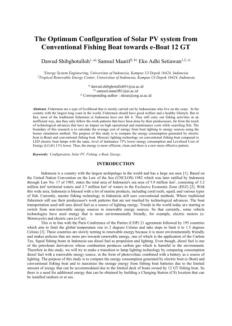
Authors: Dawud Shibghotulloh, Samsul Maarif, Eko Adhi
Setiawan
The boundary of this research is to calculate the average
cost of energy from boat lighting to energy sources using
the homer simulation method. The purpose of this study is
to compare the energy consumption generated by
electric boat (e-Boat) and conventional fishing boats.


Authors: Ulanbek Auyeskhan, Namhun Kim, Chung, Soo
Kim, ran Van Loi, Jihwan Choi, Dong-Hyun Kim
The design freedom provided by Additive Manufacturing
(AM) enables the part consolidation (PC) of sophisticated
mechanical assemblies. However, PC has been mainly
performed for static components in assemblies with
nonmoving parts. In this regard, a new approach to
assembly-level Design for Additive Manufacturing (A-
DfAM) considering an industrial lifeboat hook assembly
with a functionally dynamic system is proposed



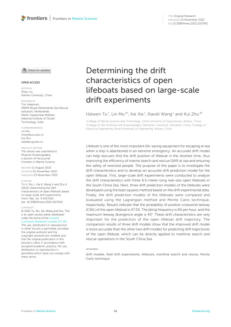
Authors: Haiwen Tu 1, Lin Mu, Kai Xia, Xiaodi Wang, and
Kui Zhu
The lifeboat is one of the most important life-saving
equipment for escaping at sea when a ship is abandoned
in an extreme emergency. An accurate drift model can
help rescuers find the drift position of the lifeboat in the
shortest time, thus improving the efficiency of marine
search and rescue (SAR) at sea and ensuring the safety of
wrecked people. The purpose of this paper is to
investigate the drift characteristics and to develop an
accurate drift prediction model for the open lifeboat.



Authors:
Heikki A. Nurmi, Cunming Yu, Dmytro Toptunov, Robin
H.A. Ras, and Ville Jokinen
Friction reduction is typically done by lubrication with
petroleum-based oils, while technology focus is shifting
toward environmentally-friendly green lubrication. Lowest
friction coefficients with water-based lubrication have
previously been achieved with smooth surfaces such as
silicon carbide and silicon nitride or polyzwitterionic
polymer brushes. This document describes a novel
concept for green lubrication using a bilayer of water and
ambient air acting as the lubricant between a hydrophilic
and superhydrophobic surface.


Authors:
Conghui Duan, Jianping Yin, Zhijun Wang, Zhiwei Hao
To study the impact of shallow water explosion shock
waves on a ship and the overpressure distribution law
under different burst points and different explosive
quantities and charge, the TNT column bare charge is
selected, based on LS-DYNA nite element software; the
underwater explosion model is created, and the
numerical simulation study of underwater explosion
under different burst points is carried out, and the
correctness of the nite element model is verified by
comparing with the empirical formula.


Authors: Alpaslan Tatlısuluoglu, Serdar Beji)
Underwater explosions that threaten the hull integrity and
proper operation of navy ships’ systems and subsystems
are considered from the viewpoint of damage estimation.
The commercial code LS-DYNA with the Arbitrary
Lagrangian-Eulerian numerical technique is used to
analyze the shock effects on structural components of a
ship-like form for three different scenarios. Computed
maximum permanent deformations are matched with the
corresponding keel shock factor (KSF) values for searching
a functional relationship of a linear form.


Authors:
Sergiy Rogalsky , Olena Moshynets, Oleg Dzhuzha,
Oksana Tarasyuk, Anastasiia Hubina, Alina Madalina
Darabut, Yevheniia Lobko, Iryna Morozovska, Oleksandr
Protasov, Jean-Francois Bardeau
This document details a novel water-insoluble cationic
biocide that has been assessed as a prospective
antifouling agent for commercial alkyd paint.
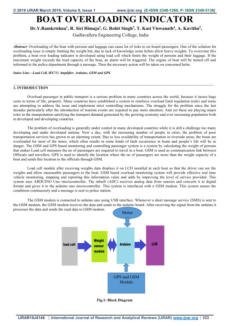
Authors: Dr.Y.Ramkrishna, R. Siri Himaja, G. Rohit Singh, T.
Kasi Viswanath, A. Kavitha
Overloading the boat with persons and luggage can
cause a lot of risks to onboard passengers. One solution
for the overloading issue is simply limiting the weight, but
due to lack of knowledge, some helms allow heavy
weights. To overcome this problem, a boat overloading
indicator is developed using a load cell, which limits the
weight of persons and their luggage. If the maximum
weight exceeds the load capacity of the boat, an alarm
will be triggered. The boat's engine will be turned off, and
informed to the police department through a message.
Then, the necessary action will be taken on the
concerned helm.
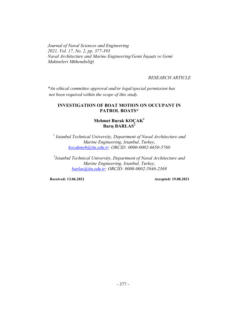
Authors: Baris Barlas
Occupants in high-speed patrol boats are subject to
impact forces due to various boat motions. These impact
forces should be precisely calculated and accounted for
when designing seats for occupants. Hull design and
cruising speed are the most critical parameters that cause
shock and impact on the boat during the journey. In
addition, seat design and material also have a major effect
on the impact level sensed by the occupant. This study
uses Altair software (Hypermesh and Radioss) to build a
sample Computer Aided Engineering (CAE) seat and
occupant model for patrol boats.
Authors: Alexandru Bobe, Tiberiu Axinte, Catalin Nutu,
Catalin Fratila, Mihai Diaconu.
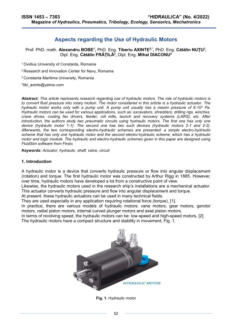
This article discusses the use of hydraulic motors to
convert fluid pressure into rotary motion. Hydraulic motors
can be used for various applications, such as excavators,
shredders, drilling rigs, winches, crane drives, cooling fan
drivers, feeders, roll mills, launch and recovery systems
(LARS), etc. The authors also study two pneumatic circuits
using hydraulic motors.
The DP Committee is a non-profit organization that
promotes a greater international understanding of
Dynamic Positioning and related issues.
The documents published by this organization should be
considered references.
They can be accessed by clicking on the following links:
Website:
https://dynamic-positioning.com/about-us/

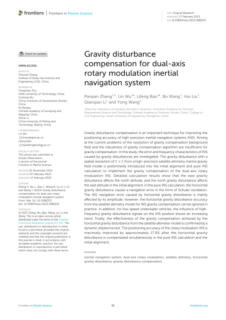
Authors: Panpan Zhang, Lin Wu, Lifeng Bao, Bo Wang,
Hui Liu, Qianqian Li, and Yong Wang
This study discusses the effectiveness of gravity
disturbance compensation in improving the positioning
accuracy of high-precision inertial navigation systems
(INS). It investigates the error and frequency characteristics
of INS caused by gravity disturbances and introduces a
method for implementing gravity compensation using
data from a high-precision satellite altimetry marine gravity
field model. The results demonstrate the impact of gravity
disturbances on INS performance and confirm the
effectiveness of the proposed compensation method
through dynamic shipborne testing, showing a significant
improvement in positioning accuracy.

Authors:
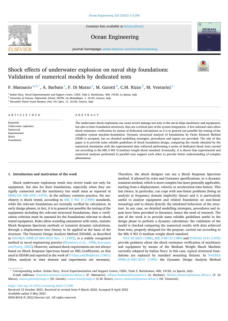
F. Mannacio, A. Barbato, F. Di Marzo, M. Gaiotti, C.M.
Rizzo, M. Venturini
This text discusses the challenges and methodologies
related to verifying shock resistance in naval ship
foundations to provide guidelines for shock foundation
design by comparing numerical simulations with
experimental data, highlighting the importance of using
both approaches to enhance understanding of complex
phenomena.


Click on the
octopus to return to
the top of the page


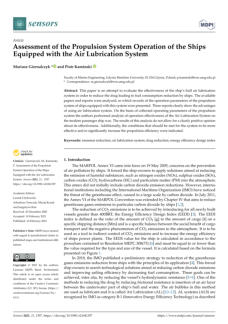
04 - Assessment of the Propulsion System Operation of the Ships
Equipped with the Air Lubrication System
Authors: Mariusz Giernalczyk, and Piotr Kaminski
This paper evaluates the effectiveness of a ship's hull air
lubrication system in reducing drag and fuel consumption.
Analyzing existing reports and operating parameters, the
authors found that while the system offers advantages, its
effectiveness on modern passenger ships is not clear-cut.
The study also suggests conditions for increased efficiency.

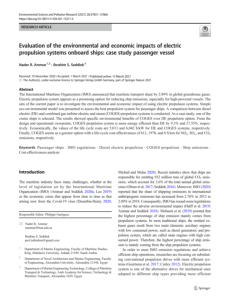
06 - Evaluation of the environmental and economic impacts of
electric propulsion systems onboard ships: case study
passenger vessel
Authors: Nader R. Ammar, & Ibrahim S. Seddiek
The International Maritime Organization (IMO) has
highlighted the significant role of maritime transport in
global greenhouse gases. This paper investigates the
environmental and economic impact of electric
propulsion systems, comparing diesel electric (DE) and
combined gas turbine electric and steam (COGES)
systems. Results show COGES is more energy efficient and
cost-effective, with a life-cycle cost-effectiveness of 612,
1970, and 6 $/ton for NOx, SOx, and CO2 emissions.

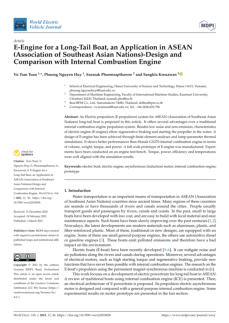
07 - E-Engine for a Long-Tail Boat, an Application in ASEAN
(Association of Southeast Asian Nations)-Design and
Comparison with Internal Combustion Engine.
Authors: Vu Tran Tuan, Phuong Nguyen Huy, Surasak
Phoemsapthawee, and Sangkla Kreuawan
This article proposes an E-propulsion system for ASEAN
long-tail boats, offering low noise, zero-emission, and
regenerative braking. The design, achieved through finite
element analyses and thermal simulations, outperforms
the Honda GX270 in volume, weight, torque, and power.
A full-scale prototype was manufactured.
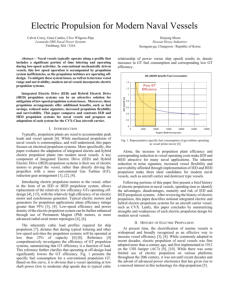
Authors: Calvin Corey, Gene Castles, Clive Wilgress-Pipe,
& Heejong Moon
Naval vessels often operate during low-speed activities,
causing propulsion system inefficiencies. Modern vessels
incorporate electric propulsion systems like Integrated
Electric Drive (IED) and Hybrid Electric Drive (HED) to
mitigate these losses and increase range and survivability.
This paper compares and contrasts these systems for naval
vessels and proposes an adaptation for the CVX-Class
aircraft carrier.

10 - Electric Propulsion for Modern Naval Vessels

14 - Validating propulsion system optimization procedure for a
carrier vessel.
Authors: M. Lobachev, V. Novoselov, Yu. Polyakov, A.
Rudnichenko, T. Saifullin, A. Taranov
The study optimizes the propulsion efficiency of Project
1594 ships using Russian software package pSeven and
Siemens Star CCM+ software. The study generates three-
dimensional parametric models for the propeller and hull,
and obtains hydrodynamic parameters using CFD
methods. The results show a new bow shape with lower
wave-making resistance and higher propeller efficiency.
The optimized system shows a growth in speed in
different conditions.
(Doc. written in Russian)

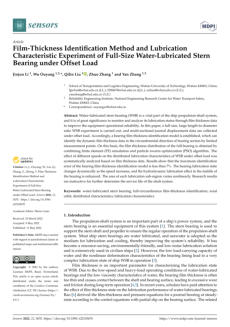
19 - Film-Thickness Identification Method and Lubrication
Characteristic Experiment of Full-Size Water-Lubricated Stern
Bearing under Offset Load
Authors: Jinjun Li, Wu Ouyang, Qilin Liu, Zhuo Zhang,
and Yan Zhang
This paper investigates the lubrication status of a water-
lubricated stern bearing (WSB) under offset load using a
full-size experiment. The study establishes a bearing film-
thickness identification model, identifying dynamic film
thickness data in the bearing section. The model's
maximum identification error is less than 7%, and the
lubrication state changes dynamically with speed. The
research provides insights for determining the shaft
system's service life.
20 - Life-Cycle Assessment and Costing of Fuels and Propulsion
Systems in Future Fossil-Free Shipping
Authors: Fayas Malik Kanchiralla, Selma Brynolf, Elin
Malmgren, Julia Hansson, and Maria Grahn
This study evaluates potential decarbonization solutions
for future ships, focusing on energy carriers like electrolytic
hydrogen, electro-ammonia, electro-methanol, and
electricity. The results show promising measures to reduce
maritime GHG emissions with low-carbon-intensive
electricity. However, the carbon abatement cost ranges
from 300 to 550 €/tCO 2 eq, with trade-offs for
environmental impacts. Electro-ammonia in fuel cells is
effective, followed by the HyMethShip concept. Major
incentives and policy measures are needed.


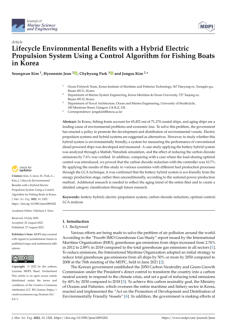
21 - Lifecycle Environmental Benefits with a Hybrid Electric
Propulsion System Using a Control Algorithm for Fishing Boats
in Korea
Authors: Seongwan Kim, Hyeonmin Jeon, Chybyung
Park, and Jongsu Kim
Korea's government is promoting the development and
distribution of environmental vessels, including electric
propulsion systems and hybrid systems. A case study
using a battery hybrid system reduced carbon dioxide
emissions by 7.6% and 10.7% compared to conventional
diesel-powered ships. The study confirmed that the hybrid
system is eco-friendly from the energy production stage,
but further research is needed to reflect the aging trend
of the entire fleet and create a detailed category
classification.
27 - Battery-Free and Real-Time Wireless Sensor System on Marine
Propulsion Shaft Using a Wireless Power Transfer Module
Authors: Young Chul Lee, and Van Ai Hoang
This paper presents a wireless sensor system (WSS) that
integrates an inductive wireless power transfer module for
real-time monitoring of rotating shaft status in ships. The
system has a power capability of 1.75 W and 75%
efficiency. The system integrates four sensors on a 200mm
shaft, demonstrating real-time monitoring without a
battery.
Authors: Qiuwen Wang , Hu Zhang, and Puxin Zhu
The use of nuclear energy for merchant ships is a
potential solution to promote maritime decarbonization
and sustainable shipping. However, concerns about
environmental risks from accidents and machinery failures
exist. This research aims to analyze existing regulations
and identify potential solutions to mitigate the impacts of
radioactive marine pollution on the international
community.
29 - Using Nuclear Energy for Maritime Decarbonization and
Related Environmental Challenges: Existing Regulatory
Shortcomings and Improvements
35 - An SE-Based Maritime Vessel Development Framework for
Changeable Propulsion Systems
Authors: Brendan Sullivan, and Monica Rossi
The International Maritime Organization (IMO) aims to
reduce greenhouse gas emissions from vessels by 40% by
2030. This is a significant challenge, as regulations are
reducing ship life spans and economic value. To address
this, the IMO recommends the Energy Efficiency Design
Index for new vessels, which encourages innovation and
continuous technical development. This paper presents a
conceptual framework for maritime vessels to achieve this.
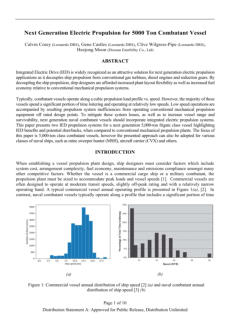
36 - Next Generation Electric Propulsion for 5000 Ton Combatant
Vessel
Authors: Calvin Corey, Gene Castles, Clive Wilgress-Pipe,
Heejong Moon
Integrated Electric Drive (IED) is a promising solution for
next-generation electric propulsion applications, as it
decouples ship propulsion from conventional engines.
This paper presents two IED propulsion systems for a
5,000-ton frigate class vessel, highlighting its benefits and
potential drawbacks. The approach can be applied to
various naval ships, including mine sweeper hunter and
aircraft carrier. The focus is on combatant vessels
operating at low speeds.
Author: Kai Bo, Junquan Chen, Yapeng Jiang, & Dong
Wang
This study presents an electromagnetic characteristics
numerical analysis of a 40 MW, 120 rpm, semi-
superconducting HTS synchronous motor. The analysis
considers the electromagnetic behavior of the motor,
analyzing the effects of varying stator winding currents
and thickness on eddy current losses of the copper
shielding sleeve. This study has significant implications for
electromagnetic design and optimization of multi-ten MW
HTS motors.
41 - Numerical analysis of 40 MW HTS motor electromagnetic
characteristics for ship electric propulsion
22 - Position Control of Heave Compensation for Offshore Cranes
Based on a Particle Swarm Optimized Model Predictive Trajectory
Path Controller
Authors: Hao Chen, Jinke Xie, Jingang Han, Weifeng Shi,
Jean-Frédéric Charpentier, and Mohamed
Benbouzid
This paper discusses the critical importance of a wave
compensation system in naval operations, which helps to
mitigate irregular motion between vessels during various
maritime activities such as replenishment and offshore
cargo transfer. It highlights the challenges posed by
nonlinear motion characteristics of crane loads due to
ship movements and introduces a novel approach called
the Particle Swarm Optimized Model Predictive Trajectory
Path (PSO-MPTP) controller. This advanced method
enhances heave compensation performance by
implementing predictive control to anticipate crane load
movements.
02 - Probabilistic Condition Monitoring of Azimuth Thrusters Based
on Acceleration Measurements
Authors: Riku-Pekka Nikula, Mika Ruusunen, Joni Keski-
Rahkonen, Lars Saarinen, and Fredrik Fagerholm
This study introduces a monitoring algorithm for azimuth
thrusters on drill ships and offshore rigs. It uses data from
acceleration and shaft speed to find driveline issues. By
applying linear regression models and analyzing residuals,
the method detects changes in thruster conditions and
calculates squared Mahalanobis distances. Tested on two
thrusters, the algorithm shows high accuracy in
identifying bearing conditions, proving its effectiveness for
real-time use.
03 - Application of Measurement Sensors and Navigation Devices in
Experimental Research of the Computer System for the Control
of an Unmanned Ship Model
Authors: Riku-Pek
Unmanned autonomous transport vessels (MASS)
represent the future of maritime transport. Key to their
development is designing algorithms and a computer
program for autonomous control, requiring a ship
equipped with a computer system, measurement sensors,
and navigation devices. Research led to the creation of an
experimental model featuring a unique propulsion system
and a complete computer system with sensors and
navigation devices for autonomous operations. The
prototype computer system, designed for optimal
performance in control software tests, was validated
through successful open-water trials, confirming the
functionality of both the system and the ship’s equipment.

Authors: Riku-Pekka Nikula, Mika Ruusunen, and Stephan
André Böhme
This study addresses the practical challenge of selecting
representative training samples and operating conditions
for vibration-based machine learning models in rotating
machinery condition monitoring. Using acceleration and
shaft speed data from an azimuth thruster on a catamaran
crane vessel, it evaluates how training set size and
distribution affect model performance. Building on a
previously developed defect-detection algorithm, the work
provides implementation guidance and proposes an
adaptive training subset selection method.


Authors: Ruiqi Liu, Zhongyu Jin, Xinfei Li and Lihao Yuan
This study analyzes the structure and operation principle
of the azimuth thruster's hydraulic rotary system,
establishes a mathematical model for the pump-controlled
hydraulic motor–gear reduction dynamic system, and
proposes a fast azimuth angle tracking method.
Simulations confirm the model accurately replicates real
thruster rotational dynamics and enables rapid, precise
azimuth control. Physical limits on rotational response are
also defined, offering valuable guidance for motion
control research in dynamic positioning vessels.
28 - Dynamic Response Characteristics of the Hydraulic Rotary
System of an Azimuth Thruster for a Dynamic Positioning Vessel

Authors: W. C. A. M. van Nieuwburg, B. J. J. van Spreuwel,
M. T. K. Tran, M. D. Yang, A. Greidanus, G. Mulder, M. J.
Tummers, J. Westerweel, W. Suijker, and R. van Wijk
This study investigates whether a forward-tilted rowing
blade improves propulsion efficiency and boat speed at
equal input power. Using a 1:5 scale rowing boat in a
towing tank, it tests blades with varying sizes and angles,
confirming a prior finding that a 15° tilt relative to the oar
shaft is optimal. Results show the modified blade increases
boat speed by 0.4% for the same power input.


Authors: Keith F. Joiner, and Ahmed A. Swidan
This paper presents a conceptual design for a submersible
seaplane that combines features of wing-in-ground (WIG)
crafts and seaplanes with underwater capabilities. WIG
crafts offer better endurance due to their higher lift-to-drag
ratio, while advancements in materials and electric
propulsion have made hybrid crafts more possible. The
design can perform underwater operations, monitor the
surface while recharging, and travel below water, all while
minimizing detection by radar and satellite systems. Five
key technologies support this design, developed in
collaboration with Ron Allum and Thales Australia.

Authors: Tunbiao Wu, Ronghui Li, Qinglong Chen,
Guiyuan Pi, Shijie Wan, and Qiao Liu
This document details a numerical methodology for
mathematical testing of ships with twin azimuth thrusters,
focusing on a model-scale unmanned surface vessel
(USV). The Ship Maneuvering Mathematical Model Group
(MMG) model is used to represent forces on the hull and
propellers. Captive tests, including planar motion
mechanism (PMM) and open-water tests, are simulated
using a software to derive hull hydrodynamic derivatives
and azimuth thruster coefficients.

05 - Modeling and Analysis of Offshore Crane Retrofitted with Cable-
Driven Inverted Tetrahedron Mechanism
Authors: Shenghai Wang, Zhaopeng Ren, Guoliang Jin,
and Haiquan Chen
Rough seas endanger crane operations via payload swing
from ship motions. This paper proposes a Cable-Driven
Inverted Tetrahedron Mechanism (CDITM) to suppress
swings. The system is modeled as a constrained
pendulum with Newton-Euler equations; 3D dynamics
are simulated in Matlab/Simulink to study influencing
factors. Experiments verify the model, supporting offshore
CDITM applications.
13 - Analysis of longitudinal coupling dynamic characteristics of deep
sea mining vessel and stepped lifting pipe
Authors: QingHui Song , HaiYan Jiang, QingJun Song,
LinJing Xiao, & Yu Wang
This paper investigates vessel-pipe coupling dynamics in
deep-sea mining using time-domain simulations in AQWA
and OrcaFlex, incorporating currents, waves, pipe
dynamics and contact mechanics. RAO validation shows
strong experiment-simulation agreement. Coupling
significantly affects the pipe's time-domain response but
has little impact on average tension or longitudinal
amplitude, informing safety design and operations.

Authors: Diego Hernández-Ménez, Iván Félix-González,
José Hernández-Hernández, Agustín L. Herrera-
May
Offshore cranes on FPSO vessels affect main deck
structural responses and safety. Classification rules
inadequately estimate performance variations under
different hydrodynamic conditions. A methodology is
presented to assess structural changes from crane
operations, using hydrodynamic responses for operating
and storm conditions (Gulf of Mexico, 1000m depth,
10/100-year returns) and FEM models. Maximum von
Mises stresses remain within limits for safe operation. It
enables designers to optimize deck modifications,
reducing construction and maintenance costs.


34 - Comparing Compact and Remote Deployments of a Speed-
controlled Cylinder Drive Unit on an Offshore Knuckle Boom
Crane
Authors: Wei Zhao, and Mohit Bhola
Speed-controlled hydraulic cylinders are popular for high
energy efficiency, easy installation, and low maintenance.
In high-power offshore knuckle boom cranes, compact
deployment (drive unit mounted on the cylinder) is often
infeasible due to size, so remote deployment is proposed,
placing the drive unit in the machine room with long
pipelines. A simulation study on a 150-ton crane model,
using commercial product data and a pipeline model,
shows remote deployment consumes 5% less power,
provides 30.5% higher load capacity, and maintains
comparable position-tracking performance. A unit
constructed for an 800-ton crane confirms sufficient
power output for most offshore hydraulic machines.

Authors: Freddy Marpaung, Harry Purnama, Nyoman
Artana, Nani Kurniawati, Dian Samodrawati, Tri
Surawan, Harini Agusta
This paper explores an open-loop control method to
eliminate payload swing for hanging loads on offshore
knuckle-boom cranes, which is crucial for safe operations.
The proposed method uses a trajectory tracking approach
based on iterative learning algorithms. Utilizing Lyapunov
techniques, the method ensures the asymptotic
convergence of the swing, angular velocity, and angular
acceleration of the payload. Simulation results
demonstrate the effectiveness of the proposed anti-swing
control method.