










Scientific papers 2024 - Part C









This workshop discussed potential updates and revisions
to "The Guide for the Care and Use of Laboratory
Animals". The presentation discusses the efforts made by
the Standing Committee for the Care and Use of Animals
in Research to gather input from various stakeholders
through listening sessions and a survey, culminating in a
virtual workshop. It highlights the collaborative nature of
the workshop, the diversity of participants, and the
collection of feedback and suggestions for future updates
to the Guide.

Authors: Nozomu Kageyama, and Takehito Sawamura
This study investigated the effects of hyperbaric exposure
on cognitive function in divers during saturation diving at
a depth of 45 atmosphere absolute (ATA). The study
utilized Stroop tasks to assess cognitive performance and
found that reaction times were delayed and correct rates
decreased at 45 ATA compared to 1 ATA. The study
emphasizes the importance of monitoring cognitive
function in deep sea saturation diving and suggests the
need for further research and training in this area.

Authors: Andreas Fahlman, Warren Burggren, and
William K. Milsom
The aim of this document is to present research findings
and insights on the dive response in air-breathing
vertebrates, particularly focusing on the role of cognitive
control and conditioning in heart rate regulation during
dives to explain how these physiological responses can be
anticipatory and vary based on the type and length of the
dive, suggesting a cognitive component. It also discusses
the implications of these findings for improving diving
capacity and preventing diving-related issues, such as
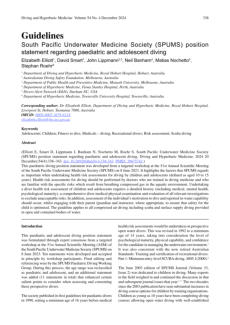
decompression sickness, through mechanisms like the
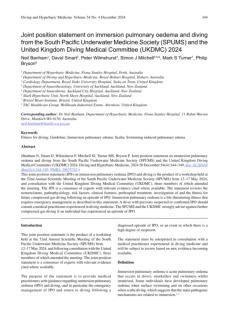
selective gas exchange hypothesis..

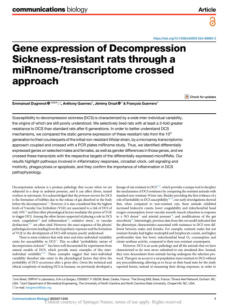
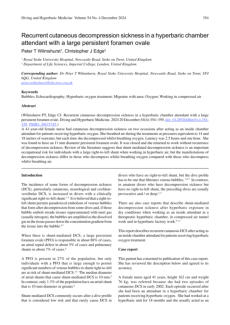
Authors: Emmanuel Dugrenot, Anthony Guernec, Jérémy
Orsat, & François Guerrero
This paper presents a study on the effects of hyperbaric
conditions on cognitive functioning, explicitly using the
critical flicker fusion frequency (CFFF) test. It highlights the
importance of considering possible side effects of
hyperbaric oxygen therapy (HBOT) on medical staff, such
as decompression sickness, and reports findings on how
oxygen breathing during decompression affects CFFF
results.

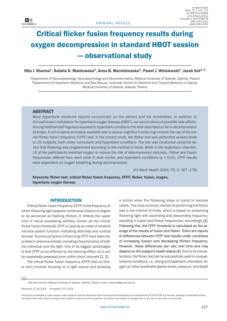
Authors: Rita I. Sharma, Natalia D. Mankowska, Anna B.
Marcinkowska, Pawel J. Winklewski, Jacek Kot
This paper presents a study on the effects of hyperbaric
conditions on cognitive functioning, explicitly using the
critical flicker fusion frequency (CFFF) test. It highlights the
importance of considering possible side effects of
hyperbaric oxygen therapy (HBOT) on medical staff, such
as decompression sickness, and reports findings on how
oxygen breathing during decompression affects CFFF
results.

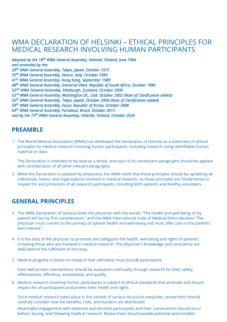
This document is the 2024 update of the Declaration of
Helsinki, developed by the World Medical Association
(WMA), for conducting safe and respectful medical
research involving human participants. It aims to
communicate the principles of the organization that
should be adhered to by all parties involved in medical
research to ensure the protection of research participants.

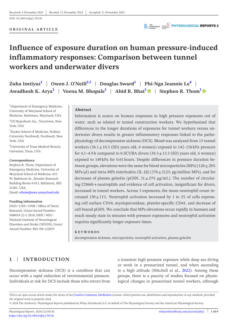
Authors:
Zuha Imtiyaz, Owen J. O'Neill, Douglas Sward, Phi- Nga
Jeannie Le, Awadhesh K. Arya, Veena M. Bhopale, Abid R.
Bhat, Stephen R. Thom
This text presents a scientific hypothesis and research
findings regarding the physiological responses of tunnel
construction workers to high-pressure exposures
compared to SCUBA divers. The study aims to investigate
the inflammatory responses and potential
pathophysiology of decompression sickness (DCS) in these
two groups, focusing on blood microparticles, interleukin
levels, plasma gelsolin, and neutrophil activation. The text
concludes with findings that suggest differences in
neutrophil activation based on the duration of pressure
exposure


Authors: Raoul A. Fakkert, Nina C. Weber, Benedikt
Preckel, Robert A. van Hulst, Inge A. Mulder,
Robert P. Weenink
This document describes a method for studying cerebral
arterial gas embolism (CAGE) using rats. Two surgical
techniques were tested: injecting air through the external
carotid artery and direct injection into the common
carotid artery. Both methods were compared, with the
CCA method showing better results in bubble
consistency, embolization time, and fewer complications.

Authors: Pauls Dzelve, Arta Legzdin, Andra Krumina, and
Madara Tirzıte
The Raman effect is a change in scattered light after
photons interact with a molecule. This makes Raman
spectroscopy useful, especially in medicine. It has potential
in pulmonary medicine, analyzing tumors, sputum, and
saliva. Saliva may serve as a quick, inexpensive diagnostic
tool for diseases like COPD, reducing healthcare costs.
04 - Utility of Raman Spectroscopy in Pulmonary Medicine
- Published by Advances in respiratory medicine - MDPI

15 - Are Exercise-Induced Premature Ventricular Contractions
Associated with Signifi cant Coronary Artery Disease?
- Published by Clinical Medicine - MDPI
Author: Sok-Sithikun Bun, Clementine Massimelli, Didier
Scarlatti, Fabien Squara and Emile Ferrar
Exercise-induced premature ventricular contractions
(EIPVC) have been linked to higher mortality, but their
connection to coronary artery disease (CAD) is unclear.
This study investigated the relationship between EIPVC
and significant CAD in patients with cardiovascular risk
factors, compared to a control group showing ischemia
during exercise tests. In total, 4098 exercise tests were
done, identifying 46 patients with EIPVC and 71 with
ischemia. CAD was found in 11% of the EIPVC group
compared to 54% in the ischemia group, suggesting
EIPVC is less often associated with CAD.

16 - N2 exchanges in hyperbaric environments: toward a model
based on physiological gas transport (O2 and CO2)
- Published by the American Physiological society
Authors: Michael Theron, Alexis Blasselle, Lisa Nedellec,
Pascal Ballet, Emmanuel Dugrenot, Bernard
Gardette, François Guerrero, Anne Henckes,
and Jean-Pierre Pennec
Decompression sickness can happen to divers even when
they follow safe procedures. Individual physiological
conditions can influence bubbling variability, highlighting
the need for personalized input for better decompression.
This study aims to create a new framework for inert gas
exchanges, validating a model for oxygen and transferring
it for nitrogen and carbon dioxide. The new model
demonstrates the integration of various physiological
factors for improved nitrogen saturation and desaturation
models.

Author: Douglas Ebersole
Patent foramen ovale (PFO) is a significant topic in
recreational diving due to its link with decompression
sickness (DCS). DCS occurs in about 2 out of every 10,000
dives, affecting roughly 1,000 divers yearly. PFO may raise
the risk of DCS by 5 to 13 times. Understanding this
connection and treatment options is crucial for divers.

01 - Sex differences in autonomic functions and cognitive
performance during cold-air exposure and cold-water partial
immersion
- Published by Frontiers
Author:
Youngsun Kong, Md Billal Hossain, Riley McNaboe, Hugo
F. Posada-Quintero, Matthew Daley, Krystina Diaz, Ki H.
Chon 1 and Jeffrey Bolkhovsky
This study examined how male and female autonomic
functions and cognitive abilities differ during cold-air
exposure and cold-water immersion versus room
temperature air. The study involved 22 males and 19
females who completed cognitive tasks in various
conditions. Results showed that females had slower
reaction times during cold-air exposure, while males
performed similarly or better. Cold-water immersion
impacted men's memory. Both genders had lower
electrodermal activity in cold conditions, and only males
had higher heart rate variability during cold air exposure.

02 - Shock Waves of the Electric Field—Part 2: Experimental Studies
of Vysikayl’s Jumps and Plasma Nozzles in Plasma With Current.
- Published by IEEE Xplore
Author: Philipp I. Vysikaylo
This work demonstrates that charged particles in plasma
exhibit self-focusing as a universal characteristic of
cumulative-dissipative structures. This cumulation results
from electric field shock waves and involves complex
interactions of charged particles in gas-discharge plasma.
The article discusses experiments on 3-D structures in
plasma and highlights the importance of electrical
neutrality violations in understanding these phenomena.
11 - Dynamic Impedance Model of Low-Voltage Electric Shock in
Animals Considering the Influence of Water Electrolysis
- Published by Processes - MDPI
Author: Haixin Tong, Xiangjun Zeng, Kun Yu, and Zehua
Zhou
This study addresses time-varying impedance in animals
after low-voltage electric shocks. It introduces a model
considering water electrolysis, showing that internal water
is key to impedance changes. The model improves
prediction accuracy compared to previous methods, with
low error rates.
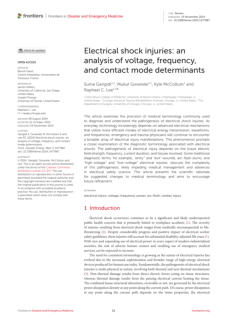
12 - Electrical shock injuries: an analysis of voltage, frequency, and
contact mode determinants
- Published by Frontiers
Authors: Suma Gangidi, Mukul Govande, Kyle McCollum,
and Raphael C. Lee
This article reviews medical terms used for diagnosing
electrical shock injuries as technology evolves. It suggests
changes to improve understanding of electrical injuries to
enhance medical care and safety.

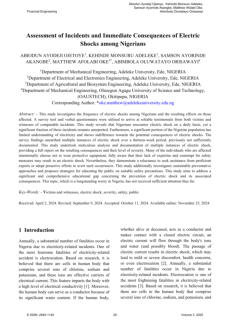
13 - Assessment of Incidents and Immediate Consequences of
Electric Shocks among Nigerians
- Published by WSEAS
Authors: Abiodun Ayodeji Ojetoye, Kehinde Monsuru
Adeleke, Samson Ayorinde Akangbe, Matthew
Afolabi Oke, Abimbola Oluwatayo Orisawayi
This study explores how often electric shocks occur in
Nigeria and their effects. A survey and questionnaire
gathered information from victims and witnesses. Many
Nigerians experience electric shocks daily, but many
incidents go unreported. There is also a lack of
understanding about electricity and safety. The study
documents various electric shock cases and suggests
ways to educate the public on safety measures and
prevention strategies to fill this educational gap.
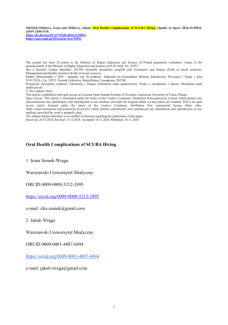
Author: Irena Sionek-Wrega, Jakub Wrega
This review looks at oral health issues related to SCUBA
diving, like barodontalgia, barosinusitis, and TMJ disorders,
as well as dental effects of hyperbaric oxygen therapy. It
involves a literature search for relevant studies and
identifies gaps for future research to improve dental care
for divers. Preventive measures are recommended, and
larger studies are needed for better guidelines.
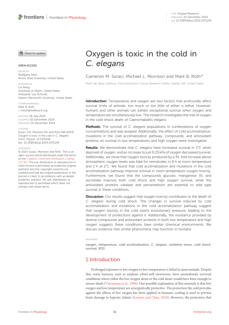
Authors: Cameron M. Suraci, Michael L. Morrison and
Mark B. Roth
This research explores the role of oxygen in the cold shock
death of Caenorhabditis elegans. It found that C. elegans
have increased survival in 2°C when deprived of oxygen,
while an increase to 0.25 kPa of oxygen decreased
survival. Oxygen toxicity produced by a 35-fold increase
above atmospheric oxygen levels was fatal for nematodes
in 8 hours at room temperature and 2 hours at 2°C. Cold
acclimatization and mutations in the cold acclimatization
pathway improved survival in room temperature oxygen
toxicity.
The authors discuss evidence that similar phenomena
may function in humans.

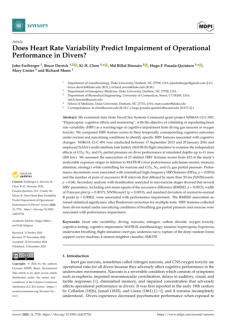
19 - Does Heart Rate Variability Predict Impairment of Operational
Performance in Divers?
- Published by Sensors - MDPI
Authors: John Freiberger, Bruce Derrick, Ki H. Chon, Md
Billal Hossain, Hugo F. Posada-Quintero, Mary
Cooter, and Richard Moon
The study aimed to validate heart rate variability (HRV) as
a warning sign of cognitive impairment from diving gas
narcosis or oxygen toxicity. The research used NASA's
multi-attribute task battery (MATB-II) flight simulator to
examine the effects of CO2, N2, and O2 partial pressure
on diver performance. Results showed performance
declines were associated with normalized high-frequency
HRV features and the number of pairs of successive R-R
intervals that differed by more than 50 ms. HRV
parameters, including RMSSD, were associated with
performance impairment.

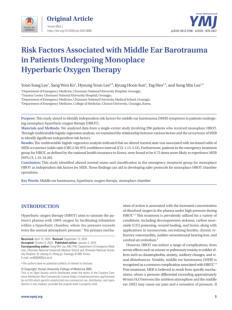
20 - Risk Factors Associated with Middle Ear Barotrauma in Patients
Undergoing Monoplace Hyperbaric Oxygen Therapy.
- Publised by the Yansei Medical Journal - YMJ
Authors: Yoon Sung Lee, Sang Won Ko, Hyoung Youn
Lee, Kyung Hoon Sun, Tag Heo, and Sung Min
Lee
The study analyzed data from 296 patients receiving
monoplace hyperbaric oxygen therapy (HBOT) and
found that altered mental state and classification in the
emergency treatment group for HBOT were independent
risk factors for middle ear barotrauma (MEB). These
findings can help develop safer protocols for monoplace
HBOT chamber operations.


Click on the octopus
to return to the top
of the page
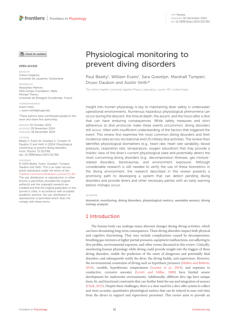
Author: Paul Beatty, William Evans, Sara Gravelyn, Marshall
Tumperi,
The article emphasizes the importance of understanding
human physiology in ensuring diver safety during
underwater operations. It details various hazardous
physiological phenomena that divers can experience
before, during, and after dives. Despite safety protocols
minimizing these incidents, diving disorders still occur,
often with unclear triggers. The review highlights
common diving disorders and their incidence in both
recreational and military contexts. It also discusses specific
physiological biomarkers that can indicate a diver’s well-
being and help in the early detection of serious
conditions, thereby potentially preventing diving-related
accidents.

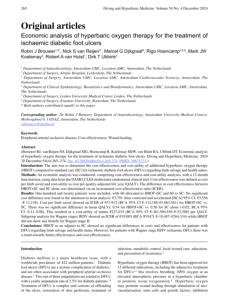
23 - Economic analysis of hyperbaric oxygen therapy for the
treatment of ischaemic diabetic foot ulcers
- Publised by Diving and Hyperbaric Medicine
Authors: Robin J Brouwer, Nick S van Reijen, Marcel G
Dijkgraaf, Rigo Hoencamp, Mark JW Koelemay,
Robert A van Hulst, Dirk T Ubbink
This study evaluated the cost-effectiveness and cost-utility
of hyperbaric oxygen therapy (HBOT) combined with
standard care (SC) versus SC alone for ischaemic diabetic
foot ulcers (DFUs) over 12 months. Using data from a
randomized clinical trial, it found no significant differences
in total costs, limb salvage rates, or quality-adjusted life
years (QALYs) between HBOT+SC and SC alone.
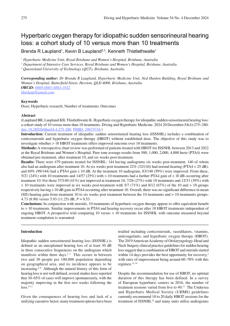
24 - Hyperbaric oxygen therapy for idiopathic sudden sensorineural
hearing loss: a cohort study of 10 versus more than 10
treatments
- Publised by Diving and Hyperbaric Medicine
Authors: Brenda R Laupland, Kevin B Laupland, Kenneth
Thistlethwaite
Current treatment for idiopathic sudden sensorineural
hearing loss (ISSNHL) includes corticosteroids and
hyperbaric oxygen therapy (HBOT). This study aimed to
see if more than 10 HBOT sessions improve outcomes
compared to 10 sessions. A review of patient records from
2013 to 2022 was conducted. Out of 479 patients, 22%
had normal hearing six weeks post-treatment, and 69%
showed significant improvement. However, there was no
significant difference in hearing gain between those
receiving 10 and more than 10 treatments.
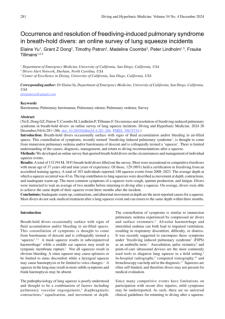
25 - Occurrence and resolution of freediving-induced pulmonary
syndrome in breath-hold divers: an online survey of lung
squeeze incidents
- Publised by Diving and Hyperbaric Medicine
Authors: Elaine Yu, Grant Z Dong, Timothy Patron,
Madeline Coombs, Peter Lindholm, Frauke
Tillmans
Breath-hold divers sometimes experience 'freediving
induced pulmonary syndrome' (colloquially 'squeeze'),
marked by fluid buildup or bleeding in air spaces, likely
due to immersion pulmonary edema or descent
barotrauma. A survey of 132 certified freedivers (mostly
recreational/competitive, average age 37) reported 140
squeeze events since 2008, primarily at ~43m depth.
Common triggers included movement at depth,
contractions, and poor warm-up, with symptoms like
cough, sputum, and fatigue. Divers typically resumed
diving after ~2 months, regaining prior dive depths ~3
months post-incident.

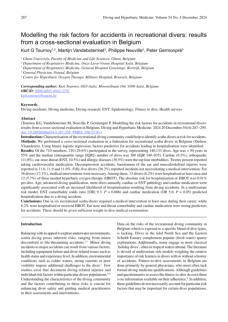
26 - Modelling the risk factors for accidents in recreational divers:
results from a cross-sectional evaluation in Belgium
- Publised by Diving and Hyperbaric Medicine
Authors: Kurt G Tournoy, Martijn Vandebotermet, Philippe
Neuville, Peter Germonpré
This cross-sectional study of 210 Belgian recreational
divers (representing 140,133 dives) found that 17.1%
required medical interventions, with 6.2% hospitalized and
5.7% needing hyperbaric oxygen therapy (HBOT). The
absolute risk of hospitalization or HBOT was 0.01% per
dive. Key risk factors for diving accidents leading to
hospitalization included age >50, advanced qualifications,
higher annual dive frequency, cardiac or ENT (ear, nose,
throat) pathology, and cardiac medication. Multivariate
analysis identified ENT comorbidities (OR 9.3; P=0.006)
and cardiac medication (OR 5.6; P=0.05) as the strongest
predictors.
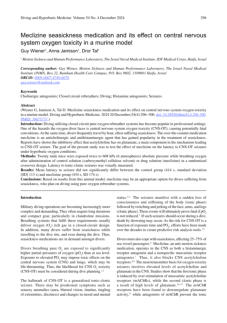
27 - Meclizine seasickness medication and its effect on central
nervous system oxygen toxicity in a murine model
- Publised by Diving and Hyperbaric Medicine
Authors: Guy Wiener, Anna Jamison, Dror Tal
This study investigated whether meclizine, a common
seasickness medication with anticholinergic properties,
delays central nervous system oxygen toxicity (CNS-OT)
seizures in hyperbaric oxygen conditions, based on the
hypothesis that acetylcholine inhibition might modulate
glutamate-mediated seizure pathways. In a randomized
crossover experiment, 20 male mice were exposed twice
to 608 kPa of pure oxygen after receiving either meclizine
or a control solvent. Seizure latency was measured visually.
Results showed no significant difference in mean seizure
latency between the meclizine group and the control
group, suggesting meclizine does not confer protection
against CNS-OT under these conditions.
Authors: Jérémie Allinger, Oleg Melikhov, Frédéric
Lemaître
Understanding safety issues in competitive freediving is
essential for reducing athlete risks. This study examined
loss of consciousness (LOC) and pulmonary barotrauma
(PBt) across 988 competitions from 2019 to 2023,
involving 38,789 performances. The average incident rate
was 3.43%, with LOC at 3.31% and PBt at 0.38%. Two
disciplines, dynamic without fins and constant weight
without fins, had higher risks for LOC.
29 - Divers treated in Townsville, Australia: worse symptoms lead to
poorer outcomes
- Publised by Diving and Hyperbaric Medicine
Authors: Denise F Blake, Melissa Crowe, Daniel Lindsay,
Richard Turk, Simon J Mitchell, Neal W Pollock
Hyperbaric oxygen treatment (HBOT) is the definitive
treatment for decompression illness, though delays may
occur due to logistical challenges. A retrospective study
(2003–2018) analyzed 306 divers treated in Townsville,
assessing demographics, disease severity, timelines
(symptom onset to HBOT), and outcomes. Median age
was 29, with 70% having mild symptoms. Median delays
were 60 minutes to symptom onset, 4 hours to pre-HBOT
oxygen therapy, and 38.8 hours to HBOT. Most (93%) had
good outcomes, and no deaths occurred. Higher initial
severity correlated with faster intervention and worse
outcomes, though minimal-delay cases were too few to
assess delay effects.
30 - Dive medicine capability at Rothera Research Station (British
Antarctic Survey), Adelaide Island, Antarctica
- Publised by Diving and Hyperbaric Medicine
Authors: Felix N R Wood, Katie Bowen, Rosemary Hartley,
Jonathon Stevenson, Matt Warner, Doug Watts
Rothera, a British Antarctic Survey station on Adelaide
Island near the Antarctic Peninsula, supports vital marine
science through diving—despite extreme remoteness and
environmental challenges. To mitigate risks,
comprehensive medical safeguards are in place: pre-
deployment training (including emergency response and
fitness-to-dive assessment), an on-site hyperbaric chamber,
real-time remote consultation with UK diving medicine
experts, and proven patient evacuation capability.
Coupled with substantial infrastructure and logistical
support, these measures ensure high-standard medical
care for divers in Antarctica.
31 - Development of myopia in scuba diving and hyperbaric oxygen
treatment: a case report and systematic review
- Publised by Diving and Hyperbaric Medicine
Authors: Sofia A Sokolowski, Anne K Räisänen-Sokolowski,
Richard V Lundell
A 54-year-old male diver experienced vision deterioration
after a 22-day diving trip involving 75 recreational dives,
mostly with nitrox. While hyperoxic myopia is
documented in hyperbaric oxygen therapy (HBOT),
evidence in recreational divers is limited. A systematic
review (PRISMA-guided, 22 studies) found that divers may
develop greater myopic shifts with less oxygen exposure,
but heterogeneity precluded statistical analysis. This is the
first review focused on divers rather than HBOT patients.
32 - South Pacific Underwater Medicine Society (SPUMS) position
statement regarding paediatric and adolescent diving
- Publised by Diving and Hyperbaric Medicine
Authors: Elizabeth Elliott, David Smart, John Lippmann,
Neil Banham, Matias Nochetto, Stephan Roehr
This paediatric diving position statement, developed at the
51st SPUMS Annual Scientific Meeting (2023), outlines key
factors for assessing health risks in children and
adolescents (ages 10–15) before diving. Conducted by
diving medicine-trained doctors, the evaluation includes
detailed medical, mental health, and psychological
maturity reviews, alongside physical exams and tests to
mitigate risks. It also considers the child’s motivation and
water skills, with input from parents/guardians and
instructors to prioritize safety. The guidelines cover all
compressed air diving, including scuba and surface supply
diving in open and confined water.

33 - Joint position statement on immersion pulmonary oedema and
diving from the South Pacific Underwater Medicine Society
(SPUMS) and the United Kingdom Diving Medical Committee
(UKDMC) 2024
- Publised by Diving and Hyperbaric Medicine
Authors: Neil Banham, David Smart, Peter Wilmshurst,
Simon J Mitchell, Mark S Turner, Philip Bryson
This joint position statement (JPS) on immersion
pulmonary oedema (IPO) and diving, developed by
experts at the 52nd SPUMS Annual Scientific Meeting
(May 2024) in collaboration with the UKDMC, summarizes
key aspects of IPO, including its nomenclature,
pathophysiology, risk factors, clinical features, prehospital
treatment, and post-episode diving fitness. As a life-
threatening condition requiring urgent management, the
JPS advises divers with suspected or confirmed IPO to seek
evaluation from a diving medicine specialist. SPUMS and
UKDMC strongly discourage further compressed gas
diving following an IPO episode.
34 - Recurrent cutaneous decompression sickness in a hyperbaric
chamber attendant with a large persistent foramen ovale
- Publised by Diving and Hyperbaric Medicine
Authors: Peter T Wilmshurst, Christopher J Edge
A 41-year-old nurse experienced cutaneous
decompression sickness twice after working in a
hyperbaric chamber. She was breathing air at significant
pressures and decompressed while breathing oxygen. A
persistent foramen ovale (11mm diameter) was
discovered. After surgical closure of the shunt, she
returned to work without further symptoms. Literature
review indicates that individuals with significant right-to-
left shunts face an occupational risk of decompression
sickness in hyperbaric air environments, with oxygen
decompression potentially altering symptom presentation.
35 - Five consecutive cases of sensorineural hearing loss associated
with inner ear barotrauma due to diving, successfully treated
with hyperbaric oxygen
- Publised by Diving and Hyperbaric Medicine
Author: David Smart
This report details favorable outcomes of hyperbaric
oxygen therapy (HBOT) in five divers with sensorineural
hearing loss (SNHL) caused by cochlear inner ear
barotrauma (IEBt). All patients had confirmed SNHL via
pre- and post-HBOT audiometry by independent
audiologists, baseline audiograms, and no vestibular
symptoms or alternative diagnoses like inner ear
decompression sickness. Diving exposures included low-
risk compressed-air and breath-hold dives; all could
equalize their ears. HBOT was administered 24 hours to
12 days post-dive, with variable steroid use (none, pre-
HBOT, or concurrent). All showed substantial hearing
recovery: median improvement was 28 dB across
frequencies and 38 dB in PTA4.