










Scientific papers 2022 - Part C









Authors:
Morgan Levenez, Kate Lambrechts, Simona Mrakic-Sposta,
Alessandra Vezzoli, Peter Germonpré, Hadrien Pique,
Fabio Virgili, Gerardo Bosco, Pierre Lafère, and Costantino
Balestra.
Impaired flow mediated dilation (FMD) shows vascular
stress after SCUBA diving, linked to nitric oxide (NO)
dysfunction and redox status disturbance. Diving often
uses a half-face (HF) mask, leading to oral breathing,
which may decrease nasal NO production and affect
vascular health. Recently, full-face (FF) masks have gained
popularity, but their impact on vascular function
compared to HF masks is unknown. This study compared
the effects of a shallow dive using either F or HF masks on
various vascular function markers.

Authors:
Torkjel Tveita, Ingrid Eftedal, Sanjoy Deb.
This paper discusses fast human adaptation to a new
equilibrium such as ambient temperature and pressure,
high altitude, water immersion, and immediate access to
natural resources like food, water, shelter, etc.

Authors:
Miguel Alvarez Villela, Sophia A. Dunworth, Bryan D. Kraft,
Nicole P. Harlan, Michael J. Natoli, Hagir B. Suliman, and
Richard E. Moon.
Hyperbaric Oxygen (HBO 2 ) has been proposed as a pre-
conditioning method to enhance exercise performance.
Inadequate methodologies have limited most prior studies
testing this effect. Its potential efficacy and mechanism of
action remain unknown. The authors hypothesized that
HBO 2 could enhance aerobic capacity by inducing
mitochondrial biogenesis via redox signaling in skeletal
muscle. HBO2 was administered in combination with
high-intensity interval training HIIT), a potent redox
stimulus known to induce mitochondrial biogenesis.

Authors:
Alain Boussuges, Jeremy Bourenne, Farid Eloufir, Julien
Fromonot, Giovanna Mottola, Jean Jacques Risso, Nicolas
Vallee, Fabienne Bregeon, and Régis Guieu.
Climbers and aviators are exposed to severe hypoxia at
high altitudes, whereas divers are exposed to hyperoxia at
depth. This study aimed to report changes in the
adenosinergic system induced by exposure to extreme
oxygen partial pressures.

Authors: Jean-Pierre Imbert, Salih-Murat Egi, and
Costantino Balestra
Decompression sickness (DCS) was the main concern of
saturation diving safety, but procedures have evolved over
the last 50 years, and DCS has become a rare event. New
needs have evolved to evaluate the diving and
decompression stress to improve the flexibility of the
operations (minimum interval between dives, optimal
oxygen levels, etc.). This paper discusses the authors'
monitoring of this stress during actual saturation
operations.

Authors:
Jean Morin, Nicolas Vallée, Pierre-Louis Dufresne, Sarah
Rives, Henri Lehot, Lucille Daubresse, Romain Roffi, Arnaud
Druelle, Pierre-Julien Cungi, and Jean-Eric Blatteau
This study analyzes 200 medical records of military divers
suspected of COVID-19 contamination between April
2020 and February 2021. The data collected included
physical examination, ECG, blood biochemistry, chest CT
scan, and spirometry

Authors:
Sung Kyun Kim, Sung Jun Han, Seok Jin Hong, and Seok
Min Hong
Ear canal skin is directly attached to bone or cartilage, and
is also connected to the eardrum. Acute otitis externa is
cellulitis of the ear canal skin and subdermal tissue
associated with acute inflammation and variable edema.
The authors characterized the microbiome of the normal
ear canal and ear canal with otitis externa.

Authors:D. Limanan & F. Ferdinal
This document is to be linked to the undesirable effects of
oxygen described in our handbooks:
Reactive Oxygen Species (ROS) can damage all
macromolecules, such as Deoxyribonucleic acid (DNA),
Ribonucleic acid (RNA), proteins, carbohydrates, and
lipids. That can contribute to the pathogenesis of various
diseases, including cancer, diabetes, neurodegenerative,
CVD, and aging (Oxidative Damage )
Hypoxia is defined as a deficiency in either the delivery or
the utilization of oxygen at the tissue level, which can lead
to changes in the body's function, metabolism, and even
structure, and could be used for drug development and
disease treatment.

Authors: JS Kelly & JP Delaney
Cold-water swimming has recently attracted academic
interest as a lifestyle therapy for improving mood and
reducing depression (Kelly & Bird, 2022; Massey et al 2020;
Van Tulleken et al, 2018). However, sudden immersion in
cold-water is not without significant risk to health,
including increased blood pressure, increased risk of
abnormal cardiac events, and death! (Tipton et al, 2017),
these are considered to result from the cold shock
response.

Authors:
Jean-Pierre Imbert, Jean-Yves Massimelli, Ajit Kulkarni,
Lyubisa Matity, & Philip Bryson
Saturation diving is a specialised method of intervention in
offshore commercial diving. Emergencies may require the
crew to be evacuated from the diving support vessel.
Because saturation divers generally need several days to
reach surface, the emergency evacuation of divers is
based on dedicated hyperbaric rescue systems. There are
still potential situations for which these systems cannot be
used or deployed, and where an emergency
decompression provides an alternative solution.

Authors:
Emmanuel Gouin, Costantino Balestra, Jeremy Orsat,
Emmanuel Dugrenot, and Erwan L’Her
The use of closed-circuit rebreathers (CCRs) in recreational
diving is gaining interest. However, data regarding its
physiological effects are still scarce. Immersion, cold water,
hyperoxia, exercise or the equipment itself could challenge
the cardiopulmonary system. The purpose of this study
was to examine the impact of CCR diving on lung function
and autonomous cardiac activity after a series of CCR dives
in cold water.

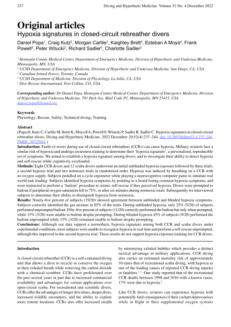
Authors:
Daniel Popa, Craig Kutz, Morgan Carlile, Kaighley Brett,
Esteban A Moya, Frank Powell, Peter Witucki, Richard
Sadler, Charlotte Sadler
Faults or errors during use of closed-circuit rebreathers
(CCRs) can cause hypoxia. Military aviators face a similar
risk of hypoxia and undergo awareness training to
determine their ‘hypoxia signature’, a personalised,
reproducible set of symptoms. The authors aimed to
establish a hypoxia signature among divers, and to
investigate their ability to detect hypoxia and self-rescue
while cognitively overloaded.

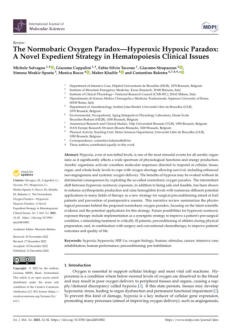
Authors:
Michele Salvagno, Giacomo Coppalini, Fabio Silvio
Taccone, Giacomo Strapazzon, Simona Mrakic-Sposta,
Monica Rocco, Maher Khalife, and Costantino Balestra
Hypoxia, even at non-lethal levels, is one of the most
stressful events for all aerobic organisms as it significantly
affects a wide spectrum of physiological functions and
energy production. Aerobic organisms activate countless
molecular responses directed to respond at cellular, tissue,
organ, and whole-body levels to cope with oxygen
shortage allowing survival, including enhanced neo-
angiogenesis and systemic oxygen delivery.

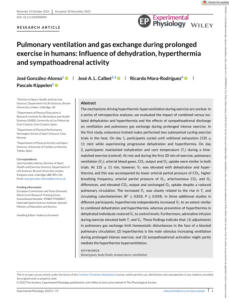
Authors:
José González-Alonso, José A. L. Calbet, Ricardo Mora-
Rodríguez, Pascale Kippelen
The authors evaluated the impact of combined versus
isolated dehydration and hyperthermia and the effects of
sympathoadrenal discharge on ventilation and pulmonary
gas exchange during prolonged intense exercise.

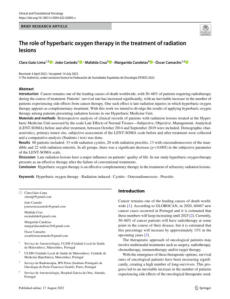
Authors:
Clara GaioLima, João Castedo, Mafalda Cruz, Margarida
Candeias, Óscar Camacho
Cancer remains one of the leading causes of death
worldwide, with patients requiring radiotherapy. Patients’
survival rate has increased significantly, with an inevitable
increase in the number of patients experiencing side
effects from cancer therapy. One such effect is late
radiation injuries in which hyperbaric oxygen therapy
appears as complementary treatment. With this work the
authors intend to divulge the results of applying
hyperbaric oxygen therapy among patients presenting
radiation lesions in our Hyperbaric Medicine Unit.

Authors: Nadiawati Abdul Razak, Victor Feizal Knight
Naval scuba-diving is part of military training and follows
the standard military diving manuals and protocols.
This review discusses the pathophysiology and
presentation of barotrauma, its associated hazards, and
the medical management of the divers, including the roles
of compression chambers for treatment and post-mortem
purposes.

Authors: Karen R. Kelly, Laura J. Arrington, Jake R.
Bernards, and Andrew E. Jensen
Cold water exposure poses a unique physiological
challenge to the human body. Normally, water
submersion increases activation of parasympathetic tone
to induce bradycardia in order to compensate for
hemodynamic shifts and reduce oxygen consumption by
peripheral tissues. However, elevated stress, such as that
which may occur due to prolonged cold exposure, may
shift the sympatho-vagal balance towards sympathetic
activation, which may potentially negate the dive reflex
and impact thermoregulation.

Authors: Pierre Lafère, Peter Germonpré, and Costantino
Balestra
Experience from treating diving accidents indicates that a
large proportion of divers suffering from pulmonary
barotrauma (PBT) or arterial gas embolism (AGE) were
engaged in training dives, specifically emergency free
ascent (EFA). The authors attempted to verify this
relationship and calculate, if possible, the risk associated
with normal recreational dives, training dives, and EFA
training dives.

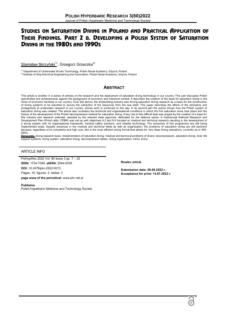
Authors: Stanisław Skrzynski, Grzegorz Grzeczka
This article is part of a series of articles on the research and
deployment of saturation diving technology in Poland.
This part discusses Polish specificities and achievements
against the background of economic and historical
contexts. It describes the creation of the foundation for
saturation diving in the times of economic hardship in the
country.

Authors: Seher Kurtul, Nejdiye Güngördü
This paper describes the case of an artisanal diving
fisherman who has worked underwater for many years
and is now affected by degenerative changes in the
acromioclavicular joint and osteonecrosis starting from the
subcortical area of the humeral head and extending to the
proximal shaft of the humerus.
The authors conclude that dysbaric osteonecrosis is one of
the most common long-term pathologies in professional
divers who do not apply safe decompression procedures
and use unsafe diving practices.

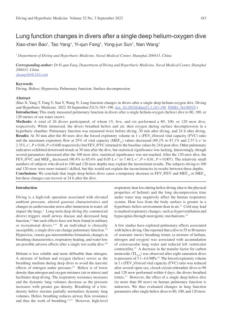
Authors: Xiao-chen Bao, Tao Yang, Yi-qun Fang, Yong-jun
Sun, Nan Wang
This study measured the lung function of divers after a
single heliox dive to 80, 100 or 120 metres of
seawater.During the dive, the divers breathed heliox and
air, and then switched to oxygen in a hyperbaric chamber
during surface decompression. Pulmonary function was
measured twice before the dive, 30 minutes after the dive,
and 24 hours after the dive. The authors concluded that a
single deep heliox dive causes a transient decrease in
forced vital capacity and maximal expiratory flow, which
can be recovered 24 hours after surfacing.

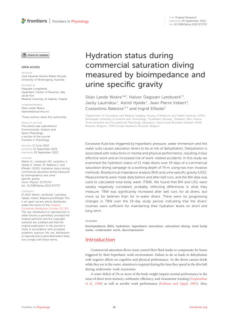
Authors: Stian Lande Wekre, Halvor Dagssøn Landsverk,
Jacky Lautridou, Astrid Hjelde, Jean Pierre Imbert,
Costantino Balestra, and Ingrid Efteda
Saturation divers are at risk of dehydration due to excessive
fluid loss caused by hyperbaric pressure, water immersion,
and hot water suits. Dehydration is associated with
reduced mental and physical performance, resulting in an
increased risk of work-related accidents. In this study, the
authors evaluated the hydration status of divers during a
saturation diving campaign at a working depth of 74 m
using bioelectrical impedance analysis (BIA) and urine
specific gravity (USG). The results showed that the divers
maintained their hydration levels.

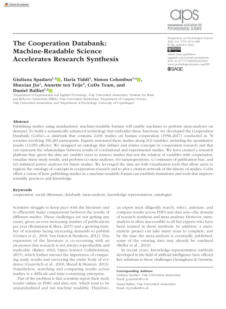
Authors: Giuliana Spadaro, Ilaria Tiddi, Simon Columbus,
Shuxian Jin, Annette ten Teije, CoDa Team, and
Daniel Balliet
The authors developed a Cooperation Databank, which is
a research platform that allows users to retrieve studies
that test the relationship between variables and
cooperation, visualize study results, and perform meta-
analyses, metaregressions, estimates of publication bias,
and statistical power analyses for future studies based on
the available data set. They used visualization tools to
leverage the dataset, enabling users to explore the
ontology of concepts in cooperative research and to plot a
citation network of the history of studies

Authors: David J. Doolette & Simon J. Mitchell
This paper explains the findings of a study on Inner Ear
Decompression Sickness (IEDCS) in the context of
saturation diving. It evaluates whether IEDCS can be
attributed to the arterialization of venous bubbles and
their prolonged survival under deep saturation diving
conditions and discusses the mechanisms by which
venous bubbles might reach the inner ear, the conditions
that make the inner ear more vulnerable to injury, and the
implications of these findings for understanding IEDCS in
saturation diving.

Author: Joseph C. Maroon
This document presents a case report on the effects of
Hyperbaric Oxygen (HBO2) therapy on various health
parameters, including neurocognition, cardiopulmonary
function, neuroimaging, and biomarkers such as telomere
length and proteomics. The author shares the results of a
self-experiment involving 60 daily HBO2 therapy sessions
over three months, highlighting improvements in
cognitive function, cerebral perfusion, physical
performance, and biomarker levels. He suggests that
further studies with larger sample sizes and randomized
clinical trials are necessary to validate these findings.

Authors: Yuwen Chen, Liang Wang, Wenjun You, Fei
Huang, Yingzi Jiang, Li Sun, Siye Wang, Su Liu
This study investigated the effectiveness and mechanisms
of hyperbaric oxygen (HBO) treatment in improving
dysfunction following traumatic brain injury (TBI). Its
authors evaluated the clinical curative effects of HBO
treatment by comparing various clinical and biochemical
parameters between a control group and an HBO-treated
group. They conclude that HBO treatment improved
consciousness, cognitive function, and overall prognosis in
TBI patients through several mechanisms, including
reducing hematoma volumes, enhancing EEG rhythms,
and modulating the expression of specific biomarkers.

Authors:
Costantino Balestra, Awadhesh K. Arya, Clément Leveque,
Fabio Virgili, Peter Germonpré, Kate Lambrechts, Pierre
Lafère, and Stephen R. Thom
This study investigated the metabolic response of healthy
subjects to different levels of oxygen exposure, both
normobaric and hyperbaric to assess the effects of these
exposures on various cellular markers and microparticles,
with a focus on understanding the differential and
sometimes opposite responses observed. It suggests that
further research is needed to explore the potential
applications of these findings.

Authors: Rienk Rienks, Mattijn Buwalda, Jeroen Bucx, Emile
Dubois, Thijs Wingelaar, Rob van Hulst
This document discusses the importance of establishing
cardiovascular risk limits for divers, similar to those in
aviation, to prevent fatal diving accidents. It highlights the
lack of formal cardiovascular risk limits in diving and
suggests using a modified risk formula to calculate the risk
of harm, emphasizing the need for a cardiovascular risk
management system, particularly for older divers, to
reduce fatalities due to cardiovascular disease.


28 - The role of routine pulmonary imaging before hyperbaric
oxygen treatment
- Published by Diving and Hyperbaric Medicine
Authors: Connor TA Brenna, Shawn Khan, George
Djaiani, Jay C Buckey Jr., Rita Katznelson
Respiratory injury during hyperbaric oxygen treatment is
rare but can occur due to pressure changes, leading to
complications like pneumothoraces. Screening with chest
X-ray and Computed tomography scans has low
sensitivity and high false positive rates. Most pulmonary
abnormalities found in imaging are insignificant for
healthy individuals. Regular screening for low-risk patients
without symptoms is of limited value. This review presents
cases of pulmonary barotrauma and provides a checklist
for targeted imaging before treatment.


Click here

Click on the octopus
to return to the top
of the page




30 - Influence of atmospheric pressure changes on dentin bond
strength of conventional, bulk-fill and single-shade resin
composites
- Published by Diving and Hyperbaric Medicine
Authors: Secil Ozkan Ata, Canan Akay, Emre Mumcu,
Nazim Ata
This study examined the dentin bond strength of
composite resins under varying environmental pressures.
Ninety human molars were prepared with conventional,
single-shade, and bulk-fill composites, then stored in
artificial saliva for 30 days. Specimens were subjected daily
to either hyperbaric (2.8 atm abs), hypobaric (0.34 atm
abs), or atmospheric (control) pressure. Results indicated
bulk-fill composites consistently exhibited the highest
bond strength, irrespective of pressure. No significant
bond strength differences were found between
hypobaric and control groups for any resin type.
31 - Lung function changes in divers after a single deep helium-
oxygen dive
- Published by Diving and Hyperbaric Medicine
Authors: Xiao-chen Bao, Tao Yang, Yi-qun Fang, Yong-jun
Sun, Nan Wang
This study assessed pulmonary function in 26 divers after
single heliox dives to 80, 100, or 120 msw. At 30 min post-
dive, the 80 msw group showed significant declines in
forced expiratory volume/forced vital capacity and
maximum expiratory flow , with forced expiratory
volume/forced vital capacity normalizing by 24 h. No
significant changes were observed after the 100 msw dive
despite downward trends, likely due to small sample size
(n=5). In contrast, the 120 msw group (n=6) exhibited
significant reductions in forced expiratory volume/forced
vital capacity and maximum expiratory flow.
32 - Recurrent dysbarism presenting with amnesia and
hypoaesthesia in a professional breath-hold diver
- Published by Diving and Hyperbaric Medicine
Authors: Emily Diacono, Kurt Magri
Dysbarism is a medical condition arising from change in
ambient pressure which outpace the rate at which the
body adapts to it. We report a case of recurrent dysbarism
consistent with possible decompression illness presenting
with amnesia, hypoaesthesia and other neurological
manifestations in a professional breath-hold diver treated
successfully with hyperbaric oxygen and fluid
resuscitation.

33 - Recompression of a diver with decompression illness found to
be COVID-19 positive
- Published by Diving and Hyperbaric Medicine
Authors: Louise Mallam, Doug Watts
This document from September 2022 provides guidelines
on how, as COVID-19 restrictions ease, hyperbaric centers
will treat more DCI in COVID-positive divers. Previously,
European guidelines recommended avoiding hyperbaric
oxygen therapy (HBOT) in COVID-19 positive patients
unless life-threatening. However, with changing COVID-
19 trajectories and increased asymptomatic cases,
treatment of less severe DCI in COVID-positive patients
warrants reconsideration. On this basis, the authors'
healthcare center treated a diver with neurological DCI
symptoms who was asymptomatic for COVID-19 but
tested positive on arrival.

34 - Effect of hyperbaric oxygen treatment on skin elasticity in
irradiated Patients
- Published by Diving and Hyperbaric Medicine
Authors: Karan Pandey, David N Teguh, Robert A van
Huls
This study evaluated hyperbaric oxygen treatment (HBOT)
for late radiation-induced tissue fibrosis (LRITF) in 13 breast
cancer survivors, using skin retraction time as a measure of
elasticity. Patients (aged 39–70) had undergone
lumpectomy and radiotherapy an average of 70 months
prior; seven also received chemotherapy. After a mean of
43 HBOT sessions (80 min at 243 kPa), irradiated skin
retraction time significantly improved from 417 ms (SD
158) to 171 ms (SD 24) (P < 0.001), approaching the
baseline non-irradiated skin value of 143 ms (SD 20),
which remained unchanged. Results suggest HBOT
markedly improves skin elasticity in irradiated tissue.
35 - Comment regarding: Han K-H, Hyun G-S, Jee Y-S, Park J-M. Effect
of water amount intake before scuba diving on the risk of
decompression sickness.
- Published by Diving and Hyperbaric Medicine
Authors: Neal W Pollock, S Lesley Blogg, Jan Risberg
This document critiques a flawed human study
investigating pre-hydration’s effect on decompression
stress and circulating bubble formation. Key issues include:
No objective hydration assessment, relying instead on
unreliable post-dive dehydration symptoms;
Methodological flaws such as fixed treatment order and
insufficient post-dive bubble score measurements;
Invalid statistical analysis of ordinal bubble data and
implausible baseline scores .
These shortcomings invalidate the study’s conclusions,
particularly regarding pre-hydration’s role in minimizing
decompression stress.
36 - Validation of very mild COVID-19 illness criteria to guide
successful return to occupational diving
- Published by Diving and Hyperbaric Medicine
Author: David Smart
COVID-19 significantly disrupted global diving, but by
2022 a pragmatic framework emerged for returning to
work after infection. SPUMS issued guidance in March
2022, later updating to a “very mild” illness category (June
2022) and permitting clearance after two weeks based on
a telephone assessment, with imaging not routinely
required if spirometry remained stable. In a QA review of
60 occupational divers (mean age 33; mostly vaccinated),
57 met the very mild criteria, showed stable spirometry
and SpO2, and returned to diving at one month with no
issues through three months. A small subset had delayed
return due to residual symptoms, but all stabilized without
imaging.

37 - Takotsubo cardiomyopathy findings on cardiac magnetic
resonance imaging following immersion pulmonary oedema
- Published by Diving and Hyperbaric Medicine
Author: Rosanna J Stokes , Ross Sayers, Benjamin J
Sieniewicz, Wan Cheol Kim
Immersion pulmonary oedema (IPO), a potentially fatal
condition affecting swimmers, snorkelers, and divers, is
frequently misdiagnosed as drowning. This case report
describes a diver rescued with IPO who was later
diagnosed with takotsubo cardiomyopathy via cardiac
magnetic resonance imaging (CMR). The report details
CMR findings, follow-up investigations, and first-hand
accounts from both the diver and instructor during the
incident.
38 - Pretreatment hearing grades and hearing recovery outcomes
after primary hyperbaric oxygen treatment in patients with
idiopathic sudden sensorineural hearing loss
- Published by Diving and Hyperbaric Medicine
Author: Andrijana Vceva, Željko Zubcic, Hrvoje Mihalj,
Josip Maleš, Tihana Mendeš, Anamarija Šestak
This study evaluated hyperbaric oxygen treatment (HBOT)
as a primary therapy for idiopathic sudden sensorineural
hearing loss (ISSNHL). Fifty-nine patients received only
HBOT (90 minutes at 203 kPa daily for 20 days) and
underwent pure-tone audiometry before and after
treatment, with outcomes categorized by modified
Siegel’s criteria. Post-treatment thresholds improved
significantly across all frequencies (P<0.001), with a
median recovery of 22.5 dB (IQR 12.5–33.7). The greatest
median gain occurred at 1,000 Hz (about 32 dB), though
differences among frequencies were not statistically
significant (P=0.10). Overall, primary HBOT yielded
meaningful hearing recovery in this ISSNHL cohort.

39 - Heart and Breathing Rate Variations as Biomarkers for Anxiety
Detection
- Published by Diving and Hyperbaric Medicine
Author: Florian Ritser, Mohamed Elgendi, Valeria Galli,
and Carlo Menon
This study leverages portable wearable devices to detect
anxiety through real-time analysis of ECG and respiration
(RSP) signals, focusing on heart-rate variability (HRV) and
breathing-rate variability (BRV). Statistically significant
biomarkers distinguishing anxiety from non-anxiety states
include MHR, SD, and SDNN for ECG; and MBR, SD,
RMSSD, and SDNN for RSP. Notably, it introduces the first
documented transitional phase in HRV/BRV response to
anxiety, advancing stress–biosignal research. By enabling
the systematic processing of emotional-physiological data,
these findings are paving the way for personalized,
wearable-driven mental health interventions.