










Scientific papers 2018 - Part B









Authors: Joe KS Leung, Rex PK Lam
Hyperbaric oxygen therapy is widely accepted as a life-
saving treatment for decompression illness.
Yet, its use in acute carbon monoxide poisoning has
remained controversial because of inconsistent findings in
clinical trials. Hyperbaric oxygen therapy has an adjunctive
role in managing gas gangrene, necrotising soft-tissue
infection, and crush injury, as supported by the case
series. Several cases have been reported in the literature
detailing the use of hyperbaric oxygen therapy in patients
with severe anemia in whom blood transfusion is not
possible.

Authors:
Fatima Z. Kiboub, Costantino Balestra, Øyvind
Loennechen, Ingrid Eftedal.
Saturation divers are exposed to elevated partial pressure
of oxygen (ppO2) in their hyperbaric work environment.
Experimental studies indicate that oxygen transport is
altered, and the authors previously reported a drop in
hematocrit and extensive downregulation of genes
involved in blood oxygen transport capacity after
decompression from professional saturation diving. This
study investigates the initial period of hematological
adjustment back to normobaric air after professional
saturation diving.

Authors:
Gerardo Bosco, Alex Rizzato, Luca Martani, Simone
Schiavo, Ennio Talamonti, Giacomo Garetto, Matteo
Paganini, Enrico M. Camporesi, and Richard E. Moon.
This study assessed arterial blood gases in breath-hold
divers at a depth of 40 meters. Eight divers participated in
trials at the "Y-40 THE DEEP JOY" pool. An arterial cannula
was placed in the non-dominant arm before they dived.
Blood samples were taken before the dive, at 40 meters,
and after surfacing for analysis.

Authors:
Jean-Eric Blatteau, Sandrine Gaillard, Sébastien De
Maistre, Simone Richard, Pierre Louges, Emmanuel
Gempp, Arnaud Druelles, Henri Lehot, Jean Morin, Olivier
Castagna, Jacques H. Abraini, Jean-Jacques Risso,
Circulating mitochondrial DNA (mtDNA) is receiving
increasing attention as a danger-associated molecular
pattern in conditions such as autoimmunity or trauma. In
the context of decompression sickness (DCS), the course
of which is sometimes erratic, the authors hypothesize
that mtDNA plays a not insignificant role, particularly in
neurological type accidents. This study is based on the
comparison of circulating mtDNA levels in humans
presenting with various types of diving accidents and
punctured upon their admission at the hyperbaric facility.

Authors:
Mikael Gennser, S. L. Blogg, Ola Eiken, and Igor B.
Mekjavic
Human extravehicular activity (EVA) is essential to space
exploration and involves the risk of decompression
sickness (DCS). On Earth, the effect of microgravity on
physiological systems is simulated in an experimental
model where subjects are confined to a 6 degres head-
down bed rest (HDBR). This model investigated various
resting and exercise regimens for forming venous gas
emboli (VGE), an indicator of decompression stress, post-
hyperbaric exposure.

Authors: BR Wienke and TR O’Leary
The question of bubble regeneration and broadening in
the diver under compression-decompression is virtually
unanswered and untractable. Effects in vivo have not
been measured nor quantified to date and remain
unlikely soon. The authors take up this question and
suggest hypothetical impacts on diver staging using
available data and recent experimental results in the
laboratory.

Author: Ran arieli
Pulmonary surfactants are surface-active lipoproteins
deposited in clearly defined areas on the luminal aspect of
blood vessels. Bubbles nucleate and grow at these spots
after decompression from high pressure. Proteins with
hydrophobic regions circulating in the blood will adhere
to the gas phase-plasma interface. Deformation of their
secondary and tertiary configuration will present them as
foreign molecules or autoantigens. Components of the
intact protein also present in a deformed protein may be
recognized as foreign too.

Authors: Barbara E. Shykoff & John P. Florian
This study examines differential effects of immersion,
elevated oxygen partial pressure, and exercise on
pulmonary function after series of five daily six-hour dives
at 130 kPa (1.3 ATA), with 18 hours between dives.

Author: Pierre Boudinet
The author of this study presents a new way of taking into
account the dynamics of the gas phase during
decompression. This study is based on the analysis of
certain hypotheses underlying classical models using
Maximal Values (M-Values). The author derives a reduced
set of ordinary differential equations, depending only on
three empirical parameters. After having explained how
the theory is built, the author proposes some values of the
parameters that match the known surface M-Values

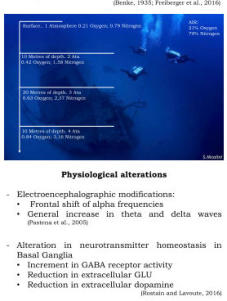
Authors: Carelli M, Laurino M, Zaccaro A, Lai E, Passera M,
Gemignani A
Nitrogen Narcosis is a reversible syndrome affecting divers
performing deep dives breathing air.
Symptoms go from euphoria, slow reasoning and reaction
time, impaired motor coordination, to complete loss of
consciousness. Symptoms severity increases as the
nitrogen partial pressure increases, with depth.
This document is a 1 page PDF designed to be displayed
on a large screen

Authors:
Pierre Lafère, Peter Germonpré, François Guerrero,
Alessandro Marroni, Costantino Balestra
Because a significant association between training to
perform emergency free ascent (EFA) and the occurrence
of pulmonary barotrauma (PBT) was demonstrated in
2006, the Belgian Underwater Federation (BUF) decided
to discontinue this procedure. An evaluation was needed
10 yr after the implementation of this change.

Authors:
Çigdem Özer Gökaslan, Ugur Toprak, Serkan Gokaslan
High-pressure water injuries are usually seen in the
extremities and less often in the thorax and abdominal
areas. A literature review reveals a few case reports
describing intra-abdominal injuries due to penetrating
trauma. This paper presents the radiological findings of a
rare case of abdominal wall injury without penetration of
the peritoneum caused by a high-pressure water jet due
to the Coanda effect. The Coanda effect is the tendency of
a fluid jet to stay attached to a curve.

Authors:
Q. Buzzacott, D. Schiller, J. Crain, and P. Denoble
This study, published in 2018, investigated morbidity and
mortality suffered by divers in the US and Canada.

Author: Ran Arieli
Taravana is a neurological form of decompression illness
(DCI) prevalent in repeated breath-hold diving. A
nanobubble on an active hydrophobic spots (AHS) in a
distal artery of the brain may receive an influx of nitrogen
after each dive until it occludes the arterial blood flow. The
vestibular organ has very low perfusion compared with
the brain and the cochlea of the inner ear. The author
suggests that a nanobbubble on an AHS in the distal
artery of the vestibular organ will receive a high influx of
nitrogen from the surrounding tissue after decompression
due to the low nitrogen clearance, thus expanding to
cause vestibular DCI.

Author: Alice Bliznyuk, Hava Golan, & Yoram Grossman
Divers that are exposed to high pressure (HP) above 1.1
MPa suffer from High Pressure Neurological Syndrome
(HPNS), which is implicated with central nervous system
(CNS) malfunction. Marine mammals performing
extended and deep breath-hold dives are
exposed to almost 20 MPa without apparent HPNS
symptoms. N-methyl-D-aspartate receptor (NMDAR) has
repeatedly been implicated as one of the major factors in
CNS hyperexcitability as part of HPNS. Electrophysiological
studies in rat brain slices at He HP showed a significant
increase in the synaptic NMDAR response, followed by
postsynaptic excitability changes.

Authors: Ahmed Mohammed Aldakhil, Abdullah Faraj
Alshammari, Sattam Saad Alshammar
This article aims to assess dental and temporomandibular
joint (TMJ) problems in a sample of SCUBA divers in
Jeddah, Saudi Arabia. This study assesses dental
complaints and TMJ problems associated with SCUBA
diving, as well as the correlation of previous problems
with diving-related characteristics such as duration of
practice, number of dives, and frequency of diving per
month.

Authors: Pieter Jan AM van Ooij
A relationship between body composition and DCS has
been observed in dogs since the nineteenth century. In
the author's experience, it was not always the overweight
diver who ended up in the treatment chamber with DCS.
Gender, age, physical fitness, and the presence of a patent
foramen ovale (PFO) have all been studied as possible
factors in the development of vascular gas bubbles and,
therefore, DCS. However, none of these factors, alone or
in combination, explains why there are intra-individual or
intra-cohort differences in bubble grade.

Authors:
Julien Hugon, Asya Metelkina, Axel Barbaud, Ron Nishi,
Fethi Bouak, Jean-Eric Blatteau, Emmanuel Gempp
This retrospective study reviewed data from 1,016
manned air dives, including dive parameters (depth,
bottom time, and total ascent time), precordial and
subclavian venous gas embolism grades (Kisman-Masurel)
and post-dive decompression sickness status. The study
analyzed the correlation between subclavian and
precordial grades, as well as the association between the
probability of decompression sickness (DCS) and dive
parameters, including high bubble levels.

Author: B.R. Wienke
The risks of decompression sickness associated with
arbitrary ascents to depths above the diver and the risks of
surfacing are not yet encoded in underwater equipment
and diveware, and this is the focus here. Assessing risks is
necessary for diver safety and sensible dive planning. The
authors define and discuss exponential risk functions for
dissolved gas and bubble models, specifically the end-of-
dive (EOD) and on-the-fly (OTF) functions, using profile
data correlated with a database

Authors:
Kate Lambrechts, Sébastien de Maistre, Jacques H. Abraini,
Jean-Eric Blatteau, Jean-Jacques Risso, and Nicolas Vallée
This study investigates the effectiveness of antiplatelet
drugs, specifically those targeting the GPIIb/IIIa integrin, in
preventing decompression sickness (DCS) using a rat
model. It aims to confirm that these drugs, particularly
tirofiban (TIR), can improve clinical outcomes and reduce
the incidence of DCS by limiting platelet activation and
subsequent inflammatory responses. This study also raises
questions about the potential drawbacks of inhibiting
other integrins, such as alpha-V-beta-3 and alpha-Mbeta-2,
which are involved in immune system communication..

Authors: Asadullah Naqvi, and Derrick Clarence
This study highlights the complexities and diagnostic
challenges associated with decompression illness (DCI) in
scuba divers. It emphasizes the need to consider multiple
possibilities and co-existing pathologies when diagnosing
and treating patients and that DCI can present with
atypical symptoms. Also, it describes the case of a 42-year-
old male who experienced symptoms post-scuba diving,
detailing the diagnostic and recovery processes and the
role of a patent foramen ovale in exacerbating DCI.

Authors: Ran Arieli
This study investigates the relationship between violations
of accepted diving practices and diver fatalities to
highlight the role of medical events and safety violations in
diving-related deaths, emphasizing the importance of
physical fitness, regular medical checkups, and adherence
to safe diving practices to reduce fatalities. It also provides
statistical data and conclusions to support these
recommendations.


11 - Effects of sleep and fatigue on teams in a submarine
environment
- Published by the UNdersea & Hyperbaric Medical Society (Author-released)
Authors: Sarah Chabal, Rebecca Welles, Lt.Cmdr. F. Jay
Haran, Rachel Markwald
Successful submarine operations depend on tactical
teams working under fatigue. Sleep loss and circadian
disruption cause this fatigue, but little is known about its
effect on team performance in submarines. This review
discusses factors in team fatigue research, the impact of
sleep on submariners, the effects of individual fatigue, and
its influence on team performance. Future research
should focus on the relationship between sleep and team
dynamics.

12 - The Gradient Perfusion Model Part 1: Why and at what sites
decompression sickness can occur
- Published by the Undersea & Hyperbaric Medical Society (Author-released).
Authors: Michael B Strauss, Lientra Q Lu, Stuart S. Miller
This first part of a series discusses the reasons and
locations of DCS. Over 50 years and 500 cases, it became
clear that most “unexplained DCS” cases have
physiological reasons. Variability in tissue blood flow and
pressure gradients contribute to bubble formation. The
Gradient-Perfusion Model explains these cases, suggesting
that the term “unexplained DCS” should be replaced with
“disordering events.
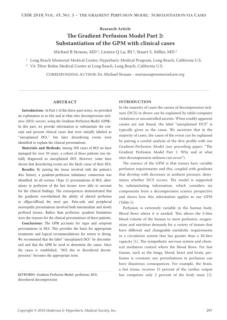
13 - The Gradient Perfusion Model Part 2: Substantiation of the GPM
with clinical cases
- Published by the Undersea & Hyperbaric Medical Society (Author-released).
Authors: Michael B Strauss, Lientra Q Lu, Stuart S. Miller
Part 1 of this series explained why and where
decompression sickness (DCS) happens using the
Gradient-Perfusion Model (GPM). This 2nd part provides
evidence and clinical cases previously labeled as
“unexplained DCS,” which later showed disordering
events as causes. 500 DCS cases over 50 years were
reviewed, finding that some previously unexplained cases
had identifiable causes. The results show that gradient-
perfusion connections explain the clinical findings,
suggesting that “unexplained DCS” should be replaced
with “DCS due to disordered decompression”.
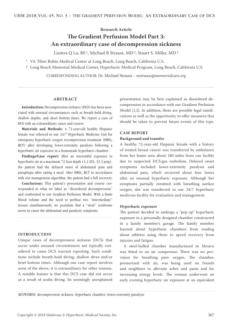
14 - The Gradient Perfusion Model Part 3: An extraordinary case of
decompression sickness
- Published by the Undersea & Hyperbaric Medical Society (Author-released).
Author: Lientra Q Lu, Michael B Strauss, Stuart S. Miller
Decompression sickness (DCS) can occur in unusual
situations like breath-hold diving. A 72-year-old healthy
Hispanic woman experienced lower-leg paralysis after
using a homemade hyperbaric chamber. She was treated
with hyperbaric oxygen therapy after reporting
abdominal pain and paralysis. Following this treatment,
she fully recovered. This case illustrates "disordered
decompression," suggesting that a "steal" syndrome may
have caused her symptoms by affecting blood flow to
tissues.
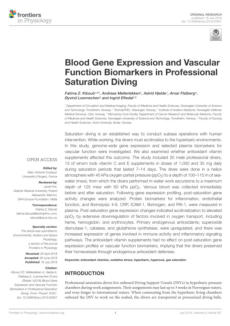
15 - Blood Gene Expression and Vascular Function Biomarkers in
Professional Saturation Diving
- Published by Frontiers.
Author: Fatima Z. Kiboub, Andreas Møllerløkken, Astrid
Hjelde, Arnar Flatberg, Øyvind Loennechen,
and Ingrid Eftedal
This study looked at gene expression and certain blood
markers related to blood vessel health. It involved 20 male
divers, with 13 taking vitamin C and E supplements during
dives that lasted 7 to 14 days. Blood was taken before and
after saturation, showing changes in gene activity related
to oxygen transport and immune response. Antioxidant
supplements did not impact these changes, indicating the
divers maintained balance through their natural defenses.
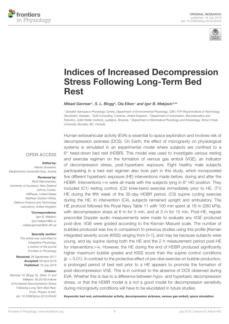
16 - Indices of Increased Decompression Stress Following Long-
Term Bed Rest
- Published by Frontiers
Author: Mikael Gennser, S. L. Blogg, Ola Eiken, and Igor
B. Mekjavic
Human extravehicular activity (EVA) is important for space
exploration and carries the risk of decompression sickness
(DCS). Researchers used a head-down bed rest (HDBR)
model to study how different resting and exercise
regimens affect venous gas emboli (VGE) formation after
hyperbaric exposure. Eight healthy men took part in five
hyperbaric exposure interventions during HDBR. Results
showed low VGE levels, but higher levels were found
when HE occurred at the end of HDBR. Future studies
need to explore reasons for these findings.
17 - Provocative decompression causes diffuse vascular injury in
mice mediated by microparticles containing interleukin-1 Beta
- Published by the American Physiological society (Author-released)
Author: Stephen R. Thom, Veena M. Bhopale, Kevin Yu,
and Ming Yang
Provocative decompression leads to wide-ranging
vascular injury in mice due to micro-particles carrying
interleukin-1Beta. Research shows that during exposure to
high pressure, these particles increase significantly, along
with levels of inflammatory agents. Vascular damage
appears two hours post-decompression and lasts for at
least 13 hours. Blocking IL-1Beta reduces this damage,
indicating its key role in the process.

Authors: Shilpi Pandey, Ninad Mehendale, and Debjani
Paul
Advances in cell biology and diagnostic technology have
necessitated reliable, accurate, and fast techniques for
single-cell separation. Conventional methods like FACS
and MACS are efficient but expensive and bulky. Micro
fluidic technology matches these performance while
being portable and suitable for field use. This chapter
discusses recent advancements in micro fluidics for rare or
single-cell separation.
Author: V A Simon, V A Gerasimov, D K Kostrin, L M
Selivanov and A A Uhov
This document discusses challenges in designing a
single-lead electroencephalographic (EEG) monitor for
tracking the depth of narcosis and reveals the
relationship between the level of narcosis and statistical
characteristics of the bioelectric signal. It also describes
the electrical circuit of the developed EEG monitor, as
well as the process for obtaining recordings of the EEG
and ECG signals.
27 - One-channel EEG monitor for tracking the depth of narcosis
- Published by the Journal of physics - IOP science

32 - Reactive Oxygen Species Formation in the Brain at Different
Oxygen Levels: The Role of Hypoxia Inducible Factors
- Published by Frontiers
Authors: Ruoli Chen, U Hin Lai, Lingling Zhu, Ayesha
Singh, Muhammad Ahmed, and Nicholas R.
Forsyth
Hypoxia inducible factor (HIF) is a key oxygen sensor in
cells, regulating cell responses to varying oxygen levels.
During hypoxia, HIF activation ensures adenosine
triphosphate (ATP) production and cell integrity, but is
associated with reactive oxygen species (ROS) formation.
Changes in oxygen concentrations affect ROS formation,
leading to oxidative stress and HIF stabilization. HIF
accumulation in the brain via HIF prolyl hydroxylase
(PHD) inhibition is proposed as an effective therapy for
ischaemia stroke due to its antioxidation, anti-
inflammatory, and pro-survival signaling properties. HIF
PHD inhibition during reperfusion can reduce ROS
formation and activate cellular survival pathways.

36 - Swimming induced pulmonary oedema in athletes –
a systematic review and best evidence synthesis
- Published by BMC Sport science
Authors: Erik Hohmann, Vaida Glatt, and Kevin
Tetsworth
This study aimed to summarize the evidence on
swimming induced pulmonary oedema (SIPE) in
endurance athletes. A total of 29 studies (174 athletes)
were included, with cough, dyspnoea, froth, and
haemoptysis as the most common symptoms. The study
found a moderate association between water
temperature and SIPE prevalence, with cough, dyspnoea,
froth, and haemoptysis strongly suggesting SIPE during or
immediately following swimming. There is limited
evidence suggesting pre-existing risk factors leading to
SIPE with strenuous physical activity during swimming.

31 - Critical Flicker Fusion Frequency: A Marker of Cerebral Arousal
During Modified Gravitational Conditions Related to Parabolic
Flights
- Published by Frontiers
Authors:
Costantino Balestra, Marie-Laure Machado,
Sigrid Theunissen, Ambre Balestra, Danilo Cialoni,
Christian Clot, Stépane Besnard, Laura Kammacher, Julie
Delzenne, Peter Germonpré, and Pierre Lafère
This study evaluates the effectiveness of Critical Flicker
Fusion Frequency (CFFF) as a rapid, reliable, and simple
tool to assess brain performance and arousal under
modified gravity conditions. Conducted during parabolic
flights with 11 healthy male volunteers, the research
measured CFFF at various stages including baseline, after
scopolamine administration, during hypergravity,
microgravity, and upon return. Results demonstrated that
CFFF increased significantly in microgravity and
decreased in hypergravity, indicating altered perceptual
abilities linked to cerebral arousal.


Click on the octopus
to return to the top
of the page
10 - Ictal Mammalian Dive Response: A Likely Cause of Sudden
Unexpected Death in Epilepsy
- Published by Frontiers
Authors: Jose L. Vega
Sudden Unexpected Death in Epilepsy (SUDEP) annually
claims the lives of thousands of epilepsy patients, yet its
underlying physiopathology is poorly understood. This
article highlights parallels between SUDEP and the
mammalian dive response (MDR), an evolutionarily
conserved reflex that conserves oxygen during prolonged
apnea through drastic cardiovascular changes, including
severe bradycardia and blood sequestration in the
cardiopulmonary vasculature. The authors propose that
prolonged apneic generalized tonic-clonic seizures trigger
an exaggerated MDR, which may lead to SUDEP in severe
cases.

Authors: John Lippmann, Chris Lawrence, Andrew Fock,
Scott Jamieson
This 2012 case review of diving-related deaths in Australia
analyzed 26 fatalities (four fewer than the previous year),
with only two females among the victims. Fourteen deaths
occurred during snorkelling/breath-hold diving, 11 while
scuba diving, and one in commercial pearl diving. Key
contributing factors included pre-existing medical
conditions, poor planning, equipment failures, lack of
proper buddy oversight, and apnoeic hypoxia. Cardiac
issues were suspected in at least three to seven snorkellers
and four scuba divers.

Authors: Elnaz Shafight , Reza Fekrazad, Amirreza Beglou
This study evaluated fracture resistance and microleakage
of MOD amalgam and composite restorations under
simulated diving (203 kPa) and flight (50.6 kPa) pressures.
Sixty premolars underwent one-month pressure cycles,
followed by Instron testing and methylene blue
microleakage assessment. Composites showed significantly
higher fracture resistance than amalgam. Control
exceeded dive group values, with no control-flight
difference. No microleakage differences occurred. Diving
pressures adversely affected fracture resistance of both
materials.

Authors: Elnaz Shafight , Reza Fekrazad, Amirreza Beglou
This study evaluated fracture resistance and microleakage
of MOD amalgam and composite restorations under
simulated diving (203 kPa) and flight (50.6 kPa) pressures.
Sixty premolars underwent one-month pressure cycles,
followed by Instron testing and methylene blue
microleakage assessment. Composites showed significantly
higher fracture resistance than amalgam. Control
exceeded dive group values, with no control-flight
difference. No microleakage differences occurred. Diving
pressures adversely affected fracture resistance of both
materials.

Authors: Stefan W Rozycki , Matthew J Brown, Macario
Camacho
This systematic review searched nine databases through
January 2018 (PRISMA guidelines) and included 21 studies
on divers with inner ear symptoms. It compared
presentations of inner ear barotrauma (IEBt) and
decompression sickness (DCS), then created the HOOYAH
Tool (Hard to clear, Onset, Otoscopic exam, Your dive
profile, Additional symptoms, Hearing) to help clinicians
differentiate them. IEBt is managed conservatively unless
surgery is needed, whereas DCS requires prompt
recompression. The tool supports accurate diagnosis and
treatment decisions.

Authors: Puraskar Pateria, Andre Chong
This paper describes the case of a 54-year-old man who
had recurrent anastomotic ulcers with bleeding and iron-
deficiency anaemia after hemicolectomy for carcinoma-in-
situ, requiring multiple resections. The ischaemic ulcer was
refractory to endoscopic and medical therapy. Hyperbaric
oxygen therapy (30 sessions over 6 weeks) achieved
healing on colonoscopy, with no further bleeding and
rising ferritin over 12 months.

Authors: Denise F Blake, Melissa Crowe, Daniel Lindsay,
Annie Brouff, Simon J Mitchell, Neal W Pollock
High concentration normobaric oxygen is essential for
treating divers with decompression illness. This study
assessed tissue oxygenation (PtcO2) with various demand-
valve masks in 16 divers. PtcO2 and nasopharyngeal FiO2
were highest using the intraoral mask (IOM) with nose clip
(NC), similar without NC, and lowest with the oronasal
mask, which was also rated hardest to breathe from and
hold. The pocket mask was most comfortable, while the
IOM was easiest to position. Due to NC discomfort, the
IOM without NC may be the best option overall.

Authors: Marion Hubbard, F Michael Davis, Kate Malcolm,
Simon J Mitchell
This study examined health and safety in recreational
diving using seven years of records (2008–2014) from a
large New Zealand charter operator. Among 97,144 dives
by 57,072 divers, there were 55 injury events (31 in
customers, 24 in staff). DCI requiring recompression
occurred in four cases (prevalence 0.41 per 10,000 dives),
with one cardiac fatality. Thirty-five minor non-diving
injuries (mainly lacerations and musculoskeletal) affected
30 people. DCI was rare in this supervised setting; minor
non-diving injuries predominated, and overall injury rates
were low compared with other adventure sports.

Author: John Lippmann
This Australian study (1960–2017) identified 187 shark
attacks on divers via databases and literature, resulting in
28 deaths (13 snorkelers, 8 scuba, 7 surface-supplied).
Victims were mostly young males (mean age 31) attacked
by great white sharks. Major risks included spearfishing
and diving near seals or fishing; attacks caused only 3% of
diving fatalities.

Authors: Hooi Geok See, Yan Ru Tan, Kwan Leong Au-
Yeung, Michael H Bennett
This prospective study of 39 HBOT patients found 12 (one
in three) at risk of malnutrition via screening; all assessed
cases had moderate-severe malnutrition, with highest risk
in non-healing wounds and osteoradionecrosis. Routine
malnutrition screening is recommended to enable timely
nutritional intervention and improve wound healing.

Authors: Hongjie Yi, Shichong Yu, Yanan Zhang, Runping
Li, Dazhi Zhang, Weigang Xu
Recent studies suggest BD-AcAc2 prevents CNS-OT and
ALI from hyperbaric oxygen. This mouse study tested oral
doses (2.5-10 g/kg) given before 600 kPa HBO exposure.
BD-AcAc2 dose-dependently prolonged seizure latency
and reduced brain malondialdehyde, bronchoalveolar
lavage fluid protein, and lung water (P<0.01). Thus, it
protects against CNS-OT and ALI, likely by alleviating
oxidative stress.

Authors: Denise F Blake, Melissa Crowe, Simon J Mitchell,
Peter Aitken, Neal W Pollock
Helicopter vibration may worsen diver conditions by
increasing venous gas emboli (VGE). This review of seven
studies found in vitro evidence linking vibration and gas
supersaturation to bubble formation. One 1980
prospective study showed no VGE difference with
vibration, but outdated methods warrant caution.
Remaining retrospective studies examined transport
factors like altitude and oxygen use. Conclusion: While
physical evidence suggests vibration promotes bubbles,
research on helicopter-specific effects is scarce; modern
VGE assessment tools will enable further study.

Author: Doug Fraedrich
While the US Navy systematically validates its dive
algorithms, commercial computers lack rigorous published
testing. This study evaluated four algorithms (Bühlmann
ZHL-16C, VPM-B, Suunto-RGBM, EMC-20H) against Navy
experimental dives with known DCS outcomes. Tests
assessed total decompression time, no-stop limits, and first
stop depth, comparing outputs to P_DCS data. None
passed with factory defaults, though ZHL-16C and
Suunto-RGBM succeeded after adjustments. Such
validation using available P_DCS data can improve diver
safety with commercial computers.

Authors: Ryo Morishima, Kei Nakashima, Shinya Suzuki,
Nobuo Yamami, Masahiro Aoshima
Immersion pulmonary oedema (IPE) is typically linked to
excessive exercise or cold stress and usually resolves within
1–2 days without treatment. However, a 58-year-old diver
with pre-existing moderate mitral valve regurgitation
experienced prolonged IPE symptoms for five days,
including dyspnoea, cough, and haemoptysis. Despite
initial oxygen therapy, symptoms worsened with elevated
C-reactive protein, though no infection was detected.
Three hyperbaric oxygen treatments were administered
under suspicion of decompression sickness, leading to
resolution.

Authors: Youichi Yanagawa, Kazuhiko Omori, Ikuto
Takeuchi, Kei Jitsuiki, Hiromichi Ohsaka, Kouhei
Ishikawa
This document discusses the risks faced by Japanese
commercial or occupational breath-hold harvest divers,
known as AMA divers, particularly the risk of
decompression sickness (DCS) from repetitive diving. A
case involving a 74-year-old AMA diver who developed
right hemiparesis during ascent from a 5-meter dive
underscores this risk. The report suggests that on-site
ultrasound is an effective tool for distinguishing between
DCS and endogenous cerebral ischemia.