











Scientific papers 2018 - Part A









Authors: B R Wienke & T R O’Learly
In this document, B Wienke & T O'Leary attempt a short
history of deep and shallow stops by taking into account
physical aspects, staging differences, diving tests, models
with data correlations, and data banks with user statistics.
Pros and cons of deep and shallow stops are presented,
and what they consider misfacts are righted.
Also, they discuss the various tests, training agency
standards, commercial diving operations, and dive
software linked to this topic.

Authors:
Alf O Brubakk, Randi Eidsmo Reinertsen, V. Flook, & S.
Koteng
t was previously reported that decompression speed and
O2 partial pressure are linearly related to human
decompressions from saturation hyperbaric exposures.
The constant of proportionality K (K 5 rate/partial pressure
of inspired O2) indicates the incidence of decompression
sickness. This study investigated the relationship between
decompression rate, partial pressure of inspired O2, and
the number of central gas bubbles after a 3-h dive to 500
kPa while breathing nitrox with an O2 content of 35 kPa.

Authors:
Serena Lucrezi, Salih Murat Egi, Massimo Pieri, Francois
Burman, Tamer Ozyigit, Danilo Cialon, Guy Thomas,
Alessandro Marroni, and Melville Saayman.
Scuba diving is a key part of marine tourism that needs
safety standards to lower risks and improve market access.
Awareness and good attitudes toward safety are vital. This
study looked at how divers and dive centers view safety to
improve safety and risk management in the industry.

Authors:
Isaac Peña-Villalobos, Ignacio Casanova-Maldonado,
Pablo Lois, & Catalina Prieto.
This paper does not speak of diving but of hyperbaric
oxygen therapy (HBOT) to solve diverse diseases,
infections, and tissue injuries. However, this study
highlights other therapeutic effects of oxygen than those
commonly explained to divers.
This study's authors analyze the effects of HBOT on
specific aspects of tissue growth, maintenance, and
regeneration to provide answers on how this treatment
could benefit from combination with regenerative
medicine strategies.

Authors:
Blair D. Johnson, Morgan C. O’Leary, Muhamed McBryde,
James R. Sackett, Zachary J. Schlader, & John J. Leddy.
The authors tested the hypothesis that concussed college
athletes have attenuated parasympathetic and
sympathetic responses to face cooling.
The experimentations described in this document were
not made with divers. However, the phenomenon
described will happen when the face of the diver is
exposed to cold water.

Authors:
Gerardo Bosco, Alex Rizzato, Silvia Quartesan , Enrico
Camporesi, Devanand Mangar, Matteo Paganini, Lorenzo
Cenci, Sandro Malacrida, Simona Mrakic-Sposta, Sara
Moretti, & Antonio Paoli.
Central Nervous System Oxygen Toxicity (CNS-OT) is one
of the most harmful effects of Enriched Air Nitrox (EAN)
diving. Protective factors of the Ketogenic Diet (KD) are
antioxidant activity, the prevention of mitochondrial
damage, and anti-inflammatory mechanisms. This study
investigated whether a short-term KD may reduce
oxidative stress and inflammation during a hyperoxic dive.

Authors:
Martin J. Barwood, Jo Corbett, Heather Massey, Terry
McMorris, Mike Tipton, and Christopher R. D. Wagstaff
Drowning is a leading cause of accidental death. In cold-
water, sudden skin cooling triggers the life-threatening
cold shock response (CSR). The CSR comprises
tachycardia, peripheral vasoconstriction, hypertension,
inspiratory gasp, and hyperventilation with the
hyperventilatory component inducing hypocapnia and
increasing risk of aspirating water to the lungs.

Authors:
Bin Peng, Shun-Hua Peng, Run-Ming Qu, Li-Hua Xu,
Zheng-Lin Jiang
Human beings are exposed to compressed air or a
nitrogen-oxygen mixture, they will produce signs and
symptoms of nitrogen narcosis such as amnesia or even
loss of memory, which may disappear once back to the
normobaric environment. This study was designed to
investigate the effect of nitrogen narcosis induced by
repetitive hyperbaric nitrogen-oxygen mixture exposure
on long-term cognitive function in newborn mice and the
underlying mechanisms.

Authors:
Gerardo Bosco, Alex Rizzato, Richard E. Moon, and Enrico
M. Camporesi
This paper illustrates the physiological changes induced by
immersion, swimming, breath-hold diving and exploring
while using special equipment in the water.

Authors:
Giuseppe Accurso, Andrea Cortegiani, Sabrina Caruso,
Oriana Danile, Domenico Garbo, Pasquale iozzo, Filippo
Vitale, Santi Maurizio Raineri, Cesare Gregoretti, &
Antonino Giarratano
The authors report two episodes of Taravana syndrome
occurred in the same young male spear fishing champion
affected by hyperho-mocysteinemia treated with
recompression treatment at the Hyperbaric Oxygen
Therapy (HBOT) Department of the University Hospital
Policlinico Paolo Giaccone, Palermo, Italy, in November
2010 and July 2016.

Authors:
Thiago Felipe dos Santos Barros, Renata Gregorio Paulos,
Fernanda do Carmo Iwase, Gustavo Bispo dos Santos,
Marcelo Rosa de Rezende, Rames Mattar Júnior
This study aims to evaluate histological changes in the
peripheral nerves of rats after sciatic nerve neurorrhaphy,
based on the duration of exposure to hyperbaric oxygen
chamber treatment.

Authors: F. Gregory Murphy, Ashleigh J. Swingler, Wayne
A. Gerth, Laurens E. Howle
Decompression sickness (DCS) in humans is associated
with reductions in ambient pressure that occur during
diving, aviation, or certain human spaceflight operations.
Probabilistic models of DCS allow predicting the
probability of DCS occurrence and the time of occurrence
during or after a given hyperbaric or hypobaric exposure,
based on how the gas contents or gas bubble volumes in
hypothetical tissue compartments vary during the
exposure. These models are calibrated using data
containing the pressure and inspired gas histories of real
exposures.

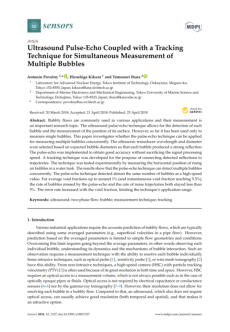
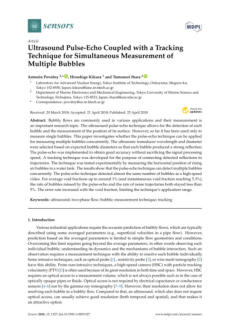
Authors: Antonin Povolny, Hiroshige Kikura, & Tomonori
Ihara
The ultrasonic pulse-echo technique makes it possible to
detect each bubble and measure the position of its
surface accurately. However, it has only been used to
measure individual bubbles so far. This paper investigates
whether the pulse-echo technique can be used to
measure multiple bubbles simultaneously.


Click on the octopus
to return to the top
of the page

Authors:
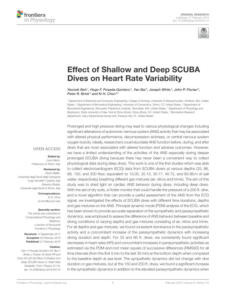
Yeonsik Noh, Hugo F. Posada-Quintero, Yan Bai, Joseph
White, John P. Florian, Peter R. Brink, and Ki H. Chon
This study investigates the effects of prolonged and high-
pressure SCUBA diving on the autonomic nervous system
(ANS) by collecting and analyzing electrocardiogram
(ECG) data from divers at different depths and using
different gas mixes to understand how diving conditions
affect cardiac ANS behaviour, with particular emphasis on
the dynamics of sympathetic and parasympathetic activity.
It details the methodology, including the use of a Holter
monitor and a novel algorithm for ANS assessment, and
presents results showing changes in parasympathetic and
sympathetic activities under different diving conditions.

Authors:
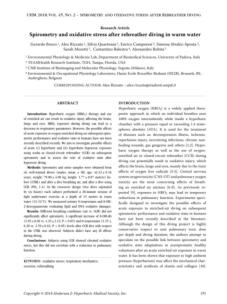
Gerardo Bosco, Alex Rizzato, Silvia Quartesan, Enrico
Camporesi, Simona Mrakic-Sposta, Sarah Moretti,
Costantino Balestra, Alessandro Rubini
This study investigates the effects of hyperbaric and
hyperoxic exposure using scuba or closed-circuit
rebreather (CCR) on divers to determine whether acute
exposure to oxygen-enriched environments during diving
affects respiratory performance and oxidative state, using
spirometry and biomarkers of oxidative damage as
measures. It concludes that oxidative stress increases with
CCR use but does not impact pulmonary function.

Authors: Ran Arieli
This paper provides a detailed scientific explanation of the
mechanisms and conditions leading to decompression
illness (DCI), particularly focusing on the formation and
expansion of gas bubbles from nanobubbles in the body.
It explains the physiological and biochemical processes
involved, the potential sources of gas micronuclei, and the
implications for different tissues and structures in the
body.

Authors:
Karl Shreeves, Peter Buzzacott, Al Hornsby, Mark Caney
The authors of this document present the findings of a
study that investigates the relationship between violations
of accepted diving practices and diver fatalities to highlight
the significance of medical events and safety violations in
diving-related deaths, emphasizing the importance of
physical fitness, regular medical checkups, and adherence
to safe diving practices to reduce fatalities.


17 - Variability in circulating gas emboli after a same scuba diving
Exposure
- Published by the European journal of applied physiology - Springer.
Author: V. Papadopoulou, P. Germonpré, D. Cosgrove,
R. J. Eckersley, P. A. Dayton, G. Obeid, A. Boutros,
M.-X. Tang, S. Theunissen, C. Balestra
This study examined venous gas emboli (VGE) variation in
14 divers after standardized dives. Results showed
significant differences between individuals in VGE
detection and scores, with some divers showing varying
results even on consecutive dives. More research is
needed to understand these differences and improve
detection methods for decompression stress.
18 - Extravascular Hydrophobic Surfaces, Fat Droplets, and the
Connection With Decompression Illness: Spinal, Joint Pain, and
Dysbaric Osteonecrosis
- Published by Frontiers.
Author: Ran Arieli
Decompression bubbles form from existing gas
micronuclei, which can grow into nanobubbles on lipid
droplets during pressure changes. When these bubbles
expand in rigid places like bones or joints, they can cause
harm. Nanobubbles can form on hydrophobic surfaces in
the body, potentially leading to DCI symptoms.

02 - A Scoring System for Prediction and Risk Stratification of CO2
Narcosis
- Published by OMICS International
Authors: Chang Yang, Jing Xi, Sadaf Sheikh,
Anoushiravan Hakim, Soumya Nadella, Suresh
Dhital, Margaret Meier, Onyema Nnanna, and
David Meyers
A previous study involving 607 patients with
hypercapnia found that 188 were diagnosed with CO2
narcosis. The condition, often caused by injudicious use
of oxygen and opioids, increases the likelihood of ICU
admission, intubation, and prolonged hospital stay. This
study developed a scoring system to predict CO2
narcosis, stratifying patients into low, intermediate, and
high risk groups. Early interventions based on this risk
stratification could potentially prevent this condition.

16 - The Effect of Oxygen Enrichment on Cardiorespiratory and
Neuropsychological Responses in Workers With Chronic
intermittent Exposure to High Altitude (ALMA, 5,050 m)
- Published by the European Journal of Applied Physiology - Springer
Authors: Fernando A. Moraga, Iván López, Alicia
Morales, Daniel Soza, and Jessica Noack
Chile's labor activity at high altitudes is expected to rise
from 60,000 to 120,000 workers by 2020. Oxygenation
improves the quality of life for workers at these altitudes. A
study aimed to determine the impact of a mobile oxygen
module system on cardiorespiratory and
neuropsychological performance in workers from the
Atacama Large Millimeter/submillimeter Array
radiotelescope in the Chajnantor Valley. Results showed
that using a mobile oxygenation module at 5,050 m,
simulating an altitude equivalent to 2,900 m, significantly
improved cardiorespiratory response and enhanced
neuropsychological performance in workers.
36 - Pain input after spinal cord injury (SCI) undermines long-term
recovery and engages signal pathways that promote cell death
- Published by Frontiers
Authors: Joel D. Turtle, Misty M. Strain, Joshua A.
Reynolds, Yung-Jen Huang, Kuan H. Lee,
Melissa K. Henwood, Sandra M. Garraway, and
James W. Grau
This study investigates the impact of noxious stimulation
on spinal contusion injury in rats. It found that both
shock and capsaicin stimulation increased the expression
of TNF and caspase-3, promoting apoptotic cell death.
However, shock led to the expression of signals related
to pyroptotic cell death. Blocking the P2X7 receptor with
Brilliant Blue G reduced the expression of pyroptotic cell
death signals in contused rats. Blocking the pannexin-1
channel with probenecid improved long-term recovery
but did not block the adverse effect of nociceptive
stimulation.

Authors: Olga Sergeevna Alekseeva, Alexander Ivanovich
Krivchenko, and Ivan Timofeyevich Demchenko
For over five decades, the Hyperbaric Laboratory has
researched CNS oxygen toxicity, high pressure nervous
syndrome, and nitrogen narcosis. Basic achievements
identified adaptive mechanisms of CNS and
cardiorespiratory systems to high-pressure gases, plus
neurophysiological mechanisms and narcosis
pathogenesis. Translational advances include monkey
diving technologies to 1000 m, escape profiles from 700
m, and preconditioning protections. Current work
examines molecular and cellular responses to extreme
hyperbaric environments.

Authors: Denise F Blake, Derelle A Young, Lawrence H
Brown
This study aimed to establish normal PtcO2 values for
upper/lower limbs in 32 healthy non-smokers using
Radiometer TCM400. TCOM was performed at multiple
chest and limb sites breathing air (with elevation) and
100% oxygen. Room-air means ranged widely (48.9–77.9
mmHg); 19 subjects had at least one value <40 mmHg,
and ~10% of lower-limb readings remained <100 mmHg
on oxygen. The broad dispersion reflects inherent biologic
variability in dermal perfusion, precluding any single
'normal' threshold. TCOM should guide, not absolutely
determine, suitability for hyperbaric oxygen therapy
following thorough patient assessment.

Authors: Christopher Sames, Desmond F Gorman, Simon J
Mitchell, Lifeng Zhou
Analysis of spirometry records from 232 New Zealand
occupational divers spanning 10-25 years showed FVC
and FEV1 declined slightly less than age-predicted norms,
while PEF declined more, with changes correlating to
diving duration, age and BMI. These shifts were statistically
significant yet small and clinically insignificant, leading to
the conclusion that long-term diving causes no
meaningful lung function changes and routine spirometry
is unjustified for asymptomatic divers.

Authors: Thijs T Wingelaar, Paul Clarijs, Pieter-Jan AM van
Ooij, Dave AA Koch, Rob A van Hulst
Pulmonary function testing (PFT) is essential for dive
medical evaluations, but reference values vary by factors
like age, sex, and ethnicity. The GLI-2012 reference set
from the Global Lung Initiative addresses these variations
and improves pulmonary medicine. This document
introduces an algorithm to standardize PFT analysis in
divers using GLI-2012, comparing it with older ECSC/ERS-
1993 standards through case studies. Accurate reference
data enhances precision, reducing unnecessary tests and
misassessments of dive fitness.

Authors: John Lippmann, David McD Taylor, Christopher
Stevenson, Joanne W Williams
This study compared results from three Australian scuba
diver surveys with differing recruitment methods,
expecting variations in respondent characteristics.
Anonymous online surveys on demographics, health,
diving practices and outcomes targeted DAN AP
members, PADI Asia-Pacific members, and recent PADI-
certified divers, analyzing only Australian residents. Of
2,275 responses, DAN and PADI members showed similar
career lengths (medians 14-15 years) but PADI members
had more dives (median 800 vs. 330 and 28).

Authors: Dogus Hemsinli, Gokalp Altun, Safiye Tuba
Kaplan, Furkan Yildirim, Gamze Cebi
This retrospective study of 97 TAO patients with refractory
ischaemic wounds (Rutherford grade III) compared HBOT
plus conventional treatment (n=47) versus conventional
treatment alone (n=50). The HBOT group had significantly
lower major amputation rates (2/47 vs. 13/50), more
progression to Rutherford grade I (27/47 vs. 17/50),
higher complete healing (21 vs. 11), and reduced pain
scores (VAS 1 vs. 6). Adding HBOT improved wound
healing and rest pain control; multi-centre randomized
trials are needed.

Authors: František Novomeský, Martin Janík, Michal Hájek,
Joze Krajþoviþ, Lubomír Straka
Vomiting and aspiration of gastric contents are common
in diving and can be life-threatening. This article discusses
two diving-related cases of vomiting with aspiration. In
one fatal case, a 39-year-old commercial diver died after
using a full-face diving mask. In the other case, a 33-year-
old recreational scuba diver aspirated a peanut, which
was removed successfully, leading to an uneventful
recovery. The article explores the causes and
consequences of underwater vomiting and highlights
potential interpretative issues.

Authors: Olivier Castagna, Sébastien de Maistre, Bruno
Schmid, Delphine Caudal, Jacques Regnard
A 26-year-old combat swimmer experienced fatal
immersion pulmonary oedema (IPE) during static
immersion in temperate water using a rebreather. The
primary cause was over-tightening the automatic diluent
valve, creating high inspiratory resistance (-5 kPa
transpulmonary pressure) and negative-pressure
breathing, which increased lung capillary pressure.
Repetitive diving drills led to fluid accumulation,
culminating in IPE decompensation.

Authors: Susannah Sherlock, Mandy Way, Alexis Tabah
This audit assessed CNS-OT risk during HBOT using various
TT14 protocols at 243 kPa across eight Australian/New
Zealand facilities (2010–2014). Among 5,193 patients and
96,670 treatments, 26 seizures occurred in 23 patients at
243 kPa (0.024% per treatment; 0.45% per patient), with
no statistically significant protocol differences. HBOT is safe
and CNS-OT uncommon; per-patient risk was 0.45% at
243 kPa (1 in 222) and 0.6% overall—higher than prior
reports as figures reflect individual risk rather than per-
treatment. Protocol variation without impact on incidence
supports adopting national consensus.

Authors: Bennett MH, Feldmeier J, Smee R, C
This Cochrane review assesses benefits/harms of
radiotherapy for malignant tumours while breathing
hyperbaric oxygen (HBO). In September 2017, CENTRAL,
MEDLINE, Embase and related databases were searched.
Nineteen randomised/quasi-randomised trials (2286
participants: 1103 HBOT, 1153 control) comparing HBO
versus air or alternative agents were included; data were
independently extracted by three authors.

Authors: Devon M Livingstone, Beth Lange
Rhinologic and oral maxillofacial complications from scuba
diving account for roughly 35% of head and neck diving-
related pathology. A systematic review of 113 papers (32
included) examined pathophysiology, diagnosis, and
treatment for conditions such as sinus barotrauma,
barodontalgia, odontocrexis, TMJ dysfunction, partially
dentulous patients, and post-surgical considerations. The
synthesized findings provide guidance for
otolaryngologists, dive medicine specialists, and primary
care providers managing these conditions.

Authors: David J Doolette, Simon J Mitchell
Divers remote from recompression chambers sometimes
use in-water recompression (IWR) for DCI, though no data
confirm superiority over surface oxygen and transport.
IWR's advantage is minimal delay; military data show <2-
hour delays with >90% resolution. Risks include oxygen
convulsions, leading to shallower (9 msw), shorter
protocols. Historical evidence suggests similar
pressures/durations are effective. IWR is unwarranted for
mild or unsafe cases but may be justified for life/limb-
threatening symptoms by trained divers when timely
chamber access is unavailable.

Authors: Neal W Pollock, Nicholas Gant, David Harvey,
Peter Mesley, Jason Hart
This study tested whether storage method affects CO2
absorption in partly used rebreather scrubbers. After 90
min use in a 45 L/min ventilation circuit with 2 L/min CO2
input, canisters (2.64 kg Sofnolime) were stored open 28
days (n=4), vacuum-sealed 28 days (n=5), or open
overnight (n=5). Run times until inspired PCO2 exceeded 1
kPa averaged 188, 241, and 239 min respectively. Divers
should vacuum-seal for storage beyond overnight; next-
day reuse is unaffected by method.

Authors: Lie Sui An, Loy Shun Ting, Lee Cheng Chuan, Kim
Soo Joang, Soh Chai Rick
This study tested the Dräger Oxylog 1000 ventilator's
performance in a hyperbaric chamber from 101.3 to 284
kPa using a mechanical test lung. Results showed reduced
tidal volume and airway pressure but increased respiratory
rate with rising pressure. These effects arise from its time-
cycled, constant-volume flow-chopper design; inter-device
variability indicates trends matter more than absolute
values. Understanding these trends enables appropriate
setting adjustments and monitoring, confirming the device
as a suitable backup for straightforward ventilator-
dependent patients during hyperbaric treatment.

Authors: Soon Yee Teoh, Venkat Narasimham Vangaveti
This study tested the safety of glass medication ampoules
in hyperbaric chambers, addressing institutional concerns
over potential rupture. Using various ampoule sizes (1-10
ml), researchers subjected them to rapid pressure changes
(142-507 kPa), physical drops (30 cm), and pressurized
opening (507 kPa). No ampoules broke during testing,
and those opened under pressure functioned normally
without shattering. The findings indicate glass ampoules
are safe for use in hyperbaric chambers at standard
treatment pressures.

Authors: Ahmad Razif Omar, Mohtar Ibrahim, Adil Hussein
This document discusses the case of a diver who
experienced total vision loss in the left eye and right-sided
weakness after a no-stop scuba dive to 20 meters.
Diagnosed with decompression illness (DCI) involving an
ophthalmic artery air embolism and left carotid artery
damage, causing acute cerebral ischaemia, the patient
recovered fully after seven hyperbaric oxygen treatments.
Magnetic resonance angiography revealed a left A1
anterior cerebral artery segment hypoplasia, which may
have exacerbated DCI severity by limiting collateral blood
flow. Prompt diagnosis and early hyperbaric treatment are
critical to prevent further ischaemic damage in CNS DCI.

Authors: Brahim Hacene, Nathalie Draulans, Tom Theys
Scuba diving with an intrathecal baclofen pump is
supported for spinal cord injury patients with spasticity, but
depths must not exceed 10 metres. Failure to adhere to
this limit risks collapsing the pump's reservoir shield,
causing permanent damage. A case of such an incident is
reported in a paraplegic diver who descended to 30
metres.

Click here