










Scientific papers 2017 - Part B









Authors:
Thijs T. Wingelaar, Pieter-Jan A. M. van Ooij, and Rob A.
van Hulst.
In Special Operations Forces (SOF) closed-circuit
rebreathers with 100% oxygen are commonly utilized for
covert diving operations. Exposure to high partial
pressures of oxygen (PO2) could cause damage to the
central nervous system (CNS) and pulmonary
system. Longer exposure time and higher PO2 lead to
faster development of more serious pathology.

Authors:
Peter Germonpré, Costantino Balestra, Walter Hemelryck,
Peter Buzzacott, Pierre Lafère.
This double-blinded, randomized trial was designed to see
if using Enriched Air Nitrox (EANx) could improve
cognitive performance while diving. Eight volunteers
performed two no-decompression dry dives breathing air
or EANx for 20 min at 0.4 MPa. Their cognitive functions
were assessed with a computerized test battery.
Measurements were taken before the dive, upon arrival,
after 15 min at depth, upon surfacing, and at 30 min
postdive. After each dive, subjects were asked to identify
the gas they had just breathed..

Authors:
Danilo Cialoni, Massimo Pieri, Costantino Balestra,
Alessandro Marroni
The popularity of SCUBA diving is rising, along with the
number of dives and related diseases. While
decompression procedures are well known, many cases
of Decompression Sickness (DCS) remain unexpected,
indicating a limitation in current prediction algorithms.
This study analyzes DCS risk factors in the diving
community.

Authors:
Heather Massey, John Leach, Michael Davis, & Vicki
Vertongen.
In many countries, immersion is a leading cause of
accidental death, especially in children and adults. The
Divers Alert Network reported 561 deaths involving
recreational divers between 2010 and 2013. There is no
reason to be careless while diving. A diver lost at sea for
75 hours off New Zealand in 2006 survived, showcasing
the factors affecting survival during prolonged immersion.
The text also discusses ways to improve diver location at
sea and examines some search and rescue challenges.

Authors:
Alvhild Alette Bjørkum, Eystein Oveland, Linda Stuhr,
Marianne Bjordal Havnes, Frode Berven, Marit Grønning,
Arvid Hope.
The main objective of the present study was to determine
the effects on the brain proteome of fast decompression
(1 bar/20 s) compared to controls (1 bar/10 min) after
heliox saturation diving, using rats in a model system.

Authors: C. Walsh, N. Ovenden, E. Stride, & U. Cheemat.
Understanding cell-bubble interactions is crucial for
preventing bubble related pathologies and harnessing
their potential therapeutic benefits. Bubbles can occur in
the body as a result of therapeutic intravenous
administration, surgery, infections or decompression.
Subsequent interactions with living cells, may result in
pathological responses such as decompression sickness
(DCS). This work investigates the interactions that occur
between bubbles formed during decompression and cells
in a 3D engineered tissue phantom.

Author: Ran Arieli
It is known that nanobubbles form spontaneously when a
smooth hydrophobic surface is submerged in water
containing dissolved gas. These nanobubbles may be the
long-sought-after gas micronuclei underlying
decompression bubbles and DCI. The authors exposed
hydrophobic and hydrophilic silicon wafers underwater to
hyperbaric pressure. After decompression, bubbles
appeared on the hydrophobic but not the hydrophilic
wafers. In further experiments, the authors placed sizeable
ovine blood vessels in a cooled high-pressure chamber at
1,000 kPa for about 20 h.

Authors: Br Vienke & T O’ Leary
This short monogram details dive computers, operation,
protocols, models, data, tests, risk and coupled
applications.
Basic diving principles are detailed with practical
computer implementations. Topics are related to diving
protocols and operational procedures. Tests and
correlations of computer models with data are
underscored. The exposition also links phase mechanics
to decompression theory with equations used in
computer syntheses.

Authors:
Long Qing, Dinesh K. Ariyadewa, Hongjie Yi , Yewei
Wang, Quan Zhou, and Weigang Xu.
Skin lesions are visual clinical manifestations of
decompression sickness (DCS).
Comprehensive knowledge of skin lesions would give
simple but strong clinical evidence to help diagnose DCS.
The aim of this study was to systematically depict skin
lesions and explore their pathophysiological basis in a
swine DCS model.

Authors:
Dor Vadas , Leonid Kalichman, Amir Hadanny , and Shai
Efrati
The Brain uses 20% of the total oxygen supply consumed
by the entire body. Even though, < 10% of the brain is
active at any given time, it utilizes almost all the oxygen
delivered. In order to perform complex tasks or more than
one task (multitasking), the oxygen supply is shifted from
one brain region to another, via blood perfusion
modulation. The aim of the present study was to evaluate
whether a hyperbaric oxygen (HBO) environment, with
increased oxygen supply to the brain, will enhance the
performance of complex and/or multiple activities.

Authors:
Moritz F Meyer, Manuela Boor, Stefanie Jansen, Eberhard
D Pracht , Moritz Felsch, Heinz D Klünter, Karl-Bernd
Hüttenbrink, Dirk Beutner, Maria Grosheva
In a prospective, observational trial, the authors
investigated the feasibility of using the Eustachian tube
function test (ETFT) to measure the effect of repetitive
pressure exposure during open seawater dives on
Eustachian tube function.

Authors:
Moritz F Meyer, Manuela Boor, Stefanie Jansen, Eberhard
D Pracht , Moritz Felsch, Heinz D Klünter, Karl-Bernd
Hüttenbrink, Dirk Beutner, Maria Grosheva
In a prospective, observational trial, the authors
investigated the feasibility of using the Eustachian tube
function test (ETFT) to measure the effect of repetitive
pressure exposure during freshwater dives on Eustachian
tube function.

Authors: Mark J Elder, John A Rawstron, Michael Davis
Acute Retinal Artery Occlusion (ARAO) is a significant
cause of sudden, painless visual loss, often leaving no
useful vision in the affected eye. Its incidence is cited at
0.85 per 100,000 persons per year but may be higher
because of under-reporting. The natural history is difficult
to study, but a spontaneous resolution rate of < 1–8% for
acute, non-arteritic ARAO has been cited. There is
currently no consensus regarding the management of
ARAO and little evidence to support any treatment
modality. Despite only a limited case series, hyperbaric
oxygen treatment (HBOT) is recommended for ARAO by
the Undersea and Hyperbaric Medical Society (UHMS)
and the European Committee for Hyperbaric Medicine.

Author: Charles H Van Wijk
This paper provides a brief overview of the shift from
studies describing the personality profiles of divers to
studies exploring associations between personality
variables and diving performance in terms of behavioural
outcomes.

Author: Abraham L Querido
Psychoactive drugs pose a risk to both the diver and his or
her buddy. Little is known about the safety of diving with
antidepressants. Amongst the potential interactions with
the diving environment are: somnolence; convulsions; a
bleeding tendency (potentially worsening decompression
illness, DCI), alterations to glucose metabolism and
psychiatric side effects. Fluoxetine may potentially reduce
the inflammatory process associated with DCI. This article
presents guidelines for recreational diving in combination
with antidepressants.

Author: Michael FM Perez, Janet V Ongkeko-Perez, April R
Serrano, Maravic P Andal, Maria CC Aldover
Arterial gas embolism is a catastrophic event. Bubbles in
the arterial circulation may lodge in the brain and cause
infarction in the affected area and/or in a coronary vessel
causing acute myocardial ischaemia. There is no well-
defined window of time beyond which a response to
hyperbaric oxygen is not expected. Major improvement
may occur if the patient is treated as soon as possible, but
is less likely in divers with severe decompression illness
who have delayed intervention. We report on a 51-year-
old, male rebreather diver who suffered loss of
consciousness and cardiovascular collapse within minutes
of a 30-metre deep dive at a remote Micronesian dive site.

Author: Jordan M Warchol, Jeffrey S Cooper, Thomas S
Diesing
Oxygen toxicity seizures are a well-known complication of
hyperbaric oxygen treatment (HBOT). Until now, there
have not been any reported cases of an acute ischaemic
event (stroke) as the result of a HBOT-associated oxygen
toxicity seizure.
This document reports an event in which a seizure and
stroke occurred together and consider that the stroke
may have been caused by seizure-induced demand
ischaemia.

Author: Lu Shi, Yan-meng Zhang, Katsuura Tetsuo,
Zhong-yuan Shi, Yi-qun Fang, Petar J. Denoble,
Yang-yang Li
Experience with commercial heliox diving at high altitude
is limited. The purpose of this study was to evaluate the
effects of acute high-altitude exposure on fitness to dive
and the safety of decompression after heliox diving while
using U.S. Navy heliox decompression tables with Cross
correction.

Authors:
W. Oliver Tobin, Sean J. Pittock
This article reviews the rapidly evolving spectrum of
autoimmune neurologic disorders with a focus on those
that involve the central nervous system, providing an
understanding of how to approach the
diagnostic workup of patients presenting with central
nervous system symptoms or signs that could be immune
mediated, either paraneoplastic or idiopathic, to guide
therapeutic decision making.


Click on the octopus
to return to the top
of the page

Author: Amy E. King, F. Gregory Murphy, Laurens E.
Howle
This study analyzed research dive trial data from the
BIG292 dataset, a primary U.S. Navy model calibration set.
Occurrence Density Functions (ODFs) were used to
visualize DCS symptom onset rates over time.
The study illuminates the complexities of DCS onset times
and highlights the need for accurate symptom timing in
diving safety protocols.

Authors: B.R. Wienke, T.R. O’Leary
Dive computers and diveware are increasingly replacing
traditional dive tables due to their crucial role in various
diving sectors, including sports, technical, and military
diving. .
This paper discusses two fundamental biophysical
models—oxygen toxicity and risk estimators—that can be
integrated into current dive computers and software to
assess end-of-dive and on-the-fly (OTF) risks. The study
provides comparative results for various diving scenarios
implementing these methodologies into existing platforms
and aims to enhance safety measures in the diving
industry.

Authors: Krzysztof Korzeniewski, Jarosław Krzyzak
The authors present this study by stating that since the
majority of popular recreational dive sites are located in
tropical or subtropical destinations, generally
characterized by harsh climates and poor sanitation,
recreational divers who are not accustomed to these
areas should take preventive measures to reduce health
risks. It can be assumed that some of the
recommendations in this document will also apply to
commercial divers who are not accustomed to working in
these areas.

Authors: Lu Shi, Yan-meng Zhang, Katsuura Tetsuo,
Zhong-yuan Shi, Yi-qun Fang, Petar J. Denoble,
Yang-yang Li
The purpose of this study was to evaluate the effects of
acute high-altitude exposure on diving fitness and
decompression safety after heliox diving using U.S. Navy
heliox decompression tables with cross-correction.
Decompression safety was assessed by precordial Doppler
venous gas embolism (VGE) monitoring during
decompression and by post-dive monitoring of divers for
symptoms of decompression sickness (DCS).

Authors: Ed O’Brien , Giorgio Caramanna
This study focused on analyzing human factors in scientific
diving, particularly during training dives by professional
divers. It aims to address individual variability in human
factors and their impact on teamwork while also
highlighting the dual nature of human involvement in
diving as both a strength and a potential source of error. It
also shares preliminary findings regarding commonalities
and correlations between stressors and human
performance among team members.
Authors:
Alvhild Alette Bjørkum, Eystein Oveland, Linda Stuhr,
Marianne Bjordal Havnes, Frode Berven, Marit Grønning,
Arvid Hope.
The main objective of the present study was to determine
the effects on the brain proteome of fast decompression
(1 bar/20 s) compared to controls (1 bar/10 min) after
heliox saturation diving, using rats in a model system.
Authors: John Lippmann, David McD Taylor, Christopher
Stevenson, Jo Williams, Simon J Mitchell
This paper is a survey conducted by the Divers Alert
Network Asia-Pacific (DAN AP) on divers with
cardiovascular, respiratory conditions, and diabetes to
analyze how these divers manage their medical
conditions, any modifications they make to their diving
practices to mitigate risks, and the outcomes of these
practices. It also discusses the methodology of the survey,
the results obtained, and the conclusions drawn
regarding the safety and risk management of diving with
pre-existing health conditions.


Author: Frédéric Beneton, Guillaume Michoud, Mathieu
Coulange, Nicolas Laine, Céline Ramdani, Marc
Borgnetta, Patricia Breton, Regis Guieu, J. C.
Rostain, and Marion Trousselard
This study evaluates the benefits of scuba diving on
perceived stress and mindful functioning to compare the
effects of scuba diving with other recreational sports on
stress reduction, mood improvement, and mindfulness. It
concludes that recreational diving has greater health
benefits in reducing stress and improving well-being
compared to other sports.


06 - Reliability of Right-to-Left Shunt screening in the prevention of
Scuba diving related-decompression sickness
- Published by the International journal of cardiology.
Author: James Bell, Paul A. Thombs, William J. Davison,
Lindell K. Weaver
This study investigated how right-to-left shunt (RLS) relates
to decompression sickness (DCS) in scuba divers and
whether screening for RLS is beneficial for prevention. It
compared 634 injured divers with 259 healthy divers,
finding higher RLS rates in those with certain types of DCS.
Increased RLS size raised DCS risk, but screening is not
recommended for routine practice.

Authors: Lijuan Zhang, Yuebin Zhang, Jie Cheng, Lei
Wang, Xingya Wang, Meng Zhang, Yi Gao, Jun
Hu, Xuehua Zhang, Junhong Lü, Guohui Li,
Renzhong Tai, & Haiping Fang
Inert gases aggregate near pepsin’s hydrophobic active
cavity, causing reversible deactivation. X-ray fluorescence
shows high Xe/Kr uptake after gassing that falls rapidly on
degassing; activity assays confirm reversible loss of
function; particle sizing detects more nanoparticles in
gassed solutions; and MD simulations reveal gas
molecules forming a tiny bubble at the active site,
explaining reduced biological activity.
Authors: John Lippmann, Christopher Stevenson, David
McD Taylor, Jo Williams, Mohammadreza
Mohebbi.
This study developed an improved CEA template for
scuba diving fatalities by adding pre-disposing factors,
expanding criteria for triggers and disabling agents, and
refining inclusion criteria for a 56-fatality dataset. Four
raters tested it on 13 deaths against prior criteria using
Index of Concordance and ICC. Agreement rose from
62% to 82%, showing substantially higher consistency.
The template reduces subjectivity and may enhance
comparability of diving fatality reports.


Authors: Samantha Barnett, Silvia Saggiomo, Michael
Smout, Jamie Seymour
This study investigated temperature and immersion time
effects on neutralizing Australian estuarine stonefish
(Synanceia horrida) venom lethality. Spine depth
averaged 18 mm. Venom was exposed to temperatures
from 4°C to 60°C for 5 or 20 minutes, then tested on
human cardiomyocytes via xCELLigence monitoring.
Results showed 99% neutralization required 44.6°C at 5
minutes versus 42.1°C at 20 minutes. The findings support
hot water immersion therapy for stings, recommending
longer times to allow heat penetration into deeper
wounds for effective venom deactivation.

Authors: Michael P Reid, Andrew Fock, David J Doolette
This study assessed P_DCS risk for medical attendants
supervising NOAA 17.11 decompression of submarine
survivors. Air breathing yields up to 4.5% P_DCS. For the
longest profile (830 min at 253 kPa), 30/60/90 min
oxygen breathing reduces P_DCS to <3.1/2.1/1.4%.
Continuous air breathing risks high DCS incidence and
resource strain, while 90 min oxygen greatly lowers
interruption probability.

Authors: Bengusu Mirasoglu, Samil Aktas
This study assessed P_DCS risk for medical attendants
supervising NOAA 17.11 decompression of submarine
survivors. Air breathing yields up to 4.5% P_DCS. For the
longest profile (830 min at 253 kPa), 30/60/90 min
oxygen breathing reduces P_DCS to <3.1/2.1/1.4%.
Continuous air breathing risks high DCS incidence and
resource strain, while 90 min oxygen greatly lowers
interruption probability.
Authors: Andy Foote, Robert Henderson, Andrew
Lindberg, Carolyn Grigg, Charlie Greenfield,
Andrew B Kirke, Kirsten Auret
Marine organism wound infections are common in
coastal regions of Western Australia. Local treatment
guidelines are based on studies from elsewhere. The
objective of this article was to identify the causative
organisms in marine wounds sustained in the subtropical
and tropical coastal waters of the Indian Ocean,
Gascoyne region (north-west), Western Australia.


Authors: Marco Gelsomino, Theo Tsouras, Ian Millar,
Andrew Fock
Standard water-seal pleural drain units (PDUs) under
hyperbaric conditions risk excessive negative intrapleural
pressure (IPP) and fluid reflux. A custom pleural vacuum
relief (PVR) device—a one-way valve with sterile microfilter
attached to the PDU sampling port—was developed to
create a controlled air leak preventing these issues. Testing
a Pleur-Evac A-6000 showed that without PVR, rates >10
kPa·min-¹ produced excessive IPP and backflow. With PVR,
IPP remained clinically acceptable, allowing compression
rates ≥30 kPa·min-¹ with suction ≤-20 cmH2O. The device
reduces workload and should be used only with suction.

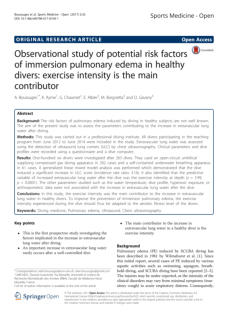
Authors: A. Boussuges, K. Ayme, G. Chaumet, E. Albier, M.
Borgnetta, and O. Gavarry
This study assessed risk factors for increased extravascular
lung water after diving in 106 healthy divers (263 dives)
using ultrasound lung comets. Dives significantly raised
ULC scores (IRR 3.16). Generalized linear mixed model
analysis identified exercise intensity at depth as the sole
predictor (p<0.0001); water temperature, dive profile,
hyperoxic exposure, and anthropometric data showed no
association. To prevent immersion pulmonary edema,
exercise intensity during dives should be matched to
divers' aerobic fitness.

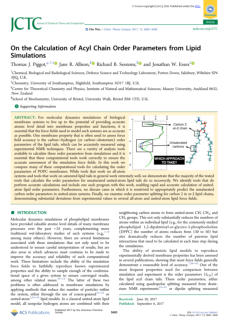
Authors: Thomas J. Piggot, Jane R. Allison, Richard B.
Sessions, and Jonathan W. Essex
Accurate force fields are crucial for molecular dynamics
simulations of biological membranes, which aid in
understanding atomic details. This study compares tools
for analyzing POPC membrane order parameters. While
all-atom and some united-atom tools work well, incorrect
calculations occur for unsaturated tails. A program for
precise united-atom calculations is provided, along with
an examination of issues related to unsaturated carbons
and deviations in C2 order parameters.

Author: Joseph L Nates, Davide Cattano, Fernanda S
Costa, Jacques E Chelly, Marie-Francoise Doursout
TEG was used to study coagulation abnormalities from
venous air embolism (VAE) in rats, with/without
mexiletine. 23 rats were randomized to VAE (n=6),
VAE+mexiletine (n=9), or saline control (n=8) groups; TEG
parameters (R, K, a, MA) were assessed at baseline, 1h and
24h. VAE alone produced hypercoagulability (decreased
R/K, increased a/MA). Mexiletine attenuated effects,
blocking MA rise and normalizing R/K by 24h (a remained
elevated). Controls showed only transient R changes.
Mexiletine may reduce VAE-induced hypercoagulability
and merits clinical investigation.