










Scientific papers 2015 - Part B









Authors: Jacek Kot & Zdzislaw Sicko
Most operational procedures rely on experimentally found
parameters describing a continuous slow decompression
rate. In Poland, the system for programming continuous
decompression after saturation with compressed air and
nitrox has been developed based on the Extended
Oxygen Window (EOW) concept. EOW mainly depends
on the physiology of the metabolic oxygen window, also
called inherent unsaturation or partial pressure vacancy,
but also on the metabolism of carbon dioxide, the
existence of water vapor, as well as tissue tension.


Authors: David J. Doolette, Keith A. Gault, wayne A. Gerth
Heliox (He-O2 ) enables diving deeper than limits imposed
by breathing N2-O2, but heliox has some costs, and
several navies have pursued a trimix (He-N2-O2) diving
capability as an alternative to heliox. It is widely believed
that trimix bounce dives can be conducted with
substantially reduced decompression times than
corresponding heliox dives. If this were true, trimix would
be an attractive alternative to heliox for U. S. Navy MK 16
MOD 1 underwater breathing apparatus (UBA) diving.
However, there is no direct evidence of greater
decompression efficiency of trimix than of heliox.


Authors
Dror Tal, Hofit Shachar-Bener, Dov Hershkovitz, Yehuda
Arieli, & Avi Shupak
Mass stranding of cetaceans (whales and dolphins), in
close association with the activity of naval sonar systems,
has been reported on numerous occasions. Necropsy
showed associated bubble lesions similar to those
described in human decompression sickness (DCS). The
authors examined the hypothesis that exposure to
underwater sound may potentiate DCS.

Stephen R. Thom, Michael Bennett, Neil D. Banham,
Walter Chin, Denise F. Blake, Anders Rosen, Neal W.
Pollock, Dennis Madden, Otto Barak, Alessandro Marroni,
Costantino Balestra, Peter Germonpre, Massimo Pieri,
Danilo Cialoni, Phi-Nga Jeannie Le, Christopher Logue,
David Lambert, Kevin R. Hardy, 1Douglas Sward, Ming
Yang, Veena B. Bhopale, and Zeljko Dujic.
The authors hypothesized that the number of blood-
borne, Annexin V-positive Circulating microparticles (MPs)
and neutrophil activation, assessed as surface MPO
staining, would differ between self-contained underwater
breathing-apparatus divers suffering from DCS vs.
asymptomatic divers.


Authors
Ming Yang, Otto F. Barak, Zeljko Dujic, Dennis Madden,
Veena M. Bhopale, Jasjeet Bhullar, and Stephen R. Thom
Predicated on evidence that diving-related microparticle
generation is an oxidative stress response. This study
investigated the role that oxygen plays in augmenting the
production of annexin V-positive microparticles associated
with open-water SCUBA diving and whether elevations
can be abrogated by ascorbic acid.

Authors
C. Balestra, F. Cimino, S. Theunissen, T. Snoeck, S. Provyn, R.
Canali, A. Bonina, and F. Virgili
Nutritional antioxidants have been proposed as an
expedient strategy to counter the potentially deleterious
effects of scuba diving on endothelial function, flow-
mediated dilation (FMD), and heart function. Sixteen
volunteers performing a single standard dive (20 min at 33
m) according to US Navy diving procedures were
randomly assigned to two groups: one was administered
with two doses of 200 mg of an anthocyanin (AC)-rich
extract from red oranges, 12 and 4 h before diving.

Authors: Gonglin Hou, Youlan Zhang, Na Zhao, Ruiyong
Chen, Weibing Xiao, Hao Yu, Jiachun Wang, and
Ti-Fei Yuan.
The present study investigated the cognition and
performance efficacy of four divers during a simulated 480
meters helium–oxygen saturation diving. The authors
analyzed the spatial memory, 2D/3D mental rotation
functioning, grip strength, and hand–eye coordination
ability in four divers during the 0–480 m compression and
decompression processes of the simulated diving.


Authors:
Syeda Rubina Gilani, Madiha Batool, Syed Raza Ali Zaidi,
Zaid Mahmood, Amanat Ali Bhatti, and Arjumand Iqbal
Durrani
This study explains the chronic effect of heavy toxic metals
on the nervous system.
During experimentation, rabbits used as laboratory
animals were given test metals in their diet. The
concentration of metals given to them in the diet was less
than their tolerable dietary intake. Behavioral changes
were observed during experimentation. A periodic
increase in the metal concentration was seen in the blood
sample of rabbits.

Author: Tuomo T. Tompuri
Physical activity refers to any bodily movements produced
by skeletal muscles that expends energy. Hence the
amount and the intensity of physical activity can be
assessed by energy expenditure. Metabolic equivalents of
task (MET) are multiplies of the resting metabolism
reflecting metabolic rate during exercise. The standard
MET is defined as 3.5 ml/min/kg. However, the expression
of energy expenditure by body weight to normalize the
size differences between subjects causes analytical
hazards: scaling by body weight does not have a
physiological, mathematical, or physical rationale.
This review demonstrates that a false methodology may
cause paradoxical observations.

Authors: Barbara E. Shykoff
A two-part residual oxygen time model predicts the
probability of detectible pulmonary oxygen toxicity P(P[O 2
tox]) after dives with oxygen partial pressure (PO2) of
approximately 130 kPa and provides a tool to plan dive
series with selected risk of P[O2 tox]. Data suggest that
pulmonary oxygen injury at this PO2 is additive between
dives. Recovery begins after a delay and continues during
any following dive.


Authors:
Martyna Krukowska, Katarzyna Janczuk, Anna Slifirczyk,
Marta Kowalenko
Pulmonary barotrauma consists in the damage of
pulmonary tissues resulting from pressure differences in
the body and the surroundings.
Barotrauma may occur during diver's ascent with a held
breath.
Objective: Presentation of symptoms in divers performing
dives at shallow depths. A detailed description of
pulmonary barotrauma as a direct hazard to life. Rescue
procedure in the case of an occurrence of pulmonary
barotrauma, methods of prevention.


Authors:
Denise F. Blake, Derelle A. Young, and Lawrence H.
Brown
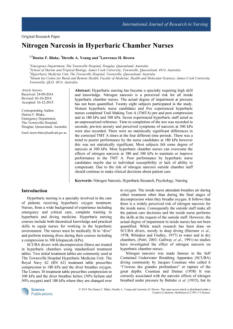
Hyperbaric nursing has become a specialty requiring high
skill and knowledge. Nitrogen narcosis is a perceived risk
for all inside hyperbaric chamber nurses. The actual
degree of impairment at pressure has not been quantified.
Twenty eight subjects participated in the study.
Sixteen hyperbaric nurse candidates and five experienced
hyperbaric nurses completed Trail Making Test A (TMTA)
pre and post compression and at 180 kPa and 300 kPa.

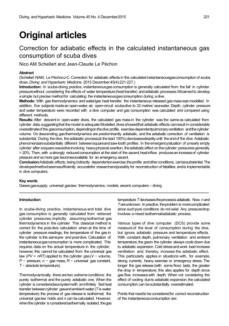
Authors: Nico AM Schellart and Jean-Claude Le Péchon
The authors aimed to develop a simple but precise
method for calculating the instantaneous gas
consumption during a dive.
With gas thermodynamics and water/gas heat transfer,
the instantaneously released gas mass was modeled. In
addition, five subjects made an open-water, air, open-
circuit scuba dive to 32 metres of seawater. Depth,
cylinder pressure, and water temperature were recorded
using a dive computer, and gas consumption was
calculated and compared using different methods.

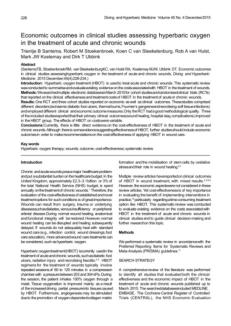
Authors: Trientje B Santema, Robert M Stoekenbroek,
Koen C van Steekelenburg, Rob A van Hulst,
Mark JW Koelemay and Dirk T Ubbink
The authors searched multiple electronic databases in
March 2015 for cohort studies and randomised clinical
trials (RCTs) that reported on the clinical eff ectiveness
andtreatment costsof HBOT in the treatmentof acuteor
chronic wounds.

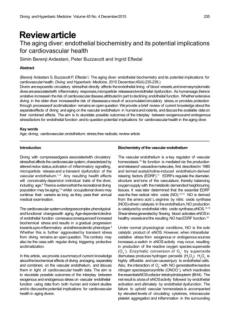
Authors: Simin Berenji Ardestani, Peter Buzzacott and
Ingrid Eftedal
The aim of this study is to elucidate the possible outcomes
of the interplay between exogenous and endogenous
stress factors on endothelial function and to question
potential implications for cardiovascular health in the
aging diver.

Authors: Pashtun Shahim, Per Arnell, Andreas Kvarnström,
Anders Rosén, Daniel Bremell, Lars Hagberg, Ka
Blennow and Henrik Zetterberg
Decompressionsickness(DCS) may cause a wide variety of
symptoms, including central nervous system (CNS)
manifestations. The main objective of this study was to
examine whether DCS is associated with neuronal injury,
andwhether DCScould result in altered amyloid
metabolism.

Authors: Christopher Sames, Desmond F Gorman, Peter
Sandiford and Lifeng Zhou
To compare Australian and New Zealand (NZ) rates of
referral to hyperbaric units for patients with, or at risk of
developing mandibular or maxillary osteoradionecrosis
(ORN) due to ahistory of radiotherapy for oropharyngeal
cancer.
Relevant patient treatment data from all hyperbaric units
in Australia and NZ were collated and analysed.

Authors: Kasper Hansen, Esben SS Hansen, Lars P Tolbod,
Martin C Kristensen, Steffen Ringgaard, Alf O
Brubakk and Michael Pedersen
The authors describe the development of a novel
preclinical rodent-sized pressure chamber system
compatible with computed tomography (CT), positron
emission tomography (PET) and magnetic resonance
imaging (MRI) that allows continuous, uncompromised,
and minimally invasived at a acquisition throughout
hyperbaric exposures.The effect of various pressures on
the acquired image intensity obtained with different CT,
PET and MRI phantoms are characterised.

Authors: Andrew Ng, and Carl Edmonds
A 67-year-old female scuba diver developed a typical
immersion pulmonary edema (IPE), but investigations
strongly indicated Takotsubo cardiomyopathy (TC). The
cardiac abnormalities included increased cardiac enzymes,
electrocardiographic anomalies, and echocardiographic
changes,all reverting to normal within days. This
casedemonstratesa similarity and association between IPE
and TC, and the importance of prompt cardiac
investigations both in the investigation of IPE and in
making the diagnosis of Takotsubo cardiomyopathy (TC).

Author: Nick Bushell
Currently, no decompression algorithm can guarantee
safe decompression in all diving scenarios. Typically,
experienced divers or organizations make empirical
adjustments to decompression profiles based on the
specific dive conditions. Decompression sickness primarily
results from bubble formation in the body, suggesting that
improved modeling of these processes could enhance the
algorithm design. The Study Group aimed to refine the
Haldane model by incorporating bubble dynamics,
hoping to better understand the physical basis for existing
parameter modifications.


Authors: Dariusz Jozwiak, Piotr Siermontowski, Zbigniew
DabrowieckiI, Romuald Olszanski
Based on data analysis of diving accidents, this study raises
the critical question of why recreational diving
experiences more accidents than military diving. It
evaluates factors such as diving frequency, adaptation to
pressure, and overestimation of skills that contribute to
higher incident rates in recreational divers compared to
military divers.


Click on the octopus
to return to the top
of the page

Authors: John W. Castellani, & Michael J. Tipton)
The text intends to comprehensively review the
physiological responses and external factors that impact
cold tolerance and physical performance, define cold
tolerance, discuss the effects of short-term and long-term
cold exposure, and examine various factors such as
habituation, anthropometry, sex, race, and fitness that
influence cold tolerance. Additionally, it seeks to explore
the impact of cold exposure on aerobic performance,
strength, and power and to discuss potential physiological
mechanisms and the concept of thermoregulatory fatigue.

Author: F. Jay Haran, Amelia Lovelace
This paper evaluates the effects of inspired CO2 and
breathing resistance on neurocognitive performance and
postural stability during endurance exercise. It outlines the
methods used, including the conditions of the dives, the
assessments conducted, and the statistical analyses
performed. It concludes with the results, which indicate no
significant differences were found, and suggests directions
for future research.

Authors: Ran Arieli and Abraham Marmur
This paper discusses scientific research findings related to
the behavior and growth of gas bubbles in ovine large
blood vessels following decompression. It describes the
experimental setup, observations, and measurements of
bubble nucleation and expansion at hydrophobic spots
on blood vessels, as well as the factors influencing bubble
growth, such as gas tension and flow regime. It also
suggests considerations for bubble-based decompression
models, emphasizing the importance of accounting for
both phases of bubble development.

Authors: Erkan Sukuroglu, Güliz N. Güncü, Kamer Kilinc,
and Feriha Caglayan
This study investigates the potential use of nitric oxide
(NO) levels in biological fluids as biomarkers for evaluating
the risk of drug-induced gingival overgrowth to determine
whether NO levels in plasma, saliva, and gingival
crevicular fluid can serve as indicators for this condition,
particularly focusing on patients receiving specific
medications. It provides details on the methodology,
results, and conclusions of the study, highlighting the
potential diagnostic value of salivary nitrite and nitrate
levels in cases of phenytoin-induced gingival overgrowth.

23 - Residual oxygen time model for oxygen partial pressure near
130 kPa (1.3 atm)
- Published by Undersea & Hyperbaric Medical Society
Author: Barbara shykoff
A two-part model predicts pulmonary oxygen toxicity risk
after dives with oxygen pressure around 130 kPa. It helps
plan dives with controlled risk. Data show injury is
accumulative between dives, with recovery starting after
delays. The probability formula relates dive duration to
toxicity risk. For multiple dives, it calculates an equivalent
dive duration. A recovery model was developed based on
residual time. The model was validated with 1,352 dives,
showing specific standard deviations for resting and
exercising divers.

30 - Development of a pulmonary oxygen toxicity risk calculator for
repeated dives with PO2 = 1.3 atm
- Published by the US Navy experimental Diving Unit.
Author: Barbara shykoff
A two-part model predicts the likelihood of pulmonary
oxygen toxicity after dives with oxygen pressure around
130 kPa. It shows that lung injury from oxygen
accumulates across dives, with recovery starting after a
delay. The model includes a logistic equation connecting
dive duration to pulmonary oxygen toxicity. For multiple
dives, it relates symptoms to equivalent dive duration. A
recovery model calculates residual time based on dive
factors. The model was validated with 1352 dives,
showing acceptable accuracy for specific oxygen
pressures and durations.

03 - Diving bradycardia of elderly Korean women divers in cold
seawater: a field report
- Published by Extreme physiology & medicine - BMC
Authors: Joo-Young Lee, Hyo-Hyon Lee, Siyeon Kim,
Young-Joon Jang
Breath-hold diving is prevalent among women divers
worldwide, including in Korea and Japan, but most use
SCUBA. With over 80% of haenyeos in their sixties or
older, it's predicted to end in a few decades. This study
aims to explore diving patterns and heart rate in older
Korean women.

16 - Alternate electrode placement for whole body and segmental
bioimpedance spectroscopy
- Published by IOP Sciences
Authors: T L Grisbrook, P Kenworthy, M Phillips, P
M Gittings, F M Wood, and D W Edgar
Bioimpedance spectroscopy (BIS) is used to monitor
body fluid and composition in both healthy and clinical
populations. However, alternate electrode positions have
not been reported yet. This study assessed three
alternate electrode placements for whole body BIS,
upper and lower body segmental BIS. Results showed
that if drive and sense electrodes are moved to ventral
positions, whole body BIS variables are comparable to
standard electrode positioning. Alternate lower limb
electrode position significantly altered resistance and
predicted BIS variables.

02 - Mental abilities and performance efficacy under a simulated 480-
m helium–oxygen saturation diving
- Published by Frontiers
Authors: Gonglin Hou, Youlan Zhang, Na Zhao, Ruiyong
Chen, Weibing Xiao, Hao Yu, Jiachun Wang,
and Ti-Fei Yuan
This study examined the cognitive and performance
impacts on four divers during a simulated 480-meter
helium-oxygen saturation dive. Findings revealed
significant impairments in hand-eye coordination (notably
above 300 m), mental rotation reaction time and
accuracy, and spatial memory (especially around 410 m),
despite only mild grip strength reduction. High individual
variability was observed. The conclusion highlights that
deep water saturation diving substantially affects human
cognition and performance efficacy.

Authors: R. Naqueti, C. Lemaire, JC Rostain
This study analyzed high pressure nervous syndrome
(h.p.n.s.) in humans during simulated deep dives
(300–610 m) using varied compression methods and gas
mixtures (Heliox, Trimix), focusing on tremor, myoclonia,
EEG changes, and psychometric performance. Key
findings: (1) H.p.n.s. includes compression-related effects
that fade and pressure-related symptoms that persist at
depth, with some signs technique-dependent. (2)
Individual susceptibility varies, affecting overall h.p.n.s.
severity and per-symptom progression at constant depths.
(3) Symptoms show no strong correlations with each
other.