











Scientific papers 2015 - Part A









Author: Nick Bailey (UK Health and Safety Laboratory)
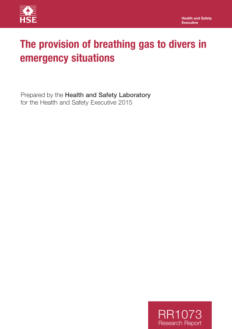
This report can be considered a Key study regarding gas
consumption in an emergency and is taken as a reference
in the publications CCO Ltd and Diving & ROV specialists
regarding the calculation of the range offered by bailouts.
This document can be downloaded from our server by
clicking on the picture of the cover, or from the UK HSE
server by clicking on the text.
UK HSE address: hse.gov.uk/research/rr1073


Authors: Alain Boussuges & Frauke Tillmans
Ultrasonic methods enable visualization of microbubbles
in the heart and vessels after diving. Common detection
techniques include Continuous Wave Doppler,
Transthoracic Echocardiography, Pulsed Doppler, and
Transesophageal Echocardiography. Counting and
grading bubbles post-dive help validate dive tables and
assess preconditioning methods, enhancing dive safety.
Various scales exist to categorize bubble quantities, but
while valuable for research, bubble counting has limited
clinical use and uncertain value for individual
decompression sickness (DCS) risk assessment.

Authors:
Arve Lie, Marit Skogstad, Håkon A. Johannessen, Tore
Tynes, Ingrid Sivesind Mehlum, Karl-Christian Nordby, Bo
Engdahl, Kristian Tambs.
This document gives a systematic review of the
development of noise-induced hearing loss (NIHL) in
working life. It can be used as a complement to the papers
more specialized on noise harm linked to diving
operations.


Authors: Mircea Degeratu, Simona Rus, Ana Ion.
The improvement of the efficiency of diving interventions
at depths greater than 15m has brought into focus the
problem of increasing underwater working time by using
over-oxygenated synthetic breathing mixtures to optimize
the relation between working time and duration of
decompression. The “nitrox” binary mixture best meets
diving requirements at depths within the range of 15 to
50 meters.

Authors: Sigrid Theunissen, Costantino Balestra, Antoine
Boutros, David De Bels, François Guerrero, and
Peter Germonpré
The study aimed to observe the effects of dark chocolate
on endothelial function after scuba diving.

Authors: Ran Arieli, Uri Arieli, & Abraham Marmur.
Bubbles nucleate and develop after decompression at
active spots on the luminal aspect of ovine large blood
vessels. A Series of bubbles were shown to detach from
the active spot with a mean diameter of 0.7–1.0 mm in
calm conditions. The effect of mechanical disturbance
(striking the bowl containing the vessel or tangential flow)
was studied on ovine blood vessels stretched on
microscope slides and photographed after hyperbaric
exposure.

Authors: Mircea Degeratu, Simona Rus, & Ana Ion
Improving the efficiency of interventions made with divers
at depths greater than 15m has brought into focus the
problem of increasing underwater working time by using
over-oxygenated synthetic breathing mixtures in order to
optimize the relation between working time and duration
of decompression. The "NITROX" binary mixture best meets
the requirements of diving at depths within the range of
15 to 50 meters. NITROX is used for depths in the range of
15 to 50 m. When this mixture is used, the decompression
time shortens and the respiratory resistance decreases.
Therefore, the use of NITROX leads to an improvement in
diving efficiency, by increasing underwater working time,
and by reducing the decompression time


Author: Ronald W. Day
Pulmonary hypertension is a serious disease associated
with constriction, cellular hypertrophy and proliferation,
inflammation, and in situ thrombosis of the small vessels of
the pulmonary circulation. Patients often respond more
favorably to long-term treatment if their pulmonary
vascular resistance decreases during acute vasodilator
testing during heart catheterization.
However, the response to short acting agents may not
predict the long-term response to medications that act on
different pathways of signal transduction. The acute
hemodynamic effects of oxygen with nitric oxide and
diltiazem were not similar in a previous study
of patients with pulmonary hypertension.

Authors:
Sebastian Schulz-Stübner, Petra Zimmer, Peter Leonards
Hyperbaric oxygen therapy (HBOT) is a non-invasive
treatment that involves breathing pure oxygen in a
pressurized room or tube.
HBOT can be used for chronic wound-healing problems,
soft-tissue infections, gas gangrene, and as an emergency
treatment for diving decompression sickness or carbon
monoxide poisoning.
Multiplace hyperbaric therapeutic chambers can
accommodate several patients at once, allowing contact
among patients who may be infected or colonized.


Authors:
Claire Masterson, Gail Otulakowski, and Brian P. Kavanagh
Multiple clinical and laboratory studies have been
conducted to illustrate the effects of hypercapnia in a
range of injuries, and to understand the mechanisms
underlying these effects. The aim of this review is to
highlight and interpret information obtained from these
recent reports and discuss how they may inform the
clinical context.


Authors: Guillaume Costalat, Aurélien Pichon, Fabrice
Joulia, Frédéric Lemaître
Although it has been demonstrated that the exponential
decay model fits the heart rate kinetics in short static
breath holding, this model might be inaccurate when
breath is maintained for several minutes. The aim of this
study was to build a new meaningful model to quantify
heart rate kinetics during prolonged static breath holding.

Authors:
Jacek Kot, Zdzislaw Sicko, Tadeusz Doboszynski
Saturation decompression is a physiological process of
transition from one steady state, full saturation with inert
gas at pressure, to another one: standard conditions at
surface. It is a delicate and long lasting process during
which single milliliters of inert gas are eliminated every
minute, and any disturbance can lead to the creation of
gas bubbles leading to decompression sickness (DCS). In
Poland, the system for programming of continuous
decompression after saturation with compressed air and
nitrox has been developed as based on the concept of the
Extended Oxygen Window (EOW).

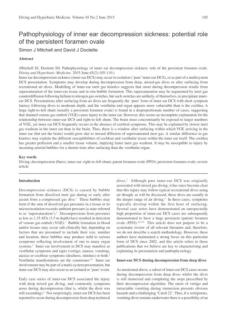
Authors: Simon J Mitchell, & David J Doolette
A large right-to-left shunt (usually a persistent foramen
ovale) is found in a disproportionate number of DCS cases,
suggesting that shunted venous gas emboli (VGE) cause
injury to the inner ear. However, this seems an incomplete
explanation for the relationship between inner-ear DCS
and right-to-left shunt. The brain must concomitantly be
exposed to larger numbers of VGE, yet inner ear DCS
frequently occurs in the absence of cerebral symptoms.
This may be explained by slower inert gas washout in the
inner ear than in the brain. Thus, there is a window after
surfacing within which VGE arriving in the inner ear (but
not the brain) would grow due to inward diffusion of
supersaturated inert gas.

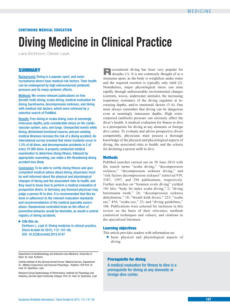
Authors: Lars Eichhorn, & Dieter Leyk
The authors reviewed literature from PubMed, a well-
known scientific database, on various aspects of diving,
including free and scuba diving, medical evaluations,
barotrauma, decompression sickness, and diving with
medical risks. In conclusion, physicians who certify diving
fitness must have a thorough understanding of the
physical and physiological impacts of diving, as well as
how to evaluate divers medically.


Click on the octopus
to return to the top
of the page

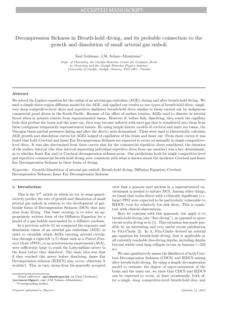
Authors: Saul Goldman, J.M. Solano-Altamirano
This study investigates the behavior of arterial gas
embolisms (AGEs) during and after breath-hold diving. It
uses a diffusion model to analyze AGE growth and
dissolution in different types of breath-hold dives,
including single deep competitive dives and repetitive
shallower dives, to explain the occurrence of cerebral and
inner ear decompression sickness in these diving scenarios
and highlight the importance of surface intervals in
preventing such conditions in repetitive dives.

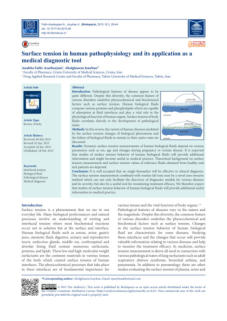
Authors: Anahita Fathi-Azarbayjani, Abolghasem Jouyban
This paper discusses the significance of surface tension
measurements of human biological fluids in
understanding and diagnosing various diseases. It outlines
how changes in surface tension are linked to pathological
states and suggests that these measurements, combined
with routine lab tests, could become a valuable non-
invasive diagnostic tool. The text also emphasizes the
potential of surface tension studies to provide additional
information for medical practice and to monitor treatment
efficacy.

Author: James E Clark
This text informs and educates readers about the
challenges and risks associated with exposure to the
underwater environment. It particularly focuses on the
effects of breathing pressurized gases, such as inert gas
narcosis, on divers. It highlights the physiological impacts,
symptoms, and potential dangers of nitrogen narcosis and
the importance of understanding these effects to promote
safe diving practices.

Authors: Bennett MH, Weibel S, Wasiak J, Schnabel A,
French C, Kranke P
This paper provides an update on a Cochrane Review that
assesses the effectiveness and safety of adjunctive
hyperbaric oxygen therapy (HBOT) in the treatment of
individuals with acute ischemic stroke. It outlines the
objectives, search methods, selection criteria, data
collection and analysis, and main results of the review, and
determines whether HBOT can improve outcomes for
stroke patients by reducing brain cell death and swelling. It
also summarizes the findings from various randomized
controlled trials (RCTs) on this topic.

Authors: A. Sureda, J. M. Batle, J. A. Tur, A. Pons
This study evaluated the effects of repetitive hypoxia and
reoxygenation episodes during a 5-day apnea diving
period on various physiological parameters. Specifically,
the study focused on antioxidant defenses, oxidative
damage, and plasma xanthine oxidase activity in
peripheral blood mononuclear cells (PBMCs) of
professional apnea divers. It details the methodology,
including the timing of blood sample collection, and
summarizes the significant changes observed in glucose
levels, triglycerides, enzyme activities, and oxidative
markers.


Authors: Peter Germonpré
This document provides an overview of diving medicine,
emphasizing its interdisciplinary nature and the
importance of prevention in maintaining diver health. It
also highlights the relevance of research from non-diving
medical fields, particularly in relation to Patent Foramen
Ovale (PFO), and discusses the complexities and ongoing
debates surrounding the treatment and prevention of
diving-related and non-diving-related illnesses associated
with PFO..


Authors: Otto F. Barak, Dennis Madden, Andrew T.
Lovering, Kate Lambrechts, Marko Ljubkovic, and
Zeljko Dujic
This study investigated the occurrence of arterial gas
emboli (AGE) in intracranial vessels of SCUBA divers to
understand how venous gas emboli (VGE) can become
AGE through intrapulmonary arterial-venous anastomoses
that open during exercise. The authors detail the
methodology, including the use of echocardiography and
Doppler techniques, and present the results, which
indicate that while some emboli of venous origin can
reach the brain, the risk of cerebral embolization is not
high in the studied population.

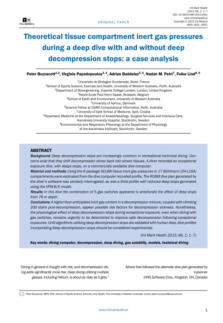
Authors: Peter Buzzacott, Virginie Papadopoulou, Adrian
Baddeley, Nadan M. Petri, Folke Lind
This paper discusses and analyzes the effects and risks
associated with deep decompression stops in recreational
technical diving. It examines the inert gas pressures in
different tissue compartments during a dive with deep
stops, using various decompression models, highlighting
potential risk factors for decompression sickness, and
emphasizing the need for further research to validate the
safety of deep decompression stops in diving profiles.

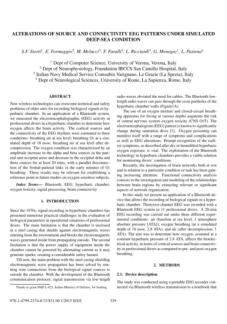
Author: S.F. Storti, E. Formaggio, M. Melucci, F. Faralli, L.
Ricciardi, G. Menegaz, L. Pastena
This study investigates the effects of oxygen on brain
activity in professional divers using new wireless
technologies, specifically a Bluetooth system, to measure
electroencephalographic (EEG) activity in a hyperbaric
chamber to understand how oxygen affects brain activity
by analyzing EEG rhythms under different conditions and
to provide a reference point for future research on
oxygen-sensitive subjects.


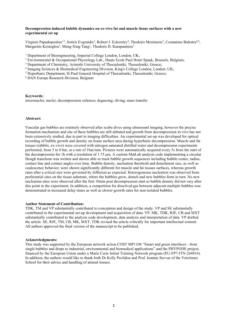
21 - Decompression induced bubble dynamics on ex-vivo fat and
muscle tissue surfaces with a new experimental set up
- Published by Science Direct
Authors: Virginie Papadopoulou, Sotiris Evgenidis, Robert
J. Eckersley, Thodoris Mesimeris, Costantino
Balestra, Margaritis Kostoglou, Meng-Xing Tang,
Thodoris D. Karapantsios
Vascular gas bubbles are often seen after scuba dives
using ultrasound, but how they form and grow during
decompression is unclear. An experiment was set up to
capture bubble growth on tissue during decompression.
Muscle and fat tissues were tested, and factors like bubble
density and growth rates were analyzed. Results showed
differences between tissue types and demonstrated how
bubbles nucleate and compete for gas.
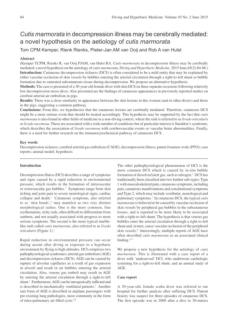
26 - Cutis marmorata in decompression illness may be cerebrally
mediated: a novel hypothesis on the aetiology of cutis
marmorata
- Published by Diving and Hyperbaric Medicine
Author: James Bell, Paul A. Thombs, William J. Davison,
Lindell K. Weaver
Cutaneous decompression sickness (DCS) is often seen as
mild, caused by bubbles in skin blood vessels or tissue
saturation during decompression. A 30-year-old female
diver had skin DCS three times after low-stress dives. Her
skin lesions resembled those in pigs with cerebral air
embolism, suggesting a shared cause. This leads to the
hypothesis that cutaneous lesions are linked to the brain,
indicating that cutaneous DCS may be more severe than
previously thought. Further research is needed on the
mechanisms behind cutaneous DCS.
06 - Techniques actuelles de sauvetage des sous-marins. Contexte
de mise en oeuvre du Nato Submarine Rescue System.
- Published by Medecine et armees
Authors: J.-E. Blatteau, C. Peny, F. Leclercq, C. Robinet, E.
Gempp, P. Louge, S. de Maistre, J.-M. Pontier, P.
Constantin, M. Hugon
France has developed a new procedure to optimize the
NATO Submarine Rescue System (NSRS) for collective
rescue of sunken submarine crews. This operation
requires healthcare personnel to understand the main
risks, including water ingress, oxygen-related pulmonary
toxicity, and decompression accidents during the return
to the surface. The goal is to bring shipwrecked
personnel and accompanying personnel to the surface
with maximum safety.

07 - Inert gas narcosis disrupts encoding but not retrieval of long
term memory
- Published by Science Direct
Authors: Malcolm Hobbs, Wendy Kneller
Inert gas narcosis, caused by increased ambient pressure,
can impair long-term memory (LTM) by disrupting
information encoding, retrieval, or both. A study in divers
underwater tested the effect of learning-recall pressure
and levels of processing on free-recall of word lists. Results
showed that free-recall memory was significantly impaired
when words were initially learned at high pressure, while
retrieval was unaffected. This suggests that narcosis
disrupts information encoding into LTM, while retrieval
remains unaffected.

16 - Job Exposure Matrix for Electric Shock Risks with Their
Uncertainties
- Published by Environmental Research and Public Health - MDPI
Authors: Ximena P. Vergara, Heidi J. Fischer, Michael
Yost, Michael Silva, David A. Lombardi, and
Leeka Kheifets
This study updates an electric shock job exposure matrix
(JEM) for 501 occupational titles, adding three new
dimensions: median proportion, 25th percentile, and
75th percentile of those experiencing occupational
electric shocks in a working lifetime. The new JEM
provides consistent exposure estimates, moving from
qualitative to quantitative measures, and demonstrates
the impact of cut point selection on exposure
assignment.
20 - The effect of hyperbaric air on the electric activity of neuronal in
vitro networks
- Published by Science Direct
Authors: Marco Stubbe, Matthias Nissen, Jessica
Schroeder, Jan Gimsa
A pressurized measuring chamber was designed to
record pressure effects on the electrical activity of
neuronal networks in NMRI mice. The study found that
pressure increased the total spike rates (TSRs) in two cell
culture media with different compositions. The TSR
increased by 19% after a pressure increase to 2 bar and
remained stable at 4 bar. After decompression to 1 bar,
activities decreased to 76% and 101% of their respective
control levels. This new approach provides new access
to exploring the neuronal effects of hyperbaric breathing
gases.

25 - Exercise-induced cardiovascular responses during combined
normobaric vs. hypobaric and normoxic vs. hypoxic acute
exposures in military air pilot trainee
- Published by the American Physiological Society
Authors: Nicolas Bourdillon, Mathias R. Aebi, Denis Bron,
Grégoire P. Millet
The study examined the effects of hypobaria on
ventilatory, cardiovascular, and muscle oxygenation
during exercise in normoxia and hypoxia. Eighteen
healthy air pilot trainees performed a 6-minute moderate-
intensity cycling exercise in four randomized conditions:
normobaric normoxia, hypobaric normoxia, normobaric
hypoxia, and hypobaric hypoxia. Results showed that
SpO2 and brain oxygenation were significantly lower in
hypobaric hypoxia, and ventilation was higher in
hypobaric hypoxia. The specific effects of hypobaria in
normoxia were lesser than in hypoxia.
05 - Cholesterol modulates open probability and desensitization of
MDA receptors
- Published by The Physiological Society
Authors: Miloslav Korinek, Vojtech Vyklicky, Jirina Borovska,
Katarina Lichnerova, Martina Kaniakova, Barbora
Krausova, Jan Krusek, Ales Balik, Tereza
Smejkalova, Martin Horak, and Ladislav Vyklicky
This study looked at how cholesterol affects NMDA
receptors in rat brain cells. It demonstrated that removing
cholesterol greatly reduced receptor activity and increased
desensitization, but these changes reversed when
cholesterol was added back. This study also showed that
other treatments had similar effects, and cholesterol
significantly influences NMDA receptor function without
changing receptor numbers or other properties.

Click here