










Scientific papers 1980 - 1983









Authors: D. E. Yount, D. C. Hoffman
In this document David E. Yount (US navy at Hawaii)
explains the advantages of his Variable Permeability Model
(VPM ) and says the following to introduce it:
With the development of a detailed mathematical model
describing bubble formation in aqueous media, it is now
possible to quantify various degrees of nucleation and
place any given dive profile at a more realistic position on
the nucleation scale. The methods of Haldane and of Hills
may then be regarded as limiting special cases of a more.
general decompression theory that should someday be
applicable to the whole range of hyperbaric and
hypobaric situations.
The excat date of publication of this document is not
indicated
.


This document was written by Nishi and Lauckner.
It describes the Kidd-Stubbs decompression model and its
adaptation to the DCIEM 1983.

Authors: C. L. Young, R. Battino, and H. L Clever
This paper aims to comprehensively search and explain
the solubility of gases, liquids, and solids in liquids.

Authors: D.E. Yount, & C. M. Yeung
This document explains the development of the Variable
Permeability Model (VPM ) by using transparent gelatin
samples subjected to various pressure schedules. The
authors explain that this technique is well suited for such a
study as it yields a definite number of bubbles that are can
be counted and measured.
.

Author: David E. Yount
In this paper, David E. Yount explains the evolution of a
nucleus from one equilibrium state to another and
investigates the statistical process by which the equilibrium
size distribution of an entire population of nuclei may be
generated or regenerated.
Date of publication: March 1982

Authors:
E. D. Thalmann, I. P. Buckingham, & W. H. Spaur
This document describes the investigations and tests made
for programming wrist-worn underwater decompression
computers used by US Navy divers.
Date of publication: 1983
Edward Deforest Thalmann (03/04/45 – 24/07/04) was
an American hyperbaric doctor of the US Navy.
He worked on the previous version of the US Navy tables
and developed Algorithms for diving computers and
compute dive tables.


Authors: Edward D. Thalmann & F. K. Butler jr
This document describes the procedure for the calculation
of multilevel dives using the repetitive groups of the US
Navy tables.
Date of publication: September 1983
Note that multilevel dive tables are present in the DCIEM
and Comex tables.


Authors:
D. B. Cotton & B. A. Hills
The pulmonary surfactant is a mixture of lipids and
proteins secreted by the epithelial cells into the alveolar
space. Its primary function is to reduce the surface tension
at the air/liquid interface in the lung.
This study aims to identify the relationship between
hydrophobicity and respiratory distress syndrome.
(Hydrophobe = that repels water)
Note that this document is more a medical document
than a document related to diving. However, it allows us
to understand the importance of the surfactant in
respiration and thus gas exchanges in the lungs.

Authors: Otto Inge Molvaer, & Truls Gjestland
This study, published in 1981, has been used by other
scientists in further studies and manuals. It investigates
noise levels with helmets and face-masks when using tools
such as HP water blasters. Note that apart from the KMB
17, the helmets and masks taken as reference are no more
produced. However, similar models are still in sold.
.

Author: Akira Ishiyama
The gas composition of intravascular bubbles produced by
decompression was investigated in rabbits using gas
chromatography. The animals were exposed to 8 ATA for
30 min. All samples of bubbles were taken from the
animals under a 0.2 ATA pressure gradient so that no air
could enter the sampling system from the outside.
The percentage of carbon dioxide in the bubbles tended
to decrease at first and then increased with post-
decompression time. On the other hand, the percentage
of oxygen tended to change in the opposite manner.

Doctor Alfred Buhlman (1923-1994) was a prolific
scientist from Switzerland well known for his sport diving
decompression algorithms, such as the ZHL-16 model still
used in many diving computers. However, he also
developed decompression models for commercial and
military diving.
This document, published in May 1984, describes the
algorythm ZH-L-12.




This publication summarizes a workshop organized by the
European Undersea Biomedical Society (EUBS), and the
Norwegian Petroleum Directorate (NPD) in November
1983.
It is no longer edited, and for this reason, and because the
topics discussed are essential, we have decided to publish
it.
It is divided into four sections, the first three of which are
introduced by keynote papers, followed by an individual
discussion on each article, and concluded with a general
discussion. The fourth session is a general discussion of the
whole meeting.


Author: Peter O. Edel
This document , published in 1980, discusses 336 depth-
time combinations of air decompression tables selected
from the U.S. Navy and British schedules that were
individually analyzed by a computer. In addition to 97
schedules tested by the C Experimental Diving Unit in
the development of Mimed Gas Scuba tables were
analyzed to compare the computer analysis with
manned test data.
.

These proceedings contain seven invited papers which
were presented during a special session on coldwater
diving at the American Academy of Underwater
Sciences' Coldwater Diving for Science - 1987
Symposium, October 29 to November 1, 1987 at the
University of Washington, Seattle.

IB.G. D'Aoust, R. White, H, Swanson, R. Dunford
This paper, published in 1989, discusses the advantages
associated with isobaric experiments involving either
transient or steady-state counter-diffusion. The authors
investigated the potential advantages and/or hazards
associated with sequentially breathing of inert gas/oxygen
mixtures using helium and nitrogen as the inert gases.

Click on the octopus
to return to the top
of the page

Authors: P. K. Weathersby, K. G. Mendenhall,E. E. Barnard,
L. D. Homer, S. Survanshi, and F. Vieras
The kinetics of xenon gas uptake and elimination were
measured by recording gas concentrations in seven
anesthetized dogs over a period of 7 hours. It was found
that the fastest exchange occurred in the lungs, and
progressively slower exchanges happened in the brain,
spinal cord, ears, peripheral joints, and shoulder (over 2
hours). The residence variance time (second moment) was
approximately four times the square of the mean
residence time. This ratio was consistent throughout the
body.Indications of unexpectedly high levels of xenon
solubility were also found in the ear and joint regions.

Author: Edward D. Thalmann
Between 1977 and 1982, the United States Navy
Experimental Diving Unit (NEDU) was tasked with
developing decompression protocols to be used with the
MK15 and MK16 Underwater Breathing Apparatus. The
protocols were designed to maintain a consistent oxygen
partial pressure of 0.7 ATA while using either helium or
nitrogen as a diluent. This manuscript outlines the
methodologies used during this project, as well as the
associated limitations.


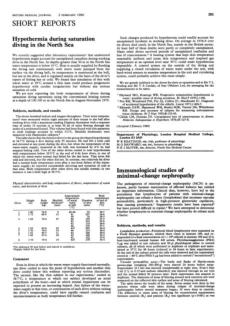
Authors: W.R Keatinge, M.G Hayward, N.K.I McIver
This text discusses the potential for undetected
hypothermia to cause unexplained casualties during
working dives in the North Sea. Laboratory experiments
showed that warm water at 29°C around a thin man
could lead to progressive hypothermia with cardiac
irregularities, even without a severe sensation of cold. The
report presents body temperature data from saturation
diving operations at depths of 130-145 meters in the
North Sea, conducted between August and November
1979, using the conventional heating system..


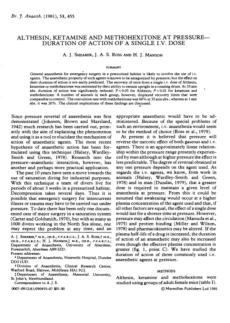
Authors: A.J. Susanna, J.A.S. Ross & H.J. Manson
The study investigates the effects of high-pressure
environments on the efficacy and duration of action of
intravenous anesthetic agents used in emergency
surgeries within pressurized habitats. It highlights that
while the anesthetic properties of these agents are known
to be reduced under pressure, predicting their duration of
action is challenging. The study measured the recovery
times of mice given a single dose of Althesin, ketamine, or
methohexitone by observing their ability to stay upright in
a rotating drum.
.

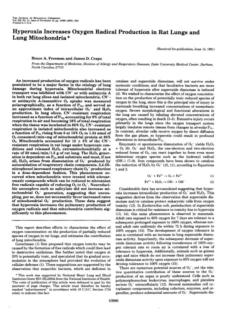
Authors: Bruce A. Freeman & James D. Crapo
This paper discusses the role of increased oxygen radicals
in lung damage during hyperoxia. It examines how
mitochondrial electron transport inhibition, using CN- or
antimycin A, affects oxygen uptake in rat lung slices and
isolated mitochondria. The study measures CN-resistant
respiration as an indicator of intracellular O2- and H2O2
production. Findings show that CN-resistant respiration
increases with higher oxygen levels in lung slices and
isolated mitochondria.
.

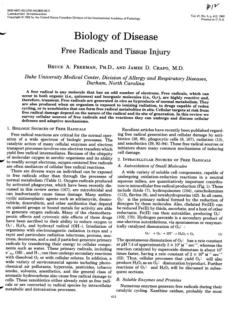
Authors: Bruce A. Freeman & James D. Crapo
This review examines the sources of free radicals, the
reactions they undergo, and the cellular defenses and
adaptive mechanisms that protect against their damage. A
free radical is a molecule with an odd number of
electrons, making it highly reactive and transient. The
damage caused by free radicals depends on their type
and where they are generated within the cell.

Author: C.A. Plantadosi
This USN document discusses the issue of convective
respiratory heat transfer in divers who breathe cold
helium-oxygen mixtures, which is a significant source of
body heat loss without effective thermoregulatory
compensation. It suggests a temperature-depth curve to
enable divers to gain heat from exercise, despite increased
respiratory heat loss due to exercise or cold, with excess
heat being dissipated through the skin as divers adjust
their hot water flow and temperature for comfort.
.

Authors: Christian Lemaire
This document reviews the research in Hyperbaric
Physiology. The writing was entrusted by the Hyperbaric
Physiology Committee of the National Center for Ocean
Exploitation (CNEXO) and the Directorate of Research and
Techniques (DRET) to Mr. Christian Lemaire, who
consulted specialists in this field. This update follows the
one that Professor L. Barthélémy wrote in 1972, titled
"Human Hyperbaric Biology - Where Are We in 1972?".

Author: Robert H. Logie & Alan Baddeley
This paper presents psychological observations from a
simulated dive to 660 meters of seawater (msw)
conducted in 1983 using a Trimix gas mixture (He-O-N2).
This was the deepest dive performed until the COMEX
Hydra 10 experimental dive reached 701 msw. The study
suggests that Trimix allows for faster compression with less
performance impairment compared to the traditional He-
O2 mixture. Data from two divers were collected on
cognitive performance tests, including arithmetic,
grammatical reasoning, perceptual speed, visuo-spatial
manipulation, and semantic processing.



This document, written in French, intends to present and
discuss the findings of a research study that compares the
ventilatory patterns of cats breathing different gas mixtures
during simulated deep-sea diving. It explains the effects of
using a helium-oxygen mixture versus a helium-nitrogen-
oxygen mixture on respiratory frequency and oxygen
transfer. It also explores potential reasons for the observed
changes in respiratory patterns, including the impact of
high helium pressures and the possible influence of the
High-Pressure Nervous Syndrome (HPNS).
Author: Kenneth W. Kizer
Auerbach and Miller compared high altitude flatus
expulsion (HAFE) syndrome to decompression sickness in
divers. However, HAFE is more similar to gastrointestinal
barotrauma, which happens when bowel gas expands
due to reduced pressure during ascent. Symptoms
include belching, gas expulsion, bloating, and abdominal
pain, sometimes leading to fainting or shock.

This document introduces a eight studies on the topics
mentioned by the following authors:
•
H.D. Van Liew and C.V. Paganelli
•
J.R. Clarke and L.D. Homer
•
D.D. Hickey, D.C. Marky, and R.J. Smith
•
Camporesi, J.V. Salzano, R.E. Moog, and B. Stolp
•
J.V. Salzano, E.M. Camporesi, R.E. Moon, and B. Stolp
•
K. Sejdal, R.E. Peterson, G. Bolstad, and J.E. Jacobsen
•
D.D. Hickey, C.E.G. Lundgren, D.R. Pendergast, and
H.T. Swanson
•
T.J. Doubt and D.B. Evans
24 - Abstract session: Ventilation - Gas exchange - Cardiovascular
- Publisher unidentified
Authors:
A. O. Brubakk, S. Tonjum, B. Holand, R. E. Peterson, R.W.
Hamilton, E. Morild, and J. Onarheim
This document describes heat loss and tolerance time
during cold exposure in a heliox atmosphere at 16 ATA.
Four types of protective clothing and three heat
conservation methods were tested at 4°C. Divers with
less insulation had to stop after 1-2 hours due to severe
cold, while those with heavy insulation lasted 8-10 hours.
Respiratory heat loss remains significant unless the
inspired gas is heated using a heat-exchanger and
scrubber..
25 - Heat loss and tolerance time during cold exposure in heliox
atmosphere at 16 ATA
- Published by the Undersea & Hyperbaric Medical Society
Authors:
P. B. Bennett, R. Coggin, and M. McLeod
This document describes a series of dives that tested the
effects of helium, nitrogen, and oxygen on divers at
extreme depths. The study compared 5% and 10%
nitrogen during fast compression to 460 m and then to
650 m over 2.5 days. In 1981, divers were compressed
more slowly to 650 m over 6 days using 10% nitrogen in
heliox. They stayed at 650 m for 4 days and then went to
686 m for 24 hours, undergoing various performance
tests. While there were some psychological effects and a
slight impairment in attention, divers performed well
overall. Slow compression helped reduce initial
performance drops experienced in earlier fast-
compression dives.
29 - Effect of compression rate on use of trimix to ameliorate HPNS
in man to 686 m (2250 ft)
- Published by the Undersea & Hyperbaric Medical Society
Authors:
R.W. Brauer, P.M. Hogan, M. Hugon, A.G. Macdonald, &
K.W. Miller
This review examines how metabolically inert light gases
(He, H1, and Ne) interact with hydrostatic pressure and
their pharmacological effects on biological responses. It
identifies common patterns in how pressure influences
anesthesia reversal, convulsions, and bradycardia. The
study shows that no single gas can completely
counteract hydrostatic pressure effects across all
biological responses. Experiments indicate that certain
responses, such as cell motility and abnormalities, form a
distinct group that requires further study. The
implications for biophysical hypotheses and safety in
high-pressure environments are also discussed.
30 - Patterns of interaction of effects of light metabolically inert gases
with those of hydrostatic pressure as such—a review
- Published by te Ubsersea & Hyperbaric Medical Society
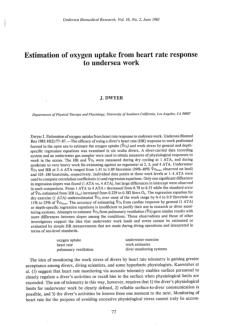
Author: J. Dwyer
The study examined how a diver's heart rate (HR) can
estimate oxygen uptake (VO2) during undersea work in
six scuba divers. Data were collected using a recording
system and gas sampler at different pressures. Results
showed that HR and VO2 varied significantly across
pressures, with only one significant difference in
regression slopes. The study concluded that HR
measurements are not reliable for estimating oxygen
uptake in underwater conditions, as they do not align
with sea-level standards.
35 - Estimation of oxygen uptake from heart rate response to
undersea work
- Published by the Undersea & Hyperbaric Mecical Society
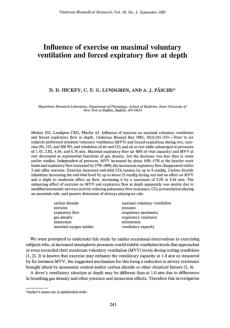
Authors: D. D. Hickey, C. E. G. Lundgren, AND A. J.
Pasche
This study examined how exercise affects maximal
voluntary ventilation (MVV) and forced expiratory flow
under different pressures. Results showed that MVV and
expiratory flow decreased with gas density but increased
during heavy exercise. CO2 inhalation had little impact
on MVV and a slight effect on flow.
39 - Influence of exercise on maximal voluntary ventilation and
forced expiratory flow at depth
- Published by the Undersea & Hyperbaric Medical Society
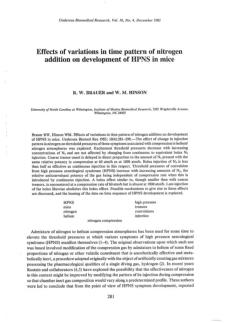
Authors: R. W. Brauer and W. M. Hinson
This study by Brauer and Hinson examines how different
patterns of nitrogen injection affect the development of
high pressure neurological syndrome (HPNS) in mice.
They found that excitement threshold pressures decrease
with higher nitrogen levels, and changing the injection
style does not impact this. Coarse tremors are delayed
based on nitrogen presence, with bolus injections being
less effective than continuous ones. Convulsion
thresholds rise with greater nitrogen amounts, and the
effects vary depending on the compression rate and
injection timing.
43 - Effects of variations in time pattern of nitrogen addition on
development of HPNS in mice
- Published by the Undersea & Hyperbaric Medical Society
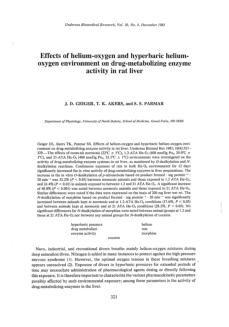
Authors: J. D. Geiger, T. K. Akers, and S. S. Parmar
The study investigated how different environments,
including normoxic air and helium-oxygen at two
pressures, affected drug-metabolizing enzyme activity in
rat liver. Rats exposed to helium-oxygen showed
significant increases in enzyme activities. The study noted
specific percentage increases in O-dealkylation and N-
dealkylation reactions between various conditions. No
significant differences were found for N-dealkylation of
cocaine.
44 - Effects of helium-oxygen and hyperbaric helium-oxygen
environment on drug-metabolizing enzyme activity in rat liver
- Published by the Undersea & Hyperbaric Medical Society

The purpose of this document was to provide guidelines
and techniques for safe and effective deep diving beyond
1500 feet (457 meters) using various diving methods.
It discussed topics such as:
•
Physiological considerations for deep diving
•
Equipment design and testing
•
Diving procedures and safety protocols
•
Emergency response planning
•
New technologies and innovations in deep diving
.


Authors: JC Rostain, MC Gardette,-Chauffour, and R
Naquet
This study examined the effects of various breathing
mixtures (He-N2-O2 with 9% and 4.5% nitrogen and He-
O2) during dives to 300 m and 180 m. Results showed
slight tremor with no significant difference between
mixtures at 180 m and between He-N2-O2 (4.5%
nitrogen) and He-O2 at 300 m. However, EEG
modifications occurred regardless of nitrogen presence,
sometimes being more intense with He-N2-O2. Certain
subjects showed paroxysmal EEG changes with He-N2-O2
at 300 m not seen with He-O2. Subjects required a 4-hour
delay before working correctly at 300 m, with EEG
modifications regressing between the 11th and 14th
hour.
.

Authors: MP Hlastala, M Meyer, G Riepl, and P Sheid
A respiratory mass spectrometry method was developed
to measure gas solubility coefficients in liquids. A 2.5 mL
liquid sample is injected into a ~140 mL sealed flask for
gas-phase reequilibration; the resulting headspace is
analyzed by mass spectrometry. Separately, 2.5 mL of the
same gas mixture is injected into a ~1-L flask, mixed, and
analyzed. Solubility is calculated from the ratio of mass
spectrometer signals and flask volumes. By matching the
flask volume ratio to the expected gas/liquid partition
coefficient, signal magnitudes are balanced—minimizing
errors from instrument nonlinearity. The method was
applied to determine solubilities of helium, argon, and
Sulfur in distilled water, human plasma, and whole blood.

Authors: PK Weathersby, & LD Homer
Solubility data for 32 inert gases in biological fluids and
tissues, including blood, muscle, and brain, have been
compiled from more than 150 references. Solubility in
blood ranges from 0.005 to 16 ml gas/ml blood per ATA
at 37°C, while other tissues show 6% to 30% of blood
solubility. Biological tissue solubility does not align well
with water or oil solubility. Temperature increases reduce
solubility by 1%–6% per °C, whereas pressure effects
remain poorly studied, with only rough estimates available
via chemical thermodynamics.

Authors: PB Bennett, R Coggin, J Roby
Starting in 1978, trimix dives explored how nitrogen
percentage and compression rate prevent HPNS at 460 m
while assessing effects on circulatory/respiratory
parameters. In 1979, 5% N2 caused prominent HPNS
symptoms on arrival that largely resolved by Day 2.
Repeating the profile in 1980 with 10% N2 eliminated
most HPNS but still reduced psychometric performance
40% on Day 1 (recovering to 15% by Day 2). Extending to
650 m with 7.7% N2 for 24 h similarly controlled HPNS,
though one subject experienced dyspnea. Findings
emphasize interactions between nitrogen content and
compression speed.


Authors: JL Parmentier, BB Shrivastav, PB Bennett
Hydrostatic pressure modulates the amplitude of
postsynaptic potentials in the Aplysia central nervous
system. While postsynaptic functions remain unaffected,
presynaptic processes like frequency facilitation and
posttetanic potentiation are altered, similar to the effects of
transmitter release blockers. This suggests pressure
reduces synaptic efficiency by disrupting specific
presynaptic mechanisms involved in transmitter release.
.


Authors: HV Hempleman et al.
The purpose of this document was to present a review of
the first eight dives in a series of human physiological
studies aimed at investigating the effects of high pressure
on the human body, focusing on the physiological
responses of humans to deep diving, with the goal of
eventually reaching a pressure of 43 bar (which
corresponds to a depth of approximately 420 metres or
1,378 feet).
.

Authors: MLJ Ashford, AG Macdonald, KT Wann
This study examined how hydrostatic pressure affects
transmitter release at the frog neuromuscular junction.
High pressure reduced the frequency of miniature end-
plate currents, showing a reversible effect upon
decompression. Pressure sensitivity remained unchanged
in various solutions, while higher pressures slightly
increased the decay time constant of currents. Both pre-
and post-synaptic effects of pressure were discussed.
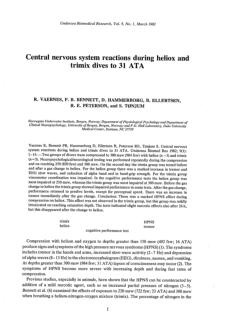
21 - Central nervous system reactions during heliox and trimix dives
to 31 ATA
- Published by the Undersea & Hyperbaric Medical Society
Authors: R. Vaernes, P. B. Bennett, D. I-Iammerborg, B.
Ellertsen, R. E. Peterson, and S. Tonjum
Divers were compressed to 300 msw with heliox or trimix
and tested neurologically/cognitively. Heliox caused
marked HPNS: increased tremor/EEG slow waves,
reduced alpha/grip strength, with peak cognitive
impairment at 250 msw. Trimix impaired visuomotor
coordination and caused mild intoxication at 300 msw;
switching to heliox restored most performance except
perceptual speed, though tremor rose. HPNS was absent
in trimix, with narcotic effects resolving after the gas
change.
20 - The effects of hydrostatic pressure on the spontaneous release of
transmitter at the fog neuromuscular junction
- Published by the The Journal of Physiology
22 - Equations for predicting diver regional skin temperatures as a
function of mean skin temperature
- Published by the Undersea & Hyperbaric Medical Society
Authors: CE Johnson, JD Collins, and CA Piantadosi
Linear algebraic equations were derived from Kerslake’s
work to predict regional skin temperatures of a quasi-
euthermic diver with pronounced vasoconstriction. These
equations, based on data from five subjects in a
hyperbaric chamber (20°C, 95% helium, 5% oxygen, 200
msw), use mean skin temperature as the key variable.
Designed to estimate supplementary heating needs for
thermal protection garments, the equations were
validated by comparing predicted and experimental
normalized regional temperatures, demonstrating an
accuracy within ±15%.