










Scientific papers 1984 - 1985







This document is the continuation of the document #6:
“Testing of decompression algorithms for the use in the US
Navy underwater decompression computer”.
Date of publication: January 1984

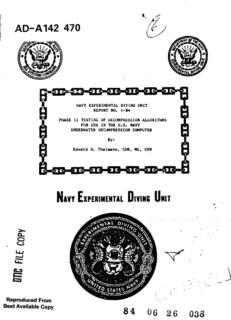

Authors: R. P. Weinberg, M. J. Ackerman, & M. E. Bradley
As indicated in the title, this document discusses the
thermal limits according to the depth and the duration of
the dive and the parts of the body exposed.
Date of publication:1984

Authors: D.C Yount & D. C. Hoffman
This document is the complement of papers #1. #2, #4
Date of publication: May 1984


This report describes some researches made by doctor
Thalman regarding heliox diving. The descriptions of cases
of DCS and treatment results are indicated in the
document with the details of the computer algorithm,
decompression schedules tested, and the final
decompression tables.
The pertinence of the final decompression model to
HeO2 bounce and saturation diving is also discussed.


Authors: C. W. Shilling et al
Decompression sickness has in the past been defined as
an overt illness that may appear in a human being while
diving or following a reduction in environmental pressure
sufficient to cause bubble formation and/or growth
from the gases dissolved in the tissues. Other terms have
been legitimized by use to have an equivalent meaning,
despite the opinions of experts that it would be more
desirable either to not use such terms at all or else to use
them only in relation to a particular type of decompression
sickness: such terms include caisson disease, compressed
air illness, and the bends.

Authors: Paul K Weathersby & Blaine Hart
Several sets of equal risk air decompression tables were
calculated using a new methodology. Empirical
decompression risk models were used to predict the
probability of decompression sickness (DCS) for a given
pressure exposure. These probabilistic models, earlier
shown to have e considerable ability to separate tabulated
experimental air dives according to DCS risk, were used to
choose decompression schedules with an acceptable risk.


Authors: Brumon Kiernikowicz & Stefan Teresinky
This paper presents a case of pulmonary barotrauma in a
scuba diver. Swallowing water and respiratory arrest
during the ascent caused the trauma.
Symptoms from the respiratory system (including the
Behnke's symptom) appeared several minutes after the
completion of the dive and were not severe.
However, symptoms from the peripheral nervous system,
which appeared later, increased rapidly until the seizure
episode and loss of consciousness.


Authors: P Naquet, C. Lemaitre, J. C. Rostain
The data presented in this paper are based on 20
experimental dives, made either at Comex in Marseille or at
the French naval station in Toulon. The gas mixture was
helium-oxygen and helium-nitrogen-oxygen. Only the
experimental dives in which subjects reached or went
below 300m are taken into account. These experiments
have shown that the intensity and type of symptoms vary
according to the experimental conditions and the tested
subjects, and they have made it possible to establish
several general rules.

Click on the octopus
to return to the top
of the page

Author: C.Y. Lin
An unusual circulatory state exists in humans immersed in
water at or near 35°C. This state is characterized by a
sustained and elevated stroke index, while the heart rate
changes only slightly. Therefore, the cardiac index
increases. Evidence supports the finding that the increase
in stroke volume is due to increased cardiac preload, and
that changes in afterload and contractility play a minor
role in affecting cardiac performance during immersion in
thermoneutral water up to the neck level.


Authors: C Blood, A. Hoiberg
Diving encompasses many activities and is subject to
numerous and varied risks for divers. Effective planning for
diving operations requires an understanding of the
conditions that contribute to the success or failure of the
mission.
The objective of this study was to identify the most
common underwater mishaps and the underlying factors
associated with diving accidents.


Authors: P.K. Weathersby, S.S. Survanshi, L.D. Homer, B.L.
Hart, R.Y. Nishi, E.T. Flynn, and M.E. Bradley
A large number of air dives were studied using a new
methodology. Several essentially empirical models of
decompression risk were considered, predicting the
probability of decompression sickness (DCS) for a given
pressure exposure, to avoid the infinitely sharp threshold
parameters that have characterized previous
decompression table calculations. The candidate models
used several different formulations of tissue gas exchange
kinetics and summed tissue overpressures calculated
during the dive to estimate decompression risk. They were
compared using statistics


Authors: O.I. Molvaer and E.H. Lehmann
There is a correlation between hearing loss and increasing
age, diving experience, and acoustic trauma. There is also
a significant increase in high-frequency hearing thresholds
in smokers compared to those who have never smoked,
and divers' high-frequency hearing thresholds are higher
than usual across all age groups. The authors conclude
that professional diving may cause a more rapid
deterioration of high-frequency hearing than in the
standard population and that smoking may be an
additional hazard to high-frequency hearing.

Author: C. Edmons
An audiometric examination was conducted on a group
of professional abalone divers who had experienced
significant exposure to dysbaric conditions. The findings
from this study demonstrated that over 60% exhibited
unsatisfactory high-frequency sensorineural hearing loss.
Half of these cases were unilateral, while the other half
were bilateral.


Authors: C. Blood and A. Hoiberg
The US Navy examined dive logs to identify the most
common accidents and underlying factors. Of the 1174
incidents reported in 706,259 dives, decompression
sickness and barotrauma were the most common. The
incidence of accidents increased significantly with
increasing depth. Selection or experimental dives,
saturation dives, and surface decompressions were
associated with an increased risk of incidents. Older divers
were disproportionately assigned to deep dives.

Authors: C.G. Bayne, W.S. Hunt, D.C. Johanson, E.T. Flynn,
and P.K. Weathersby.
Doppler detection has been promoted as a non-invasive
and sensitive indicator of impending decompression
sickness. The authors conducted a double-blind,
prospective clinical trial of Doppler ultrasound bubble
detection in simulated diving in 83 men with clinical
disease who were also treated. Diagnosis based solely on
Doppler signals did not correlate with the clinical
diagnosis.
Bubble scores were only slightly higher in the group with
clinical disease. The Doppler technique appears to have
no diagnostic value without additional clinical information.


Authors: J. Parmentier, B. Shrivastav, and P. B. Bennett
This study reports on experiments investigating the effects
of halothane, a general anesthetic gas also known by the
brand name Fluothane, and hydrostatic compression on
the voltage-dependent sodium conductances in the squid
giant axon. The authors conclude that pressure and
halothane do not act antagonistically.


Authors: J.J.W. Sykes and L.J. Yaffe
The document's authors examined spinal cords from
animals affected by experimental decompression sickness
(DCS) to understand the varied responses to treatment
observed. Light microscopy of toluidine blue-stained
ultrathin sections from these animals revealed a noticeable
widening of the myelin sheath and a banded pattern,
indicating myelin disruption. These findings might explain
the treatment responses observed in patients and the
development of late lesions in the spinal cords of long-
term DCS survivors.


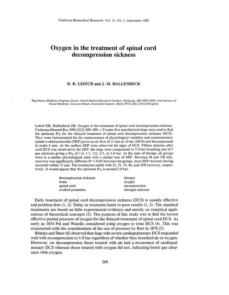
Authors: DR Leitch, JM Hallenbeck
Twenty-five anesthetized dogs were studied to determine
the optimal PO2 for treating delayed spinal cord
decompression sickness. After a 15-minute dive at 10 bar
and a rapid decompression, dogs showed signs of
decompression sickness monitored by somatosensory
spinal evoked potentials (SEP). Upon confirming DCS, the
dogs were recompressed to 5.0 bar and breathed
different gas mixtures, resulting in PO2 levels ranging from
1.0 to 3.0 bar. Recovery rates varied, with the most
effective PO2 around 2.0 bar.

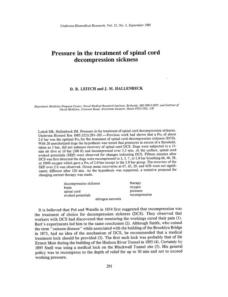
Authors: D.R. Leitch and J.M. Hallenbeck
Previous research found that 2.0 bar is the best PO2 for
treating spinal cord DCS. A study involving 20 dogs was
conducted to determine if pressures above 3 bar aided in
recovery. The dogs were decompressed after a 15-minute
air dive and monitored for symptoms of DCS. The dogs
were then recompressed to different pressures with
varying oxygen levels to maintain a PO2 of approximately
2.0 bar, with the exception of one group. The recovery of
SEP was monitored for two hours, and the results
indicated no significant difference between the groups.
This suggests a need to revise treatment protocols.

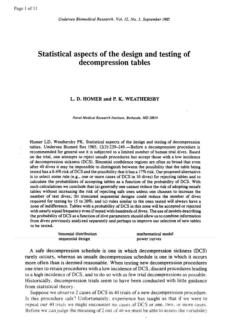
Authors: L.D. Homer and P.K. Weathersby
Before approving a decompression procedure, several trial
dives are conducted to assess its safety and effectiveness.
However, determining the risk of decompression sickness
(DCS) can be challenging. The authors suggest setting a
specific criterion to reject unsafe tables and calculating
acceptance probabilities based on the probability of DCS.
They indicate that reducing the risk of accepting unsafe
tables without increasing the rejection of safe ones
typically requires more testing. Alternatively, truncated
sequential designs could reduce the number of dives
needed by up to 20%.

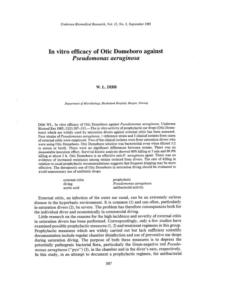
Author: W.L. Dibb
Otic Domeboro ear drops, commonly used by saturation
divers to prevent external otitis, have been tested for their
effectiveness against Pseudomonas aeruginosa. The study
involved one reference strain and three clinical isolates
from external otitis cases, including two from divers using
the drops. Results showed that Otic Domeboro effectively
kills the bacteria, even when diluted, with no significant
differences between strains or evidence of increased
resistance in divers. The drops killed 60% of bacteria in 5
minutes and 99.9% in about two hours, suggesting that
more frequent application could enhance effectiveness.



Authors: C. Edmons & J Boughton
A survey of professional abalone divers in New South
Wales found that nearly half may have intellectual
impairments due to the high decompression stress unique
to this group.
It is unwise to generalize these findings to other divers.
The results are consistent with the existing beliefs about
intellectual challenges in this group of divers.

Author: R.D. Vann
This document, presented at the congress held in Toronto
in March 1984, aimed to assess the state of knowledge
regarding saturation diving decompression.


Authors: R.G. Eckenhoff, and R.D. Vann
The study examined 77 subjects undergoing
decompression from air or nitrogen-oxygen (nitrox)
saturation exposures at depths of 18.3 to 40.2 meters of
seawater (msw) using four different decompression
schedules. Results. The overall DCS incidence was 9%, all
being pain-only and localized to the knee. The US Navy
heliox saturation decompression schedule showed a
higher DCS incidence compared to other schedules.
Differentiation between nitrox schedules was inconclusive
due to the limited number of subjects and variable
exposures.

Author: Richard d. Vann
This paper describes the development and application of a
theoretical method for predicting spacecraft and spacesuit
atmospheres, as well as to discuss the analysis of
decompression procedures and the study of
decompression sickness in rats. Additionally, it outlines a
method for developing decompression schedules for
helium/oxygen and nitrogen/oxygen saturation dives,
including the use of equations and examples for
calculating these schedules.

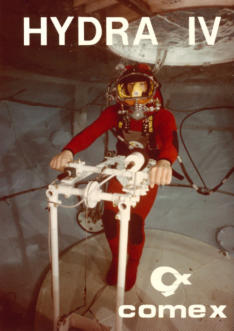
The paper intends to inform and describe the details and
significance of Operation HYDRA IV, a deep-sea diving
experiment conducted by COMEX in 1983. It highlights
the achievements of the operation, particularly the use of
a hydrogen-oxygen breathing mixture (Hydrox) at a
record depth, and positions it as a pioneering effort in
deep-sea exploration, and also provides context by
mentioning previous operations and the motivation
behind using Hydrox to overcome limitations of
conventional gas mixtures for deep diving.

Authors: Department of Anesthesiology and F.G. Hall
Laboratory Duke University Medical Center
Durham, North Carolina
The Third Annual Canadian Ocean Technology Congress
was held in Toronto on March 22, 1984. This event served
as a significant platform for professionals, researchers, and
industry leaders to convene and discuss advancements,
challenges, and innovations within the field of ocean
technology. The congress likely featured a series of
presentations, panel discussions, and networking
opportunities aimed at fostering collaboration and
knowledge exchange among participants dedicated to
the development and application of oceanographic
technologies.

Authors: DR Leitch,
The document offers a comprehensive summary and
analysis of the experiences and outcomes of Royal Navy
saturation divers during deep-sea dives. It specifically
examines the incidence of decompression sickness and
evaluates the effectiveness of decompression tables at
various depths. The aim is to present findings and
conclusions concerning the safety and risks associated
with different diving depths and decompression practices.
Authors: B.A Hills, & B.D. Butler
Thin-layer chromatography has identified phospholipids
from canine synovial fluid, with phosphatidylcholine (PC)
being the main component at 45%. These extracts
reduce water's surface tension and adsorb onto
hydrophilic solids, making them hydrophobic. The
adsorbed layers work well as lubricants, cutting down
friction by up to 97% for extracts and 99% for PC.
Surface-active phospholipids may aid in joint lubrication
and could help in artificial lubrication for arthritis patients.
01 - Surfactants identified in synovial fluid and their ability to act as
boundary lubricants.
- Published by the Annals of the Reumatic Diseases

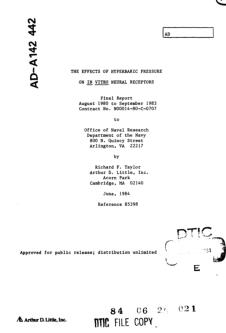
Authors: Richard F. Taylor, Arthur D. Little
The authors studied nicotinic acetylcholine receptors
(AChR) from rat muscle and electric eel tissue, exposing
them to high pressure (800 psi) to examine how pressure
affects cholinergic agent binding. They found that
pressure reversibly reduces ACh binding to rat AChR in a
dose-dependent manner through conformational
changes at binding sites; certain stabilizing agents, like
hexamethonium, can prevent this pressure-induced loss of
binding; and electric eel AChR shows greater pressure
resistance than mammalian AChR. These results suggest
that hyperbaric pressure effects on neural receptors may
explain high-pressure neurological disorders and indicate
potential therapeutic applications for treating acute
intoxication from marine toxins and nerve agents.

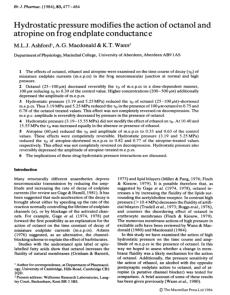
Authors: M.L.J. Ashford, A.G. Macdonald, & K.T. Wann
The study investigated how octanol, ethanol, and atropine
affect the decay of miniature endplate currents in frog
neuromuscular junctions under normal and high pressure.
Octanol decreased decay time and current amplitude,
with further reduction under high pressure. Ethanol had
no effect on decay time under pressure, while atropine
reduced both decay time and amplitude, with these
effects being reversible. The results show interactions
between these drugs and pressure.

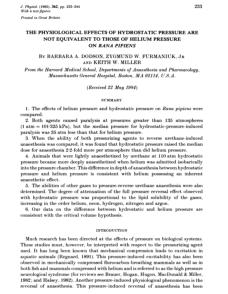
Authors: Barbara A. Dodson, Zygmund W Furmaniuk, and
Keith W Miller
This study on Rana pipiens (Leopard Frogs) compared the
effects of helium and hydrostatic pressure. Both caused
paralysis above 135 atm, but hydrostatic pressure induced
paralysis at a median 35 atm lower than helium.
Hydrostatic pressure was also more effective at reversing
urethane (anesthetic) induced anesthesia per atmosphere.
Helium, when added isobarically to hydrostatic pressure,
deepened anesthesia, suggesting an inherent anesthetic
effect. Other gases (helium, neon, hydrogen, nitrogen,
argon) attenuated the pressure-reversal effect in
proportion to their lipid solubility.

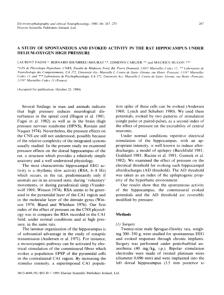
Authors: Laurent Fagni, Bernard Sourimeu-Mourat,
Edmond Carlier, & Maurice Hugon
This study investigated pressure effects on the rat dorsal
hippocampus, a structurally simpler system with well-
characterized physiology. The researchers used three
indices to measure pressure's impact on the central
nervous system: (1) rhythmic slow activity (RSA, 6-8 Hz)
recorded from the CA1 field during arousal and sleep; (2)
evoked potentials from electrical stimulation of
commissural fibers, measuring neuronal excitability; and
(3) the electrical threshold for hippocampal
afterdischarges, an epilepsy model indicating the
epileptogenic properties of high pressure.