










First aid 1970 - 2014






Council directive 92/29/EEC of 31 March 1992 on the
minimum safety and health requirements for improved
medical treatment on board vessels


Author: J. Delosa
This paper reviews the problems in performing correct
volumetric or manometric mechanical ventilation inside
the chamber, blood transfusions and/ or administration of
vasoactive substances, control and surveillance of
infectious diseases and coordination between the surgical
and anaesthesiological procedures the patient may
require as often happens in patients with gas gangrene.
Problems concerning the medical and nursing staff are
also discussed, since these persons are often obliged to
stay under pressure.


Author: Unknown
This document is a presentation of Cardiopulmonary
resuscitation (CPR) and most 1st aid techniques that can
be used to initiate personnel not familliar with such
procedures.


Author: Jacek Kot
All medical devices introduced into the hyperbaric
chamber should be of an appropriate design and fit for
use in the hyperbaric environment and the manufacturer
should certify them for hyperbaric conditions. However,
until now only several medical devices are CE marked for
usage in hyperbaric chambers. Therefore users often need
to perform themselves checking of the medical equipment
needed for continuation of intensive care during
hyperbaric treatment. To make this task easier, this paper
presents review of reports of usage of medical devices
under increased pressure.


The International Labour Organization (ILO) Maritime
Labour Convention 2006 stipulates that all ships shall carry
a medicine chest, medical equipment and a medical
guide.
The International Medical Guide for Ships supports a main
principle of that Convention: to ensure that seafarers are
given health protection and medical care as comparable
as possible to that which is generally available to workers
ashore, including prompt access to the necessary
medicines, medical equipment and facilities for diagnosis
and treatment and to medical information and expertise.
Also consider the additional document Quantification
Addendum: International Medical Guide for Ships


Authors:
Martin A Croce, Louis J Magnotti, Stephanie A Savage,
George W Wood, Timothy C Fabian
An alternative to embolization or external pelvic fixation
(EPF) in patients with multiple pelvic fractures and
hemorrhage is a pelvic orthotic device (POD), which may
easily be placed in the resuscitation area. Little published
information is available about its effectiveness. This study
evaluated the efficacy of the POD compared with EPF in
patients with life-threatening pelvic fractures.

Authors: John Penzo & Kirk Dobrowolski
This document provides comprehensive explanations
regarding drugs and their usage..


Author:
Schlaich C., Reinke A., Sevenich C., Riemer T., Oldenburg
M., 5 , Baur X., Horneland A., Jaremin BM., Nielsen.,
Wichtmann EM., Ioannidis., Brandal., Puskeppeleit M,
Denisenko I, Carter T, Nikolic N
This document has been published to help the non-
medical person in charge of medical care on board vessels
to make the best use of the medical chest and equipment
on board.


This document is the complement of the International
Medical Guide for Ships.
The University of Newcastle WHO Collaborating Centre
for Training in Pharmaco-economics and Rational
Pharmacotherapy was commissioned to develop a list of
recommended quantities of medicines listed in the third
edition of the International Medical Guide for Ships.


Authors:
M. Beuran, S. Paun, B. Gaspar, M. Vartic, S. Hostiuc, A.
Chiotoroiu, I. Negoi
There are many controversies related to the trauma
patient care during the pre-hospital period nowadays.
Due to the heterogeneity of the rescue personnel and
variability of protocols used in various countries, the
benefit of the pre-hospital advanced life support on
morbidity and mortality has been not established.
The authors reviewed the literature in what concerns the
basic and advanced life support given to the trauma
patients during the pre-hospital period.


This user manual relates to the DanMedical Analysis System
(D-MAS).
This manual explains how to set up and use D-MAS and
includes important safety information.
All information in this manual is based on D-MAS and the
standard factory default configuration.


This document is also availaible on DMAC’s website
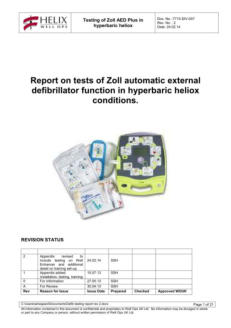
Note that today defibrillators should be provided in all
chambers.


Author: Dr. Alan Moloff
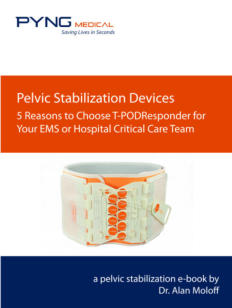
This document, published by PYNG, a medical
equipement manufacturer, promotes the use of Pelvic
Stabilization devices.
Note that the mortality for pelvic fractures is very high due
to the major hemorrhage that can occur secondary to
pelvic fracture




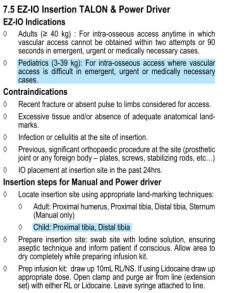
This document is the method of use of the EZ-IO® Power
Driver, a sealed, hand-held, lithium battery powered
medical device for use with the EZ-IO® Intraosseous
Vascular Access System from Teleflex
(https://www.teleflex.com/usa/en/index.html).
This system can be used in any situation where
intravenous access is difficult to obtain in emergent,
urgent, or medically necessary cases. It is also described in
logistics/Mediical equipment



This document is a presentation published by PYNG
medical on the use of Pelvic Stabilization Devices.


Authors:
Emmanuel Cauchy, MD, Sandra Leal, MD, Marie-Anne
Magnan, MD, and Hugo Nespoulet, Ph
A hyperbaric chamber is available in most trekking and
high-altitude expeditions primarily to treat and prevent
altitude illness. The device reproduces a low-altitude
evacuation when descent is impossible (Bartsch et al.,
1993). Atmospheric pressure is increased inside the
chamber using a mechanical pump.
This paper does not discuss diving. However, it highlights
phenomenons linked to the use of decompression
chambers while at altitude


Authors: Jacek Kot
This paper aims to present current controversies
concerning the safety of medical devices and procedures
under pressure in a hyperbaric chamber, including:
defibrillation in a multiplace chamber; implantable devices
during hyperbaric oxygen treatment (HBOT), and the
results of a recent European questionnaire on medical
devices used inside hyperbaric chambers.


Authors: M Abdollahi, A Hosseini
This document describes the generation of H2S, its
mechanisms of toxicity, and the recommended treatment
procedures and precautions to be implemented at work.

Authors: S. Nogue, R. Pou, J. Fernandez, and P. Sanz-
Fatal hydrogen sulphide poisoning usually occurs in
confined spaces. However, this report discusses two fatal
accidents in unconfined spaces. The first accident caused
the death of three workers who entered an unconfined
room in a silo of sludge at the same time that a truck
dumped several tons of sludge from water purification
stations. The hydrogen sulphide that had accumulated
inside the silo spilled out into the interior of the room due
to a ‘splashing effect’ caused by the impact of the dumped
sludge. The second accident occurred when the foreman
of a wastewater treatment plant entered one of the
substations to perform routine checks.

Author: N. K. I. McIver
This document provides an historic of the decompression
procedures since the observations of Robert Boyle to
today. This description includes the therapeutic
procedures.


Publisher:
Undersea & Hyperbaric Medical Society
This document is a compilation of pratices made by UHMS
and published in April 2011. It is based in part on the USN
Diving Manual Revision 6; April 200 with Advance Change
Notices 15-102 , the Manual of the Medical Department
(ManMed) Change 126 - August 2005, the U.S. Air Force
Guidelines for Treating Altitude Decompression Sickness
(USAF Instruction 48-112), and Association of Diving
Contractors International (ADCI) Return to Diving
Guidelines after DCS - 2011.
Note that it could also be logged in “Diving & ROV
procedures” however the treatment side of the document
justifies to publish it in 1st aid.

Author: Sara Booth, Heather Anderson, Maelie Swannick,
Rosemary Wade, Suzanne Kite, Miriam Johnson
This document intends to inform and provide
recommendations to clinicians working in palliative care
regarding the use of oxygen for the palliation of
breathlessness in patients with COPD, advanced cancer,
and chronic heart failure. It discusses the current state of
evidence, highlights the scarcity of randomized controlled
trials, and emphasizes the need for individualized
assessment of oxygen therapy's efficacy in reducing
breathlessness and improving quality of life.


Authors: Tony Alleman, & Joseph Serio
This document provides a detailed medical case report of
a commercial diver who developed a painful, swollen, and
infected thumb after sustaining a minor abrasion from a
barnacle while diving. It outlines the diver's initial
treatment with ciprofloxacin, the addition of doxycycline,
the progression of the infection, the surgical intervention
required, and the eventual identification of the infecting
organism as methicillin-resistant Staphylococcus aureus
(MRSA). It concludes with the successful treatment using
trimethoprim/sulfamethoxazole and rifampicin and the
diver's return to regular duty after recovery.


Authors: Ferhat Meziani , Xavier Delabranche, Pierre Asfar,
and Florence Toti
This paper provides a detailed explanation of the role of
microparticles in the pathophysiology of sepsis. It discusses
how microparticles, which are fragments originating from
the plasma membrane after cellular activation, contribute
to inflammation and coagulation processes in the body.
The text aims to highlight the significance of microparticles
in regulating vascular tone, acting as intercellular
messengers, and their potential involvement in the
mechanisms underlying multiple organ dysfunction in
septic shock.


This document's intent is to inform readers about the
purpose and process of the IARC Monographs series in
evaluating carcinogenic risks. It clarifies that the inclusion
of an agent in the Monographs does not necessarily
mean it is a carcinogen but rather that the available data
has been reviewed. It also encourages readers to provide
any new data that could affect the evaluation of an
agent's carcinogenic risk and to report any errors found in
the Monographs for correction in future volumes.


Authors: Adrian Fuente, Bradley McPherson, and Louise
Hickson
This study investigates the association between solvent
exposure and its adverse effects on both peripheral and
central auditory functioning. It aims to provide evidence of
solvent-induced hearing loss (SIHL) by using a
comprehensive audiological test battery and analyzing the
results through statistical models. Also, it seeks to discuss the
implications of these findings and the utility of specific
hearing tests in assessing SIHL.


Authors: Conkin J, Abercromby AFJ, Dervay JP, Feiveson
AH, Gernhardt ML, Norcross J, Ploutz-Snyder R,
Wessel JH
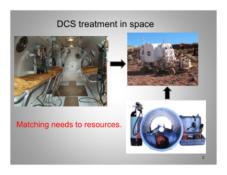
This document is a presentation that explains the
probabilistic nature of DCS symptoms and symptom
resolution, the tissue bubble dynamics model (TBDM), the
cumulative fraction of resolved symptoms with delta P and
the symptoms linked to this delta P, and hypobaric DCS
treatment models.

Authors: Richard D. Vann & James Vorosmarti
This document comprehensively overviews the unique
challenges, training, and medical considerations
associated with military diving operations. It discusses the
various roles and responsibilities of military divers, their
training, and the specific medical support required due to
the physiological and environmental challenges of diving.
It also highlights the historical and operational context of
diving hazards and the therapy of diving casualties,
emphasizing the importance of specialized training for
military physicians in diving medicine.



Authors: D.H. Elliott, and R. de G. Hanson
Diving accidents are becoming more common in
hospitals due to the rise in both professional and amateur
diving. Many of these cases can be related to drowning
or hypothermia, but there are specific diving illnesses that
may also occur. Conditions like sub-arachnoid
hemorrhage or cardiac infarction can happen
underwater. This review will focus on diving-specific
conditions, excluding hypothermia and drowning. An
accurate diver history and details about the dives, like
equipment used and depth, are crucial for diagnosis.

3 - Defibrillator Electrode-Chest Wall Coupling Agents: Influence on
Transthoracic Impedance and Shock Success.
- Published by JACC Journals
Authors: Philip E Aylward, Robert Kieso, Pamela Hite,
Francis Charbonnier, Richard E. Kerber
This study aimed to find out if different coupling agents
affect the success of defibrillation shocks. Three agents
were tested on 10 anesthetized dogs with induced
ventricular fibrillation: Harco pads, Littman pads, and
Redux paste. Even though Redux paste had lower
impedance and higher current, there were no significant
differences in shock success among all three agents.
Therefore, disposable pads were as effective as electrode
paste for defibrillation.
28 - A prospective, randomised trial of pneumothorax therapy:
Manual aspiration versus conventional chest tube drainage
- Published by Respiratory Medicine (Science direct/Elsevier)
Author: Mehmet Parlak, Steven M. Uil, Jan W.K. van den
Berg
No agreement exists on the treatment for pneumothorax
(PTX). Some guidelines suggest manual aspiration (MA)
might be better than tube thoracostomy (TT) for
uncomplicated primary spontaneous pneumothorax
(PSP). A trial with 56 patients showed MA had a lower
immediate success rate but resulted in shorter hospital
stays. Both methods had similar long-term outcomes.
Therefore, MA is recommended as the preferred
treatment.


Click on the octopus
to return to the top
of the page
Author: P. Marcus
The article discusses the development and application of
metallized plastic sheeting (MPS), which has been utilized
for thermal insulation in various fields, including
cryogenics and space research. Initially developed in the
1960s, MPS serves as a flexible super insulator, crucial for
applications like astronaut suits. More recently, MPS has
gained popularity in survival gear, marketed as ‘space
blankets,’ which offer significant thermal insulation
through their reflective surfaces, compactness, and
lightweight properties. The article explores the two main
forms of MPS available for survival, detailing their
structures, reflective qualities, and practical uses.

Publisher: Erminia Colucci, Claire M Kelly, Harry Minas,
Anthony F Jorm & Dinah Nadera
This article discusses the development of guidelines for
providing mental health first aid to individuals in the
Philippines who are contemplating suicide. By employing
a structured Delphi process, a panel of 34 mental health
experts reviewed and rated various potential actions to
determine which should be included in the guidelines.
The final output consisted of 102 consensus actions aimed
at assisting the public in responding effectively to suicidal
thoughts and behaviors, with plans for translation into
local languages.

Publisher & organizatior: Critical Care- Springer Nature
The International Symposium on Intensive Care and
Emergency Medicine is a major scientific meeting focused
on intensive care and emergency medicine, serving as a
platform for multidisciplinary discussions and the sharing
of innovations, best practices, and emerging challenges in
critical care. It brings together experts from around the
world to present research, exchange knowledge, and
advance the practice of critical care and emergency
medicine.

Authors: Yan-Sheng Liu, Ya-Ping Feng, Jia-Xin Xie, Zhuo-
Jing Luo, Cai-Hong Shen, Fang Niu, Jian Zou,
Shao-Feng Tang, Jiang Hao, Jia-Xiang Xu, Li-Ping
Xiao, Xiao-Ming Xu, Hui Zhu
The article introduces an innovative stretcher design called
the emergency carpet, specifically created for improving
the immobilization and transportation of patients with
spinal injuries. Unlike conventional stretchers, which often
contribute to medical complications, the emergency
carpet is made from a polyurethane composite material
that hardens into a supportive shape, enabling immediate
spinal immobilization. It can be assembled quickly at the
scene, facilitates safe transport across various terrains, and
allows for medical examinations without patient removal.

Authors: Kobi Peleg
The article emphasizes the unpredictable nature of
disasters and mass casualty incidents (MCI), noting that
each event has unique characteristics. It stresses the
importance of sharing knowledge and experiences gained
from various disasters to improve preparedness and
enhance the collective ability to save lives and reduce
injuries in future incidents.

Authors: Tessa Dieltjens, Inge Moonens, Koen Van Praet,
Emmy De Buck, Philippe Vandekerckhove
The article evaluates the effectiveness of Psychological First
Aid (PFA) practices through a systematic literature review.
It aims to inform training for Belgian Red Cross-Flanders
volunteers and identifies a lack of strong evidence
supporting PFA interventions. Despite a thorough search
of guidelines, systematic reviews, and individual studies, no
conclusive data exist to establish effective PFA practices,
posing challenges to developing evidence-based
guidelines for assisting disaster and trauma victims.

Author: Yutaka TakeiI, Eiji Sakaguchi, Koichi Sasaki, Yoko
Tomoyasu, Kouji Yamamoto, Yasuharu Yasuda
Carrying patients down stairs poses a high risk of patient
falls and rescuer back injuries. This study evaluated the
Airstretcher, a device designed to help drag patients, to
reduce physical burden. Forty-one paramedical students
transported a 65-kg manikin from the 3rd to the 1st floor
using four methods: Airstretcher (dragging or lifting),
backboard (lifting), and tarpaulin (lifting). Perceived
exertion was significantly lower in the Airstretcher-
dragging condition versus backboard-lifting. Results
suggest dragging with the Airstretcher meaningfully
reduces rescuer physical strain during stair descent.

Authors: Josef I. Ruzek, Melissa J. Brymer, Anne K. Jacobs,
Christopher M. Layne, Eric M. Vernberg, Patricia J.
Watson
Psychological First Aid (PFA) is a structured, early
intervention to reduce initial post-trauma distress and
foster adaptive functioning. It serves as the first step in
disaster/trauma response and is built on eight core
actions: contact and engagement; safety and comfort;
stabilization; information gathering; practical assistance;
connection with social supports; coping support
education; and linkage to collaborative services. For
children and adolescents, these actions are adapted
developmentally. Formal evaluation of PFA’s effectiveness
is still needed, and the creation of a PFA Field Operations
Guide is expected to support such research.

Authors: Andrius Pranskunas, Paulius Dobožinskas, Vidas
Pilvinis, Živile Petkeviciuty, Nedas Jasinskas,
Kestutis Stašaitis, Egle Vaitkaitiene, Dinas Vaitkaitis
Despite advances in cardiac arrest care, survival to hospital
discharge remains low. This review examines CPR
innovations from December 2005 to March 2010 that
may improve survival or reshape CPR understanding. A
key limitation is the scarcity of recent randomized
controlled trials, hindering evidence-based decision-
making. Current priorities include minimizing chest
compression interruptions and enhancing CPR quality,
alongside reinforcing all links in the chain of survival.


Authors: Michael Fralick, Christopher J. Denny, Donald A.
Redelmeier
Drowning deaths are preventable, yet hot weather is not
commonly perceived as a risk factor. This case-crossover
study of 1,243 unintentional drowning deaths in Ontario
(1999–2009) found that temperatures >30°C were
associated with a 69% increased risk of outdoor drowning
, but no significant association for indoor drowning. Adult
men showed the strongest association, though elevated
risk was observed across genders and age groups.


Authors: Andrew R. Martin, Angela Ang, Ira M. Katz,
Sabine Haussermann, Georges Caillibotte, and
Joelle Texereau
This study looked at how different types of carrier gases
affect droplet size and aerosol delivery from a nebulizer
during patient breathing. Measurements showed that
unhumidified helium–oxygen created smaller droplets
than medical air at the nebulizer exit. At the patient end,
helium–oxygen produced larger droplets. Additionally, it
impacted aerosol recovery in the nebulizer and filters,
affecting clinical ventilation strategies.