












Videos & animations - page 8


This page provides historical films, classified chronologically
to reflect the industry's progression, starting in 1896.

1 - Scaphandrier (by Lumiere brothers) - 1896
2 - The Diver (1911)

Click on the
octopus to return to
the top of the page
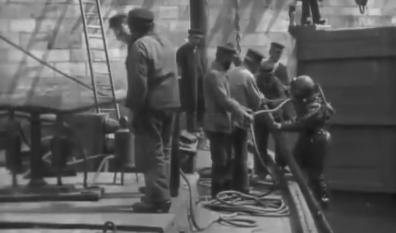
This short film, showing the final ascent of a commercial diver (scaphandrier),
his transfer aboard a boat or pontoon, and the beginning of undressing, was
first shown on 3 May 1896 in Lyon, France. It is one of the earliest films on this
subject, given that Auguste and Louis Lumière were pioneering French
inventors and filmmakers credited with creating one of the first practical
motion-picture cameras and projectors. In 1895, they introduced the
Cinématographe, a device that could record, develop, and project motion
pictures, a significant advancement over earlier inventions such as Thomas
Edison's Kinetoscope.
There is no information about the exact filming location; however, the
presence of a quay, a door, and a ladder that appears to reach the bottom
suggests it was shot at or near a dry dock in a port.
Film published by “L’œuvre cinématographique des frères Lumière”
Website: https://catalogue-lumiere.com/scaphandrier/
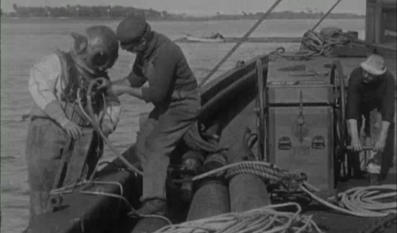
This documentary, filmed at the mouth of the St. Johns River in Jacksonville,
Florida, USA, is among the earliest surviving motion pictures devoted to
commercial diving operations, dating to 1911. It was long believed lost until a
nitrate print was rediscovered in New Zealand and subsequently preserved
through an international archival collaboration.
Rather than telling a fictional story, it carefully documents the equipment and
procedures required of a commercial diver at the time. As underwater
cinematography had not yet become practical at the time, the entire film was
shot above the surface.
Film published by the National Film Preservation Foundation
Website: https://www.filmpreservation.org
3 - Human Fish – Breaks Record for Deep Sea Diving (1920)
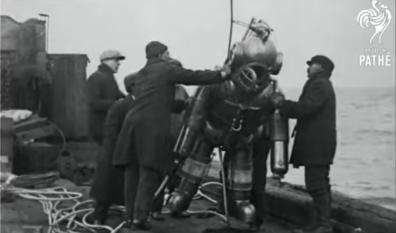
This British Pathé newsreel, filmed in Boston, Massachusetts, USA, documents
the testing of an experimental armoured atmospheric diving suit reportedly
capable of reaching 360 ft (110 m). The film shows the diver's preparation,
helmet assembly, lowering, and recovery of the suit from a support vessel.
Although presented as a "deep-sea diving record", the footage only
demonstrates the handling and deployment of the experimental suit; its
performance underwater is not shown. This is unsurprising, as practical
underwater motion-picture filming was still in its infancy in 1920 and was not
yet feasible for routine newsreel production.
Film published by British Pathe
Website: https://www.britishpathe.com/
5 - Par 18m de fond (JY Cousteau)
This film, which was the first published by JY Cousteau et al., focused on
spearfishing, probably because the Cousteau-Gagnan regulator had not yet
been invented. The sequences were filmed near Le Brusc and the Île du Gaou
on the French Mediterranean coast, using a homemade black-and-white
camera, which explains the low resolution. It is considered one of the first
documentaries of this nature dedicated to the public. Also consider that it was
made in 1942, so during the 2nd war in occupied France.
Film published by Internet Archive
Website: https://archive.org/
6 - Epave (JY Cousteau)
This 1943 film was the first released by J.Y. Cousteau et al., in which SCUBAs
(using Cousteau-Gagnan regulators) were employed. It focused on the
exploration of several Mediterranean shipwrecks, probably filmed with the
camera previously used for the film "Par 18 m de fond". Like the earlier film, it
was aimed at the public, introducing modern scuba diving. It was also made
during World War II in occupied France and established many visual
conventions that later became synonymous with Cousteau films.
Film published by “Philippe Taillez” (for the memory of Philippe Taillez)
Website: https://www.philippe.tailliez.net/
7 - Paysages du silence - Silent Lanscapes (JY Cousteau)
This film, published in 1947, was shot around Porquerolles in the French
Mediterranean coast, where Cousteau, Philippe Tailliez, and Frédéric Dumas
were perfecting the use of the Aqua-Lung and underwater cameras.
Unfortunately, this film copy provides pictures only (no comment / no sound).
Film published by “Philippe Taillez” (for the memory of Philippe Taillez)
Website: https://www.philippe.tailliez.net/
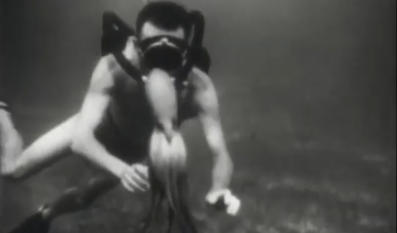
8 - Ten fathoms deep (JY Cousteau)
This film, produced in 1949, appears to have been intended primarily for
English-speaking audiences. It begins with a dramatic reconstruction of a
submarine attack, rather than immediately showing diving. This wartime
introduction provides the historical explanation for the wreck's existence. The
remainder of the film consists of preparing the dive, entering the sea,
swimming through wrecks, observing marine life, and recovering an ancient-
looking amphora.
Film published by Periscope film
Website: https://www.PeriscopeFilm.com
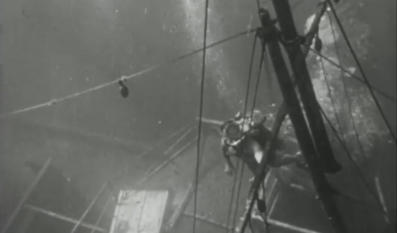
4 - “3000 Feet Under the Sea” (British Pathé)
This footage probably documents the famous William Beebe and Otis Barton
bathysphere expeditions, which took place off the coast of Bermuda from
1930 to 1934 and marked the first time a marine biologist observed deep-sea
animals in their native environment, with a deepest dive of 3,028 feet on
August 15, 1934. However, British Pathé labels this clip as "unused/unissued
material" with no paperwork, meaning it was never actually broadcast as a
finished newsreel, and Pathé doesn't have a confirmed date for it.
Film published by British Pathe
Website: https://www.britishpathe.com/
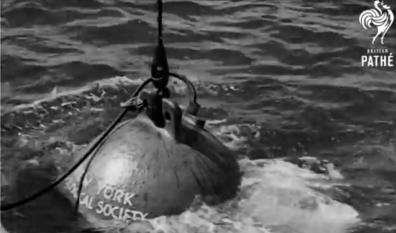
9 - TUnderwater TV Camera (British Pathe)
This historical record, filmed in 1952 near Falmouth, Cornwall, England,
documents trials of an underwater television camera aboard the Royal Navy
diving vessel HMS Reclaim. It represents one of the earliest practical uses of
underwater television in naval operations, just a few years after television
technology became available to the public.
Film published by British Pathe
Website: https://www.britishpathe.com/
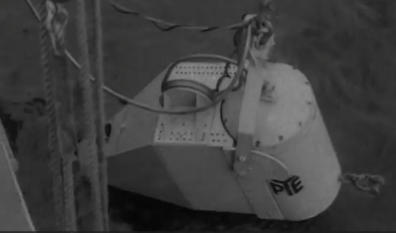
10 - The Silent World (JY Cousteau)
This long 1956 documentary, filmed aboard the famous Calypso over two
years in the Mediterranean, Red Sea, Persian Gulf, and Indian Ocean,
continued Cousteau’s earlier short films, which were all designed to reveal the
undersea world to a general audience. It won both the Palme d’Or at Cannes
and the Academy Award for Best Documentary, securing J.Y. Cousteau’s
worldwide reputation. Note that some practices shown in the film may shock
modern viewers; however, as with every vintage film, these practices should
be considered in the context of their time.
Film published on various YouTube channels
Website: https://www.youtube.com
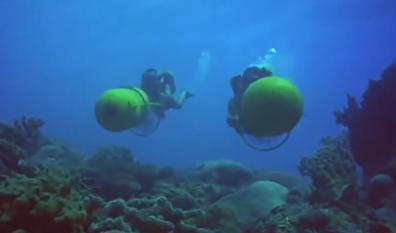
11 - Le monde du silence (JY Cousteau)
This film is the French (and original) version of The Silent World (see above)
Film published on various YouTube channels
Website: https://www.youtube.com
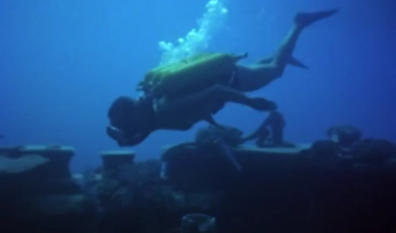
12 - Underwater welding Operations (Unidentified British Pathé Video)
Despite research, it has been impossible to identify the real title of this video by
British Pathe, likely published in the 1950s or early 1960s.
Film published by British Pathe, available on various YouTube channels
Website: https://www.britishpathe.com/
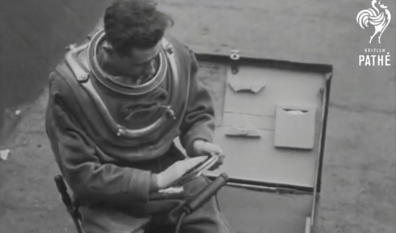
13 - US Navy Diving: Assembling the deep sea outfit
This U.S. Navy instructional film was produced around 1963 for training Navy
divers and diving tenders. It demonstrates the complete U.S. Navy Standard
Deep Sea Diving Outfit, consisting of: canvas diving dress, copper-and-brass
helmet (Mark V type), breastplate (corselet), neck gasket, lead chest and back
weights, weighted belt, weighted boots, air hose, lifeline, telephone
communications cable, non-return valve, exhaust valve, and the air control
valve.
Film published by the U. S. Naval photographic center / The Best Film Archives
Website: https://www.youtube.com/user/TheBestFilmArchives
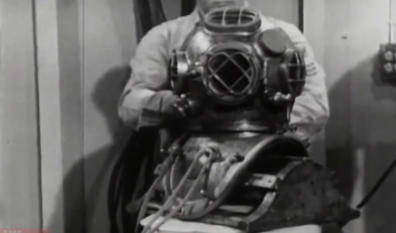
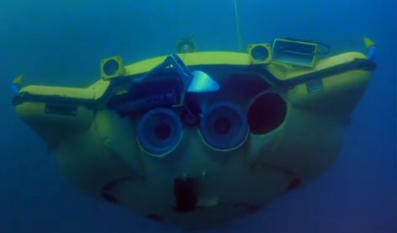
14 - World Without Sun - Conshelf II (JY Cousteau)
This film relates to Cousteau's underwater habitat experiment conducted in the
Red Sea off Sudan from 14 June to 14 July 1963. It involved six divers who
lived in a starfish-shaped habitat at a depth of 10 m (33 ft), with two of them
also living for one week in a second habitat at 30 m under heliox. This film also
shows the "diving saucer" concept: a compact, disk-shaped submersible
capable of descending to 300 m depth while providing excellent visibility and
agility underwater.
This film won the Academy Award for Best Documentary Feature and is
considered a precursor to the practice of saturation diving. It is worth noting
that this experiment was preceded by Conshelf 1, in which 2 divers were
saturated from the 14th to the 21st of September 1962 at a depth of 10 m
near Marseille. Unfortunately, no document or video related to this event
could be made available for our database.
Film published on various YouTube channels
Website: https://www.youtube.com
15 - Le monde sans soleil - Precontinent 2 (JY Cousteau)
This film is the French (and original) version of World Without Sun
Film published on various YouTube channels
Website: https://www.youtube.com
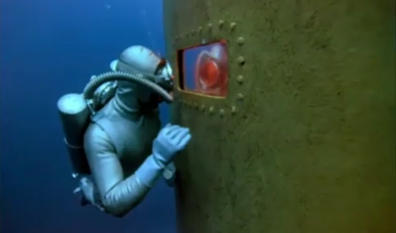
16 - Sealab 1 (US Navy)
The SEALAB program was the first series of saturation-diving experiments
conducted at sea by the US Navy in the 1960s under the leadership of Captain
(later Rear Admiral) George F. Bond. The program comprised three phases
and used habitats installed on the seafloor. While, for many practical reasons,
the underwater habitat concept was not adopted for military and commercial
diving in favor of pressurized systems installed on the decks of surface support
vessels that use a closed bell to deploy divers, these experiments enabled the
US Navy to develop the first saturation diving procedures.
Sealab 1 was conducted 26 miles off Bermuda between the 20th and 31st of
July, 1964, at a depth of 192–193 ft (58–59 m) and involved 4 divers who
successfully completed experiments from the submerged habitat during these
11 days. The operation was interrupted due to an approaching tropical storm.
Film published by the US Navy and the US National archives
Website: https://www.archives.gov/
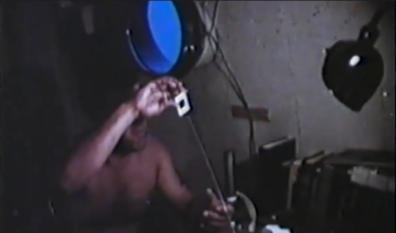
17 - Conshelf III (JY Cousteau)
Conshelf III was a documentary about a more industrial experiment than
Conshelf II, its purpose being to live for 22 days at a depth of 100 m under
heliox and carry out underwater operations commonly practiced in the
offshore industry. The operation took place off Cap Ferrat, France, from 22
September to 13 October 1965 and was completed successfully. However,
that was the last in this series of experimental dives involving underwater
habitats, as the French Navy and the commercial diving industry ultimately
adopted the principle of saturation diving systems similar to those we continue
to use today, which COMEX began developing during the same period.
Film published by The National Geographic Society (USA). Today, available on
various YouTube channels
Website: https://www.youtube.com
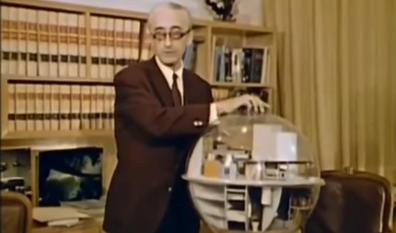
18 - Precontinent 3 (JY Cousteau)
This film is the French (and original) version of Conshelf III
Film published by The National Geographic Society (USA). Today: “L'aventure
Cousteau". Also available on various YouTube channels.
Website: https://www.youtube.com
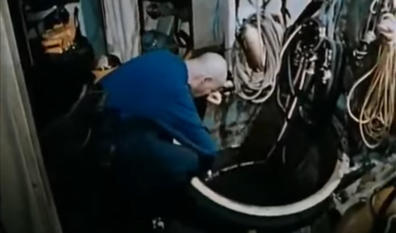
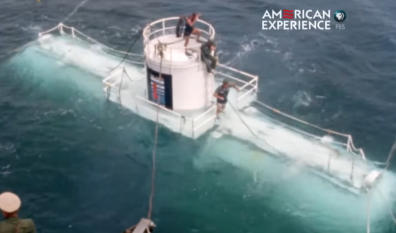
19 - Sealab 2 (US Navy)
Sealab 2 was conducted in La Jolla Canyon, California, near the Scripps
Institution of Oceanography. between the 24th of August and the 10th of
November 1965, at a depth of 205 ft (62 m), and was staffed by three
successive teams, each occupying the habitat for approximately 15 days,
except one diver who spent 30 days (team #2 and #3), with a total of 10 divers
participating in the experiment that was completed successfully
Film published by American Experience. Today, available on various YouTube
channels
Website: https://www.pbs.org/wgbh/americanexperience/
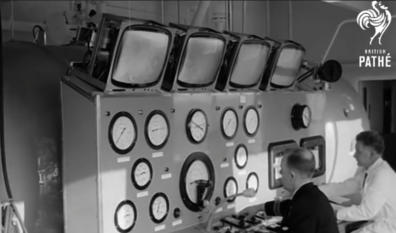
20 - Deep Diving Trials Unit
This 1965 British Pathé newsreel provides one of the earliest public views of
the Deep Diving Trials Unit (DDTU) at the Royal Naval Physiological Laboratory
in Gosport, Hampshire, England. It documents simulated deep-diving trials
conducted in a hyperbaric diving simulator during a period when the British
Royal Navy was rapidly expanding deep-diving research.
Film published by British Pathe
Website: https://www.britishpathe.com/
21 - Sealab 3 (US Navy)
Sealab 3 was conducted in San Clemente Island, California, at a depth of 610 ft
(186 m). The operations started on 15 February 1969. However, major gas
leaks were detected almost immediately, resulting in several repair attempts.
During these repairs, on the 17th of February, the diver, Berry L. Cannon, died
from carbon dioxide poisoning caused by an improperly prepared scrubber
canister in his semi-closed rebreather, resulting in the aborting of the
operation.
Film published by American Experience. Today, available on various YouTube
channels
Website: https://www.pbs.org/wgbh/americanexperience/
22 - Atlantis 3 (Duke University)
The experimental dives of the Atlantis series were initiated at the Duke
University Medical Center in 1978 and carried out from 1979 to 1981 to
establish the relationship between a given nitrogen percentage (5% and 10%)
and the rate of compression required to prevent the high-pressure nervous
syndrome (HPNS) at depths below 450 m. The aim of these dives was also to
determine the effects of inspired gas density, hydrostatic pressure, and narcosis
on various circulatory and respiratory parameters, including the presence of
dyspnea.
Altantis #1, carried out in April 1979, involved 3 volunteers who were
compressed with a trimix of 5% nitrogen using a fast, stepped descent profile
to a final depth of 460 m. The divers performed very well after Day 2.
However, the performance tests showed some decrement.
Atlantis #2 was launched in March 1980 and also involved 3 divers. Its profile
to 460 m (1509 ft) was similar to that of Atlantis #1, except that a trimix of 10%
nitrogen in heliox was used, and that the nitrogen percentage was lowered to
7.7% at 650 m (2132 ft) by compressing with pure helium. The results were
considered satisfactory.
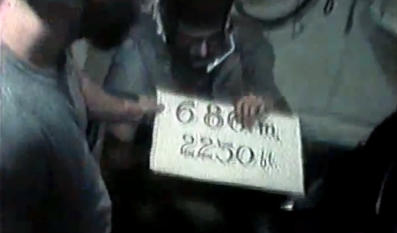
The Atlantis #3 dive took place from 23/01/81 to 06/03/81. The aim of this
dive was to ensure that a trimix with 10% nitrogen would be effective for
reaching depths below 600 m without causing incapacitating High-Pressure
Nervous Syndrome (HPNS) symptoms. It resulted in a storage time of four and
a half days at 650 m and one day at 686 m, making it the second-deepest
human dive recorded to date (this record was surpassed by the COMEX 701
msw dive in 1992).
These dives are better described in Section HPNS of book #4 of our saturation
diving manual, available under the "Documents Diving & ROV Specialists"
subsection in this database.
The video presented here relates to the operations undertaken during the
Atlantis 3 dive, the latest of the series. It was produced for the Duke University
Center for Hyperbaric Medicine and Environmental Physiology (CHMEP) /
Atlantis Dive Series research program (1978–1984). However, the actual
production company is not yet identified.
Note that this video comes from the original film, which has been split into 3
separate videos on the Duke University website. It has been recomposed into
one file to make it easier to watch
Duke University website: https://anesthesiology.duke.edu/hyperbaric-center
23 - COMEX - Hydra 8
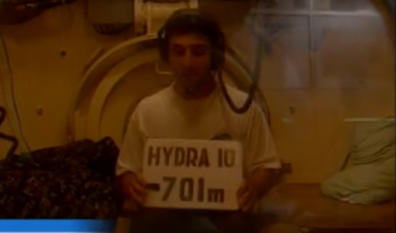
The Hydra dive series, first launched in 1968, culminated in the Hydra 10 dive,
which reached 701 m in 1992, the deepest depth reached by a diver at this
day.
As for the US Atlantis series dives, the Hydra series is explained in Section HPNS
of book #4 of our saturation diving manual, available under the "Documents
Diving & ROV Specialists" subsection in this database.
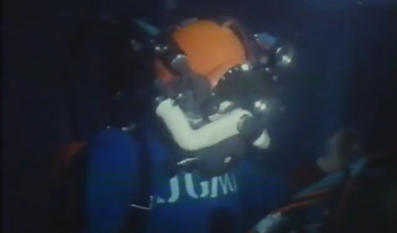
The purpose of Hydra #8 was to demonstrate a test that accurately reflected
actual working conditions at sea, conducted from a barge using a real diving
system. To match real working conditions, the project included making
pipeline connections and associated tasks at depths greater than 500 metres.
Two teams of 3 divers each were involved. Preparation for the operation took
place in July 1986 and culminated in a dive conducted from 22/02/1988 to
22/03/1988 from the COMEX barge ORELIA, whose diving system had been
configured for this specific operation. The depths attained during the bell runs
were between 520 and 534 m, making these dives the deepest performed at
sea.
Film released by COMEX and the Provence-Côte d'Azur Region.
COMEX Website related to hydrogen dives: https://comex.fr/en/news-
en/hydrogen-mastering-pressures-creating-the-future/
24 - The Hydra 10 story, as told by Theo Mavrostomos and Prof. Gardette
Hydra 10 followed Hydra 9, whose purpose was to test the effects of hydreliox
at 900 m on mice and to continue research on the human hydrogen narcosis
threshold during long exposures at 200 and 300 m. The objective of Hydra 10
was to conduct a hyperbaric chamber dive at a depth of 700 metres to verify
the operational feasibility of human intervention at that depth using hydreliox
mixtures (H2/He/O2).
This dive, which started on 02/11/92 and lasted until 14/11/92, involved three
divers and resulted in one diver reaching 701 m, the deepest depth attained
by a diver to date.
Despite extensive research, we were unable to find any original footage of this
event, even though we are convinced that such footage exists. However, we
did find this 2012 interview with Theo Mavrostomos, the diver who reached
701 m, and Professor Gardette, who led the medical team in charge of the
project. Note that some footage from this short report in French (apologies to
those who do not speak the language) was filmed during this operation. For
those familiar with our website, we can also see Dr. Massimelli in it
Film published by LCM - TV sud Provence
Website: https://www.youtube.com/lcm