










Underwater construction 2025










Click on the
octopus to return to
the top of the page


03 - Control of nonlinear offshore platforms using semi-active tuned
mass damper inerter under combined wave and wind loads
Authors: Seyyed Ali Mousavi Gavgani, Seyed Hossein
Hosseini Lavassani, Gebrail Bekdas
This paper studies the Semi-Active Tuned Mass Damper
Inerter (SATMDI) for reducing vibrations in offshore
platforms responding to wind and wave loading. It uses
an interval type-2 fuzzy logic controller (IT2FLC) optimized
with an observer-teacher-learner-based optimization
algorithm. Results show that SATMDI + IT2FLC can greatly
reduce energy effects, preventing structural plasticity, with
example reductions of 91% in inter-story drift and 83% in
absolute acceleration for a 100-year loading scenario.
04 - A Comprehensive Study on Environmental Impacts of Offshore
Platforms Abandonment and Decommissioning in Malaysia.
Authors: Nuraiesya Khanoon Thariq Khan, Nurfarah
Farhana Nurisman, Asheeka Razali, Mohd Haris
Abdul Rani
PETRONAS plans to increase the abandonment and
decommissioning of offshore platforms from 2024 to
2026. Malaysia's oil and gas sector, contributing about
20% to the GDP, requires eco-friendly methods to prevent
environmental harm. The study reviews sustainable
dismantling practices, balancing economic and ecological
needs.

05 - Tether analysis and stability investigation of space rocket launch
offshore compliant platform in regular seas.
Authors: Srinivasan Chandrasekaran, Ashish
Unnikrishnan, and Adwait Panindre
This study looks at the stability of a multi-utility offshore
platform for rocket launches, focusing on tether dynamics
and platform behavior. The platform, modeled in ANSYS
AQWA, has buoyant legs and a topside linked by ball-
and-socket joints, allowing motion while keeping rotations
separate. The extended topside needs stability checks due
to pitch moments. Free-decay tests show rigid heave and
pitch motions (~3 s) and flexible surge motions (~150 s).
Dynamic tether analysis in different sea states shows
simultaneous tether failures significantly affect platform
stability, causing major shifts in heave and pitch.
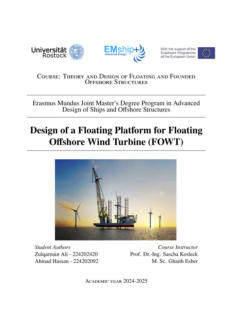
06 - Design of a Semi-Submersible floating platform for Floating
Offshore Wind Turbine (FOWT) IEA 15-Megawatt
Authors: Zulqarnain Ali, Ahmad Hassan, Sascha Kosleck,
Ghaith Esber
This study proposes solutions for designing a semi-
submersible platform for a 15-MW wind turbine, located
300 meters deep with a height of 165 meters above
water. It uses structural steel and concrete for stability and
examines the platform's dynamics while ignoring mooring
effects. Structural analysis includes pitch and stability
calculations. Advanced simulations assess heave responses
and wave interactions, achieving a 20% reduction in
dynamic response and 25% improvement in energy
efficiency. The framework aids in marine engineering, and
future work may include testing and machine learning for
better design.

13 - Analysing the legal and regulatory framework for
decommissioning offshore platforms: a comparison between
brazil (br) and the united kingdom (uk).
Authors: Elesito Lelo-Mali Cairo de Deus, José Adolfo de
Almeida Neto, Attawan Guerino Locatel Suela
This article analyzes the legal aspects of the
decommissioning process in the United Kingdom and
Brazil through a systematic literature review. It examines
norms related to offshore platform decommissioning in
both countries, finding that they align their policies with
international sustainability standards. However,
implementation issues arise, especially in Brazil, due to
conflicts of interest. The study suggests areas for future
research to improve policy application and resolve these
conflicts.
14 - The impact of platform motion on the aerodynamic
characteristics of floating offshore wind turbine arrays.
Authors: Xiang Li, Qing Xiao, and Yang Huang
Floating offshore wind turbines (FOWTs) are gaining
attention. This paper examines how platform motion
affects the aerodynamic features of a FOWT array using a
high-fidelity numerical tool developed from OpenFOAM,
a powerful, open-source software for computational fluid
dynamics (CFD). Three turbine arrangements are
simulated, showing significant wake interactions. The
capacity factor varies by layout, while platform motion
influences power fluctuations. A coupled model
considering both pitch and surge motion is needed.
01 - Effects of Cover-Plate Geometry on the Mechanical Behavior of
Steel Frame Joints with Middle-Flange and Wide-Flange H-
Beams
Author: Osama Zaid Yahya Al-Ansi, Linfeng Lu, Saleem
Mohammed Ali Ahmed AL-Saeedi and Bingyou
Liu
This study explores the mechanical behavior of cover-plate
reinforced connections in steel frames, addressing gaps in
current design standards. Results show that cover plates
improve load-bearing capacity and ductility by relocating
plastic hinges outward from joint regions. The study also
recommends cover-plate thickness should be at least 0.3
times the beam height, ensuring the combined thickness
does not exceed the column height. These findings
provide practical guidelines for designing resilient steel
frame connections in seismic regions.

12 - Bolted Flange Connection Leakage: a Systematic Review of
Monitoring Challenges and Technologies
Authors: Ben Cloostermans, Dick Pronk, Björn
Bruckenburg, Sidney Goossens, Tigran
Baghdasaryan, Francis Berghmans
This article reviews various techniques to enhance the
safety, reliability, and environmental compliance of bolted
flange connections in industrial systems. It emphasizes the
importance of proper installation processes to achieve
optimal gasket surface pressure for leakage prevention
and highlights the need for robust monitoring systems.
The article explores both traditional and advanced
monitoring strategies, weighing their effectiveness in leak
detection and highlighting innovative approaches for
enhancing long-term monitoring.
15 - Gas Pipeline Leakage Risk Analysis Based on Dynamic Bayesian
Network
Author: Zhenping Wang, Xiaoyun Gui, Weifeng Wang,
Xuanchong Zhao, and Xiaohan Ji
A dynamic Bayesian network analysis is proposed to
address high uncertainty and leakage risk in gas
production pipelines in high-sulfur fields. The model uses
Bow-tie model analysis to summarize risk sources and
accidents, and a temporal dimension to construct a
dynamic Bayesian network model. The study reveals that
flow, valve, and pipeline status are key factors in gas
leakage accidents, and six risk sources, including medium
corrosion, are identified.
17 - Experimental Study on Pipeline–Soil Interaction in Translational
Landslide
Authors: Tianjun Xue, Lingxin Liu, Jianlei Zhang, Mengjie
Dai, Gengyuan Shi, and Xinze Li
This study investigates the interaction between pipelines
and soil in translational landslide zones using large-scale
indoor model tests. Results show that failure in
translational landslides is characterized by initial sliding at
the slope crest, driving lower soil mass, and resulting in
global slope instability. Pipelines traversing slopes laterally
enhance slope stability by providing anti-sliding resistance.
The study offers insights for improving pipeline safety and
reliability.

18 - Study of the mechanical properties of double line pipelines
under silty sandstone and pipeline coupling.
Authors: Cun-dong Xu, Wen-hao Han, Jin-xi Xia, Jun-kun
Nie, Jun Cao, & Zhi-hang Wang
This study examines the impact of filling thickness and
internal water pressure on the stability of a water supply
pipeline. It uses a numerical simulation method to study
the influence of different filling thicknesses and internal
water pressures on the pipeline's mechanical properties.
Results show that soil filling and single-layer filling
thickness increase vertical displacement and tensile and
compressive stresses.
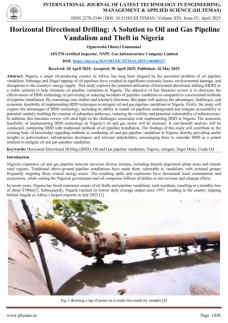
20 - Horizontal Directional Drilling: A Solution to Oil and Gas
Pipeline Vandalism and Theft in Nigeria
Authors: Ogunweolu Oluseyi Emmanuel
This study explores the use of horizontal directional
drilling (HDD) as a potential solution to combat oil
pipeline vandalism in Nigeria. The research aims to
analyze the advantages, challenges, and economic
feasibility of HDD in Nigeria's oil and gas sector. The
study will examine case studies and literature to assess
the economic feasibility of HDD and compare it with
traditional methods. The findings will contribute to the
existing knowledge on combating oil and gas pipeline
vandalism in Nigeria and encourage policymakers and
stakeholders to consider HDD as a viable solution.

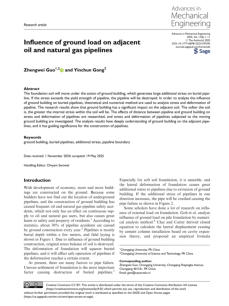
21 - Influence of ground load on adjacent oil and natural gas
pipelines
Authors: Zhengwei Guo, and Yinchun Gong
Ground building causes significant stress on buried
pipelines, potentially destroying them if the stress exceeds
the pipeline's yield strength. Research uses theoretical and
numerical methods to analyze stress and deformation of
pipelines. The study investigates the impact of distance
between pipeline and ground building on stress and
deformation, providing valuable insights for pipeline
construction.
22 - Mathematical And Experimental Investigation Of Vibration
Isolation Characteristics Of Negative Stiffness System For Pipeline
Authors: Sharif Md Yousuf Bhuiyan, Adar Chowdhury,
Md Shahadat Hossain
This document analyzes the impact of vibration on
pipelines and their equipment, focusing on the
development of a negative stiffness system. The study
aims to reduce frequency and vibration in pipeline
systems by adding a negative stiffness system to the main
structure. This will help maintain safe and secure
operations, ensuring the safety and efficiency of pipelines.
23 - Mechanical Response of Pipeline Leakage to Existing Tunnel
Structures: Insights from Numerical Modeling
Authors: Ruichuan Zhao, Linghui Li, Xiaofei Chen, and
Sulei Zhang
This study investigates the mechanical response of
existing tunnel structures to pipeline leakage under
different layout conditions using numerical modeling.
Results show that horizontal pipeline-tunnel distance does
not influence leakage zone development but significantly
alters seepage path length and interface contact area.
This information is crucial for optimizing urban
underground design and construction guidelines.
27 - Analysis of the Causes of Excessive Noise and Vibrations of Live
Steam Pipelines
Authors: Damian Pietrusiak, Jerzy Czmochowski, Artur
Górski, Artur Iluk, Przemysław Moczko, and
Michał Paduchowicz
This article investigates noise and vibration issues in a live
steam pipeline using a scanning laser vibrometer and
acoustic camera. A discrete model and FEM analysis
identify noise sources and propose methods for
eliminating harmful noise.

28 - Dynamic response behaviors of buried pipelines subjected to
the impact of spherical falling objects in cold regions
Authors: Qiaozhen Li, Chao Wang, Peng Wang, Min
Luo, Hao Wang, Ye Lu
The study examines the dynamic response behavior of
buried pipelines in cold regions, considering the
nonlinearity of pipeline material, falling objects, and frozen
soil. Results show that factors like diameter-to-thickness
ratio, impact velocity, and soil water content significantly
influence pipeline deformation and residual stress.
Controlling these factors can improve pipeline resistance
to external impact damage.
29 - Optimising ML Pipeline Execution via Smart Task Placement
Authors: Pedro Rodrigues, Julio Corona, Mário Antunes,
and Rui L. Aguiar
This paper introduces a modular and flexible placement
system for Machine Learning Operations (MLOps)
pipelines, which automatically allocates tasks to suitable
machines, reducing execution and waiting times. The
system outperforms baseline methods and the
Kubernetes default scheduler, demonstrating potential for
improved resource utilization and faster ML model
development in heterogeneous environments.
30 - Vibration Control of Deepwater Offshore Platform Using
Viscous Dampers Under Wind, Wave, and Earthquake
Authors: Kaien Jiang, Huiyang Li, Guoer Lv, Lizhong
Wang, Lilin Wang, and Huafeng Yu
This study explores the use of viscous dampers (VDs) to
reduce the vibration of a deepwater offshore platform
under wind, wave, and earthquake action. A finite
element model was used, and the results showed that
VDs diagonally placed at each structural level effectively
suppress platform vibrations. Under seismic excitation, the
system reduced maximum deck acceleration, velocity,
displacement, and base shear force by 9.95%, 22.33%,
14%, and 31.08%, respectively.
31 - Research on High-Performance Underwater-Curing Polymer
Composites for Offshore Oil Riser Pipes
Authors: Xuan Zhao, Jun Wan, Xuefeng Qv, Yajun Yu,
and Huiyan Zhao
This study developed an underwater-curing composite
material for offshore oil and gas extraction riser pipes,
addressing corrosion issues and poor adhesion. The
material, based on a polyisobutylene and butyl rubber
blend system, exhibits high peel strength, low water
absorption, and stability across a wide temperature range.
The innovative solvent-free two-component epoxy system
achieves rapid surface drying and pull-off strength
exceeding 3.5 MPa. The material's fundamental properties
and operational performance were determined,
extending the service life of the pipes.
32 - Symmetric and Asymmetric Semi-Metallic Gasket Cores and
Their Effect on the Tightness Level of the Bolted Flange Joint
Authors: Przemysław Jaszak, and Rafał Grzejda
This paper explores the impact of semi-metallic gasket
core shapes on bolted hinge joints. Its authors found that
asymmetric gaskets provide higher strain on the sealing
graphite layer and have a more uniform strain
distribution. Additionally, asymmetric gaskets reduce
leakage rates by around 60% compared to symmetric
ones. The main leakage path is through the porous
graphite layer.

37 - Advanced resource operation of main natural gas pipeline
using CFD modeling methods
Authors: G.G. Ismayilov, F.B. Ismayilova, A. Nagizadeh
The oil and gas industry's future operation of pipelines is
crucial, and periodic checks are necessary to diagnose
their technical condition. This paper investigates residual
operating resources and wall thickness using an
OLYMPUS 27 MG Ultrasonic Thickness Gauge. The study
calculates minimum allowable thicknesses based on
internal pressure and operational loads, determining the
possibility of safe operation. Both analytical methods and
modern software were used for calculations, including a
three-dimensional spatial model and strength and stability
calculations.
38 - A Novel Quadrilateral-Shaped Vibration Isolation Platform and
Its Application in the Offshore Floating Platform
Authors:
Zhenbin Guo, Jing Bian, Liangyu Li, and Ning Su
This study presents a quadrilateral-shaped vibration
isolation platform (QVIP) for offshore wind platforms,
combining negative stiffness elements and optimized
damping for high-static-low-dynamic stiffness. The design
offers improved stability and effective vibration control,
overcoming traditional trade-offs between isolation and
load-bearing capacity.
39 - Prediction of Failure Pressure of Sulfur-Corrosion-Defective
Pipelines Based on GABP Neural Networks
Authors: Li Zhu, Yi Xia, Bin Jia, and Jingyang Ma
This study explores the degradation and failure prediction
of pipeline materials in sulfur-containing environments,
focusing on X52 pipeline steel. Despite surface corrosion
and reduced structural load-bearing capacity, X52 steel's
intrinsic mechanical properties remained within standard
ranges. A Johnson-Cook constitutive model and a genetic
algorithm-optimized backpropagation neural network
were developed to predict failure pressure and corrosion
rate in acidic environments.
02 - Design and development of a low-cost, eco-friendly forklift for
sustainable logistics management
Authors: Asif Jalal, Muhammad Farooq, Izza Anwer, Nasir
Hayat, Adeel Munir, Imran Zahid, Noreen Sher
Akbar, M. Hamza, M. Nouman, and Fahid Riaz
This article discusses the development and evaluation of
an automated robotic forklift prototype designed to
reduce injuries and improve efficiency in material
handling within warehouses. Current statistics highlight
the significant number of injuries and fatalities associated
with manual forklift operations, prompting the need for
safer alternatives. The prototype features advanced
mobility capabilities, a remote operating system, and
robust structural integrity, demonstrating its potential as a
cost-effective and eco-friendly solution for industrial
applications.
11 - Sustainability assessment of different pipeline materials in
freshwater supply systems
Authors: Imran Mir Chohan, Azlan Ahmad, Naraindas
Bheel, Taoufik Najeh, and Abdulrazak H. Almaliki
This article explores the environmental effects of different
pipeline materials used in freshwater supply systems
through a life cycle assessment (LCA) framework. Utilizing
SimaPro software, the research evaluates four pipeline
materials and identifies that steel has a notably higher
environmental impact during the manufacturing phase
compared to others. It also assesses the installation phase,
revealing that plastic pipelines produce significant impacts
during installation. A case study in Seri Iskandar
demonstrates that using environmentally sustainable
materials can substantially reduce various environmental
impacts associated with pipeline manufacturing and
materials.
19 - Calculation of steel corrosion rate of reinforced concrete slab
based on rust expansion crack
Authors: Duo Wu, Ziyi Zou, Hao Wu, Weihong Wan,
Shangchuan Zhao, Jian Cao
This study develops a refined calculation model that
enhances the understanding of how distributed
reinforcement affects crack propagation in reinforced
concrete. It aims to improve nondestructive corrosion
assessment methods through both experimental and
theoretical analyses. The research incorporates the
relationship between crack width and corrosion rates,
validated through comparisons with existing models,
ultimately contributing to more reliable quantitative
detection of reinforcement corrosion in concrete
structures.
26 - Modeling of the dynamic response of a wearable composite for
an underwater shock wave
Authors: Jiangrui Qian, Xuhua Yu, Wenwu Liu, Guoyang
Huang, Xia Liu, Yukun Wen, Yiqun Fang, Jun Li,
and Jiajun Xu
The article discusses the destructive effects of underwater
explosions and highlights the urgent need for research
not just in engineering protective materials, but also in
human protection materials. A new composite material,
combining carbon fiber laminate, artificial cartilage foam
(ACF), and Kevlar fabric, has been developed to reduce
injuries from explosive impacts. A finite element model
was created to analyze the composite’s effectiveness while
considering various factors like plate thickness and core
panel density, along with an equivalent human body
representation.


40 - Fiber-Reinforced Polymer Laminates in Aviation and Structural
Engineering: A Synthetic Comparison of Performance
Requirements, Design Principles, and Defect Assessment
Procedures
Authors: Joana Janeikaite, Ieva Misiunaite, and Viktor
Gribniak
The article explores the divergent approaches to fiber-
reinforced polymer (FRP) laminates in aviation and
structural engineering, highlighting the unique challenges
of each domain. While aviation prioritizes certification and
fatigue resistance, structural engineering focuses on
durability and environmental impact. The review
synthesizes information from 168 literature references to
propose integrated modeling and inspection frameworks
that aim to harmonize the precision found in aviation with
the practical considerations of structural engineering for
improved performance and reliability of FRP composites.
41 - Hydrodynamic Characteristic Around the Riprap Protection of
Monopile Wind Power Foundation with Scour Pit During Scour
Authors: Tongshun Yu, Li Wang, Congbao Mei, and
Xiaofeng Dong
This article examines the role of riprap protection in
offshore wind power foundations, particularly its impact
on hydrodynamics during scour events. Through
experimental data on the soil failure process and a
numerical model simulating the interaction between
currents, the study reveals that intact riprap increases flow
velocity and horseshoe vortex range around the
monopile while decreasing pressure. As riprap becomes
scoured, water cross-section increases, leading to reduced
velocities and altered vortex patterns, ultimately affecting
the stability of the foundation.
42 - The Mechanism Underlying the Influence of Temperature on the
Fracture Toughness of Dissimilar Steel Welded Joints in Nuclear
Power Plants
Authors: Jiahua Liu, Aiquan Zheng, Lei Wang, Hongwu
Xu, Feifei Ji, Liqun Guan, and Jiong Luo
This study investigates the fracture toughness (JQ) of the
isolation layer in dissimilar metal welded joints (DMWJs) of
pressure vessels, specifically focusing on SA508-III-
309L/308L-316L joints. Using the J-integral method, the
research evaluates the impact of temperature on unstable
crack propagation by conducting tests at varying
temperatures, revealing that the JQ decreases as
temperature increases, with a maximum reduction of
31.8%. The study concludes that the structural
characteristics of the isolation layer and the thermal
expansion differences exacerbate crack initiation and
propagation, ultimately compromising the toughness of
the weld material.

10 - Explosive Charge Applications in Seabed Strengthening for
Underwater Pipelines
Authors: Eligiusz Mieloszyk, Anita Milewska, Mariusz
Wyroslak
This paper highlights the critical role of subsoil quality in
ensuring the safety and reliability of underwater pipelines.
It applies non-classical operational analysis to formulate a
generalized dynamic system framework, within which the
subsoil–pipeline interaction in underwater excavations is
modeled. The study justifies using this analytical
framework for the pipeline–subsoil system and proposes
an innovative blasting-based method to compact and
enhance subsoil for pipeline foundations.

16 - Corrosion prediction for shale gas pipelines based on Bayesian
network and common cause failure analysis
Authors: Jianhua Gong, Jun Shen, Ming Wen, Kege Yang,
Jing Zhou, Yaping Li, and Xingyu Zhu
Internal corrosion causes perforation accidents in shale
gas pipelines, with limited research on prediction due to
complexity. This paper develops a Bayesian network
model with common cause failure analysis to predict
internal corrosion probability. Applied to a Sichuan
Province shale gas field, the model achieved a 20% error
margin against field inspections.
25 - Water Basin Effect of Cofferdam Foundation Pit
Authors: Guofeng Li, Qinchao Zuo, Xiaoyan Zhou, Yanbo
Hu, and Ning Li
This study examines the water basin effect in underwater
sand layers of steel pipe pile cofferdams by applying
foundation pit analysis concepts. It derives theoretical
equations for deformation evolution of steel pipe piles and
bottom seals during four dewatering stages: riverbed
excavation, dewatering to second and third supports, and
final sealing. Steel pipe piles are modeled as cantilever
beams, and bottom seals as end-fixed beams, with
deflection equations derived using superposition.

35 - Optimization Design Method of Pipe-Insulating Joints Based on
Surrogate Model and Genetic Algorithm
Authors: Chen Guo, Zheng Yang, Jianbo Dong, Yanchao
Yue, Linjun Tian, & Ping Ma
This study addresses the over-conservative design of pipe-
insulating joints in oil and gas pipelines, which leads to
excessive size, weight, and cost. By analyzing the right
flange under worst-case conditions and using finite
element calculations, a dataset linking flange dimensions
to maximum stress was generated. A surrogate model,
developed via ridge regression, accurately predicts stress,
enabling optimization. Coupled with a genetic algorithm,
the model identifies optimal flange dimensions, reducing
computational effort.
36 - A Transfer Matrix Method to Dynamic Calculation and Optimal
Design of Flanged Pipelines
Authors: Zhiming Yang, Yingbo Diao, Jingfeng Gong, and
Kai Gao
This paper studies the dynamic characteristics of fluid-filled
ship piping systems with flanges and optimizes their
design using transfer matrix methods (TMMs). It proposes
two modeling approaches for flat-welded and weld-neck
flanges: Method 1 uses a lumped mass equivalent, while
Method 2 equates flanges to pipe sections with increased
wall thickness based on finite element and analogy
concepts. Comparisons with finite element method (FEM)
results show Method 2 is more accurate for both flange
types. Experimental verification confirms consistency with
Method 2.
50 - Progress in Offshore Oilfield Development Planning
Author: L.M.R. Silva, and C. Guedes Soares
This article critically reviews the growing integration of
ROVs and AUVs into offshore wind farm O&M,
highlighting their role in enhancing safety, precision, and
autonomy in harsh marine environments. It emphasizes
synergies with AI, digital twins, and multi-robot
collaboration, signaling a shift from crewed vessel-
dependent, manual methods toward automated,
sustainable, and integrated solutions aligned with the
sector’s environmental and social goals. Key challenges,
particularly energy autonomy, are discussed alongside
emerging trends, underscoring the need for a robust,
connected, and sustainability-driven offshore maintenance
framework.
43 - Risk and safety assessment of hydrogen pipelines and storage
tanks using preliminary hazard analysis
Authors: Solomon Asante-Okyere, Rhoda Afriyie Mensah,
Joakim Sandström, and Michael Försth
This study assessed hazards in hydrogen pipelines and
storage tanks using a database, which recorded 34
pipeline and 28 storage tank incidents over five decades.
Pipeline incidents frequently resulted in fires, while storage
tank failures often led to explosions. Key hazards included
corrosion and welding issues for pipelines, operational
failures and corrosion for storage tanks, and rare but high-
impact risks like natural disasters. Civil/construction work
also posed risks to pipelines. The findings underscore
critical vulnerabilities in these systems and emphasize the
need for enhanced safety management to mitigate
hazardous outcomes.
44 - Numerical study of corrosion in high pressure vent pipelines at
high sulfur natural gas stations considering liquid phase
accumulation and erosion
Authors: Jing Li, Jun Shen, Longhua Tan, Liang Zhang,
Defei Du, Yihong Liao, and Xingyu Zhu
Vent pipelines in high-sulfur natural gas stations are
susceptible to acidic corrosion and erosion, particularly at
elbows, compromising safety. Existing on-site wall
thickness measurements are insufficient for accurately
assessing the entire pipeline's corrosion status. This study
employed computational fluid dynamics (CFD) to simulate
a high-pressure vent pipeline. By analyzing the flow field,
the simulation identified areas of liquid accumulation and
severe erosion, providing data to guide on-site corrosion
measurement point selection.
45 - Machine Learning Approaches for Fatigue Life Prediction of Steel
and Feature Importance Analyses
Authors: Babak Naeim, Ali Javadzade Khiavi, Erfan Khajavi,
Amir Reza Taghavi Khanghah, Ali Asgari, Reza
Taghipour, and Mohsen Bagheri
Predicting fatigue behavior in steel components is difficult
due to nonlinear material degradation under cyclic
loading. This study developed four hybrid machine
learning models by combining Histogram Gradient
Boosting (HGB) and Categorical Gradient Boosting (CAT)
with metaheuristic optimization algorithms, Prairie Dog
Optimization (PDO) and Wild Geese Algorithm (WGA).
The models, HGPD, HGGW, CAPD, and CAGW, aim to
improve the accuracy, generalization, and robustness of
steel fatigue life predictions.
46 - Influence of Pile Spacing on the Compressive Performance and
Soil Failure Mechanism of CEP Double Piles
Authors: Yongmei Qian, Yuhang Li, Xihui Wang, Yu Dong,
Yingtao Zhang, Ming Guan, and Ying Zhou
Concrete expanded-plate piles (CEP piles) are innovative
variable-section piles that provide broader applicability,
higher bearing capacity, and greater economic benefits
than conventional straight-shaft piles, as evidenced by
their growing adoption in construction. While prior
research confirms the superior bearing performance of
CEP monopiles, the impact of pile spacing on CEP double
piles remains unexamined. This study addresses this gap
by integrating small-scale soil tests with finite element
simulations to assess how pile spacing affects the bearing
behavior and soil failure mechanisms of CEP double piles.
47 - Re-evaluation of excavation class limits for underground
excavations based on new data
Authors: Zulfu Gurocak, Ayberk Kaya, Mustafa Kanik, &
Selcuk Alemdag
Researchers have developed empirical excavatability
classifications primarily for surface excavations, with limited
options for underground conditions. This study analyzed
16 underground rock masses, assessing their engineering
properties, rock strength, and in-situ excavation classes.
Findings reveal that surface-based classifications are
unsuitable for underground use due to overburden stress,
which complicates excavation, particularly for medium,
weak, and very weak rock masses. However, classifications
align well for good to very good rock masses.
49 - Experimental study on critical conditions of ground collapse
caused by leakage of pressurized hydraulic pipelines in sandy
formations
Authors: Liling Zhou, Qimeng Ping, Huizhen Shen, Yiming
Wang, Qing Huang, and Dazheng Zhang
Ground collapse, a major safety risk, is often triggered by
pipeline leakage in sandy formations. Through physical
experiments, researchers identified three states of sandy
formations under leakage erosion: infiltration disturbance,
stable cavity, and fluidized failure. Critical conditions
between stable cavity and fluidized failure were
determined to predict ground collapse. Additionally,
models were developed to predict collapse scale
(volume/area) and provide early warnings based on
surface subsidence and cavity area correlations. These
findings offer a scientific basis for urban ground collapse
prevention and control.
48 - A comprehensive risk assessment method for Christmas tree
combined with a multi source information fusion algorithm and
an improved HAZOP method
Authors: Qiong Wang, Huimin Li, Guanlong Ren
This study introduces a novel risk assessment method
combining an improved HAZOP technique with Genetic
Algorithm (GA) and Backpropagation (BP) neural network
techniques, first applied to offshore oil equipment, to
evaluate safety risks of China’s first domestically produced
subsea Christmas tree. Using multi-source fused risk data
from installation and operation, the method classifies risk
likelihood and severity.
51 - Remotely Operated and Autonomous Underwater Vehicles in
Offshore Wind Farms: A Review on Applications, Challenges,
and Sustainability Perspectives
Authors: Rodolfo Augusto Kanashiro, Juliani Chico Piai
Paiva, Willian Ricardo Bispo Murbak Nunes, and
Leonimer Flávio de Melo
This study analyzes approximately 100 papers to identify
methods for planning offshore oilfield development,
aiding decision-making. Unlike previous reviews, it adopts
a broad approach, not limited to a single methodology or
oilfield characteristics. Key findings include the growing
importance of environmental planning decisions and the
crucial need to incorporate safety criteria into technical-
economic decisions during the design phase of
production systems.
07 - The Development of the Pipe Jacking Guidance Technology
Authors: Di Qiu, Lu Wang, Yutong Zu and Yin Qing
Pipe jacking guidance collects machine attitude and
position data to keep routes accurate within tolerances,
preventing facility damage while boosting efficiency,
precision, and safety. This paper reviews system principles
and modes, classifies current techniques, surveys research,
discusses trends toward automation, intelligence, and
multi-source fusion, and outlines challenges in complex
scenarios to guide further innovation.
08 - Mechanical Analysis of Lined Pipe System Under temperature–
Pressure Coupling in Elastic Laying
Authors: Junyan Liu, Wei Zhang, Tianping Gu, Ju Liu,
Jianxin Peng, and Yihua Dou
Lined pipes are important for oil and gas transport
because they resist corrosion and are cost-effective.
Current design codes often simplify their behavior by
viewing them as single-layer systems, ignoring the
complex interactions between the liner and outer pipes
when temperature and pressure change. This study
creates a finite element model to assess the stress
distribution and bonding strength of a specific lined pipe
under various conditions. Findings reveal that internal
pressure improves bonding strength and reduces
delamination risk. Simplified models can underestimate
stress interactions. This research highlights the need for
better design methods.
09 - Identifying path ahead for tackling future challenges in direct-
drive permanent magnet wind turbine generator’s electro-
mechanical design and manufacturing
Authors: Abbas Mehrad Kazemi Amiri, Kelly Tartt, Alasdair
McDonald
To meet UK/EU Net Zero targets, offshore wind farms
with larger turbines are expanding. Harsh conditions
require reliable direct-drive permanent magnet
generators, which avoid gearbox issues but are larger,
heavier, and use more rare earths, creating OEM
challenges in design, supply, manufacturing and
installation. Reviewing state-of-the-art DDPM generators,
identifying key OEMs and interviewing experts shows
manufacturing scaling is the primary challenge.
Recommendations include reducing magnet material,
optimising structural mass, automating processes and
adopting additive manufacturing.
24 - Offshore renewable energies: exploring floating modular energy
Islands, materials, construction technologies, and life cycle
Assessment
Authors: Enzo Marino et al. (29 co-authors)
Floating modular energy islands (FMEIs) are
interconnected floating structures that produce, store,
convert, and transport renewable energy in offshore
environments. This review examines existing technologies
for floating energy structures and their applicability to
FMEIs, evaluates suitable structural materials for
construction, assesses appropriate offshore construction
methods, and analyzes life cycle assessments of hybrid
energy systems. The findings demonstrate environmental
benefits of integrating multiple renewable energy sources,
highlighting FMEIs' potential as sustainable multi-energy
solutions.

33 - Influence of the Centre Distance between Counter-Rotating
Control Rods and the Circular Cylinder on FIV Suppression
Authors: Tianqi Zhang, Zhaoyong Mao, Wenlong Tian,
WenJun Ding, and Guanyong Yang
This study uses computational fluid dynamics (CFD) to
analyze flow-induced vibration (FIV) suppression in ocean
engineering. The research examines how varying the
distance between control rods and a main cylinder affects
vibration suppression across reduced velocities of 2-14,
with particular focus on transverse flow amplitude and lift
coefficients at reduced velocity 10. Analysis of vorticity and
pressure fields reveals that control rods suppress vibrations
by disrupting wake vortices and reducing negative
pressure in the wake region. enhanced suppression at
high reduced velocities.
34 - Dynamic Analysis of an Offshore Knuckle-Boom Crane Under
Different Load Applications Laws
Authors: Ivan Tomasi, and Luigi Solazzi
This study analyzes the dynamic behavior of an articulated
boom offshore crane using FEM simulations. Key
resonance frequencies were identified in the direction of
load application. The crane's response (displacement,
velocity, acceleration) depends on load application laws,
particularly the time (epsilon) to reach full payload. A
strong exponential correlation exists between epsilon and
the dynamic factor (maximum acceleration × payload),
which influences structural effects like overstress,
overturning, and buckling. This correlation serves as a tool
to enhance the safety and reliability of offshore lifting
operations.
52 - De-risking utilising a floating crane for floating offshore wind
turbine maintenance
Authors: Alastair Ramsay, Vahid Vaziri, Sean Snee, Marcin
Kapitaniak
This study investigates the feasibility of in-situ generator
replacement on the UMaine VolturnUS-S semi-
submersible floating offshore wind turbine (15 MW) using
a floating crane. Marine simulations at NDC assessed
dynamic responses of the generator, nacelle, and crane
barge across sea states. Results show that collision risk
between the generator and turbine structure—not
acceleration alone—is the primary operational constraint
during lifting. Critical wave periods were identified that
worsen motion and collision likelihood; lifting method
adjustments had little effect, but aligning the crane barge
parallel to incoming waves modestly reduced collisions.
53 - Flight Altitude of Common Cranes (Grus grus) Crossing the
Arkona Basin (Baltic Sea): Implications for Offshore Wind Farm
Development
Authors: Henrik Skov, Stefan Heinänen, Lars O. Mortensen,
Johan Månsson, Lovisa Nilsson, Rune S. Tjørnløv,
Ramunas Zydelis
The study examines the potential interactions between
migrating common cranes and offshore wind turbines in
the Arkona Basin, a region slated for extensive wind farm
development covering about 80% of the crane migration
corridor. Using laser rangefinder tracking and GPS
tagging, the research analyzed crane flight behavior in
relation to weather conditions. Models showed that crane
flight altitudes significantly depend on wind and sky clarity.
During migration, cranes use coastal thermal winds to
soar above 300 metres but descend to rotor height in the
central basin under crosswind, headwind, and low clarity
conditions.