










Scientific papers 2021 - Part C









Click here





Click on the octopus
to return to the top
of the page

Authors:
Costantino Balestra, François Guerrero, Sigrid Theunissen,
Peter Germonpré, & Pierre Lafère
This study looked at technical divers during a wreck diving
expedition to gather data on decompression stress and
venous gas emboli (VGE) after deep dives. Ten divers
made three consecutive dives around 100 m, and VGE
counts were measured 30 and 60 minutes after surfacing
using echography and Doppler techniques. Body weight
and fluid shifts were also monitored.

Authors:
Robert P. Weenink, & Thijs T. Wingelaar.
Immersion in water increases hydrostatic pressure, which
counteracts gravity through buoyancy and reduces fluid
leakage from blood vessels. Cold water immersion causes
peripheral vasoconstriction, centralizing blood circulation.
A pressure difference between the lungs and body can
promote pulmonary edema. However, hydrostatic
pressure is evenly distributed in tissues and does not
compress them externally or resist blood flow vertically.
Cardiovascular collapse after rescue from water results
from gravity returning suddenly to a cold, vasoplegic
person, not from loss of hydrostatic pressure.

Authors:
Pierre Lafère, Kate Lambrechts, Peter Germonpré,
Ambre Balestra, Faye Lisa Germonpré, Danilo Cialoni,
Alessandro Marroni, Gerardo Bosco, & Costantino Balestra.
Heart rate variability (HRV) during underwater diving has
been infrequently investigated because of environmental
limitations and technical challenges. This study aims to
analyze HRV changes while diving at variable hyperoxia
when using an open circuit (OC) air diving apparatus or at
constant hyperoxia using a closed-circuit rebreather (CCR).
We used HRV analysis in the time and frequency domain
adding nonlinear analysis which is more adapted to short-
time analysis and less dependent on respiratory rate (Sinus
respiratory arrhythmia).

Authors:
Alexander Patrician, Frank Pernett, Angelica Lodin-
Sundström, Erika Schagatay.
Breath-hold diving (freediving) is an underwater sport that
is associated with elevated hydrostatic pressure, which has
a compressive effect on the lungs that can lead to the
development of pulmonary edema. Pulmonary edema
reduces oxygen uptake and
thereby the recovery from the hypoxia developed during
freediving, and increases the risk of hypoxic syncope. The
authors aimed to examine the blood oxygenation via
pulse-oximetry (SpO2), as a tool to detect pulmonary
edema by comparing it to lung ultrasonography
measurements after deep diving.

Authors:
Kil-Hyung Han, Gwang-Suk Hyun, Yong-Seok Jee, & Jung-
Min Park
This study aimed to investigate the influence of pre-
hydration levels on circulating bubble formation for scuba
divers and evaluate the appropriate volume of water
intake before diving for reducing the risk of
decompression sickness. Circulating bubble measurements
using doppler were performed before and after a dive of
25 min and a depth of 30 m on twenty scuba divers who
were classified into four groups: no-water-intake, 30%-
water-intake, 50%-water intake, and 100%-water-intake.

Authors:
Christian Pristipino, Peter Germonpré, Danilo Toni, Horst
Sievert, Bernhard Meier, Fabrizio D’Ascenzo, Sergio Berti,
Eustaquio Maria Onorato, Francesco Bedogni, Jean-Louis
Mas, Paolo Scacciatella, David Hildick-Smith, Fiorenzo
Gaita, Paul A. Kyrle, John Thomson, Genevieve
Derumeaux, Dirk Sibbing, Massimo Chessa, Marius
Hornung, Jose Zamorano, Dariusz Dudek
This interdisciplinary paper, prepared with the involvement
of eight European scientific societies, reviews the available
evidence and proposes a rationale for decision making for
other Patent Foramen Ovale related clinical conditions.

Authors:
Danilo Cialoni, Andrea Brizzolari, Michele Samaja, Gerardo
Bosco, Matteo Paganini, Nicola Sponsiello, Valentina
Lancellotti, and Alessandro Marron.
Nitric oxide (NO) is an essential signaling molecule
modulating the endothelial adaptation during breath-hold
diving (BH-diving). This study aimed to investigate
changes in NO derivatives (NOx) and total antioxidant
capacity (TAC), searching for correlations with different
environmental and hyperbaric exposure.

Authors: Karin Biering, Anette Kærgaard, Ole Carstensen,
Kent Jacob Nielsen.
This study aimed to monitor exposure to electrical shocks
weekly over six months and to determine whether these
shocks have short-term, health-related consequences. Its
results should be considered for the safety of surface
technicians involved in the maintenance of Diving and
ROV systems.

Authors: Tobias Cibis & Carolyn McGregor
This book overviews the technical and clinical challenges
of living and working in extreme environments. It blends
the story of physiological and psychological adaptation to
harsh environments on Earth and the two final frontiers of
space and the undersea world. It also discusses new
technologies and the role of artificial intelligence in
helping monitor and detect physiologic decompensation,
illness, or injury.

Authors: Oskari H Lindfors, Anne K Räisänen-Sokolowski,
Jari Suvilehto, Saku T Sinkkonen
Sinus barotrauma while diving is considered to be the
consequence of insufficient paranasal sinus ventilation
during ambient pressure changes, when either ascending
or descending on a dive, or when diving in a multilevel
environment. The sinuses most often affected are
considered to be the frontal and maxillary sinuses, while
involvement of the sphenoid and ethmoid sinuses is
thought to be less common.

Authors:
Alessandro Belletti, Giovanni Landoni, Alberto Zangrillo
In their multicenter study, the Authors present incidence,
clinical characteristics and outcome of pneumothorax in
critically ill patients with coronavirus disease 2019
(COVID-19). They found that pneumothorax rate among
invasively ventilated COVID-19 patients is 80/594
(13 %), and mortality rate for patients who developed
pneumothorax is 50/80 (62 %). On the contrary, among
160 randomly selected invasively ventilated COVID-19
patients without pneumothorax, mortality was 78/160
(49 %).

Authors: Wen-Jie Wang, Jia-Sheng Ding, Qing Sun, Xiang
Xu, Gang Chend
Gliomas are common brain masses with a high mortality
rate. Patients with gliomas have a severely poor outcome,
with an average survival
duration of less than 15 months due to high recurrence
rates and resistance to radiotherapy and chemistry drugs
therapy. Hyperbaric oxygen is extensively used as an
adjuvant treatment for various disease conditions. The
authors found that, in general, hyperbaric oxygen shows
an obvious positive effect on the treatment of gliomas,
and it can also relieve the complications caused by
postoperative radiotherapy and chemotherapy of gliomas.

Authors: Selahattin Çakiroglu, Ertugrul Kerimoglu,
Bengüsu Mirasoglu
Dysbaric osteonecrosis (DON) is a type of avascular bone
necrosis observed in divers and pressure environmental
employees. Early diagnosis is particularly crucial in DON.
The lesions can be detected through bone scintigraphy,
magnetic resonance imaging (MRI), or direct radiography.
Hyperbaric oxygen therapy has been successfully used to
treat avascular necrosis in the early stages of avascular
necrosis. Early results of hyperbaric oxygen therapy
(HBOT) showed positive outcomes in the treatment of
DON.

Authors: Andreas Fichtner, Benedikt P. Brunner, Thomas
Pohl, Thomas Grab, Tobias Fieback, Thea Koch
The authors taught audio Doppler self-assessment of
subclavian and precordial probe positions to 41 divers in a
45-minute standardized, didactically optimized training
session. In conclusion, the authors suggest that although
accurate bubble grading is not possible under dive site
conditions, non-professionals can detect relevant high
bubble grades. This qualitative information may be
important for self-assessment of decompression stress and
for evaluating measures to increase diving safety.
Authors:
Pierre Lafère, Kate Lambrechts, Peter Germonpré,
Ambre Balestra, Faye Lisa Germonpré, Danilo Cialoni,
Alessandro Marroni, Gerardo Bosco, & Costantino Balestra.
Heart rate variability (HRV) during underwater diving has
been infrequently investigated because of environmental
limitations and technical challenges. This study aims to
analyze HRV changes while diving at variable hyperoxia
when using an open circuit (OC) air diving apparatus or at
constant hyperoxia using a closed-circuit rebreather (CCR).
We used HRV analysis in the time and frequency domain
adding nonlinear analysis which is more adapted to short-
time analysis and less dependent on respiratory rate (Sinus
respiratory arrhythmia).

Authors: Rickard Ånell, Mikael Grönkvist, Mikael Gennser,
Ola Eiken
This study investigated whether an early excursion from
high to moderate altitude can reduce high-altitude
decompression strain. The conclusion is that an early,
single excursion from high to moderate cabin altitude
holds promise as an in-flight means of reducing the risk of
altitude decompression sickness during long-duration
high-altitude flying in aircraft with limited cabin
pressurization.
This document should be considered for travel by non-
pressurized aircraft after diving.

Authors: Kay Tetzlaff, Frederic , Christof Burgstahler, Julian
A. Luetkens, & Lars Eichhorn
This study explains the environmental stressors, such as
water immersion, hydrostatic pressure, and asphyxia, that
affect the respiratory system during such dives. It discusses
the physiological adaptations and techniques used by elite
breath-hold divers to achieve extreme depths, as well as
the potential medical risks, including nitrogen narcosis and
decompression stress, associated with deep breath-hold
diving. Also, it highlights that the ultimate goal is to
enhance understanding of pulmonary physiology at
depth and to assess the medical risks involved.

Authors: Miguel A. Ortega, Oscar Fraile-Martinez, Cielo
García-Montero, Enrique Callejón-Peláez, Miguel
A. Sáez, Miguel A. Álvarez-Mon, Natalio García-
Honduvilla, Jorge Monserrat, Melchor Álvarez-
Mon, Julia Bujan, and María Luisa Canals
This paper is a comprehensive review of Hyperbaric
Oxygen Therapy (HBOT) that discusses its physiological
relevance and therapeutic basis, including its current
indications, underlying mechanisms, and potential areas
for future research. It also intends to examine the adverse
effects and contraindications associated with HBOT and
encourage further research to expand its clinical
applications.

Authors:
Janne Bouten, Sander De Bock, Gil Bourgois, Sarah de
Jager, Asmien Dumortier, Jan Boone, and Jan G. Bourgois
This study investigates the cardiovascular and metabolic
responses to dynamic dry apnea (DRA) and face
immersed apnea (FIA) in young female volunteers to
compare the effects of these two conditions on heart rate,
muscle tissue oxygenation, and lactate levels during
breath-holds while cycling. It provides detailed methods,
results, and conclusions, highlighting the physiological
responses observed, such as bradycardia and changes in
muscle oxygenation, and discusses the implications of
these findings.


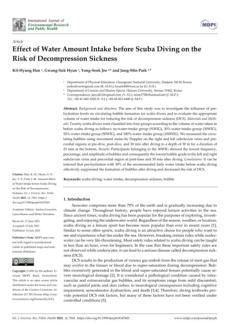
03 - Effect of Water Amount Intake before Scuba Diving on the Risk
of Decompression Sickness
- Published by International Journal of environmental Research and Public Health - MDPI
Authors: Kil-Hyung Han, Gwang-Suk Hyun, Yong-Seok
Jee, and Jung-Min Park
This study examined how pre-hydration levels affect
bubble formation in scuba divers and determine the right
water intake to lower decompression sickness (DCS) risk.
Twenty divers were split into four groups based on their
water intake. Results showed the 30%-water-intake group
had the lowest bubble formation after diving. Therefore,
pre-hydration with 30% of daily water intake is suggested
to reduce bubble formation and DCS risk.
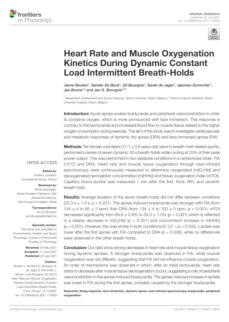
11 - Heart Rate and Muscle Oxygenation Kinetics During Dynamic
Constant Load Intermittent Breath-Holds
- Published by Frontiers
Authors: Janne Bouten, Sander De Bock, Gil Bourgois,
Sarah de Jager, Jasmien Dumortier, Jan Boone,
and Jan G. Bourgois
This study examined cardiovascular and metabolic
responses of dynamic dry apnea (DRA) and face
immersed apnea (FIA) in ten young female volunteers.
They performed seven 30-second breath-holds while
cycling, measuring heart rate and muscle oxygenation.
Results showed stronger bradycardia in FIA and a notable
drop in muscle oxygenation. Lactate levels were lower
after the first FIA breath-hold. Ultimately, FIA did not affect
muscle oxygenation despite stronger bradycardia.

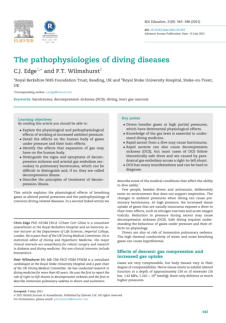
Authors: C.J. Edge, and P.T. Wilmshurst
This article discusses the physiological effects of breathing
gases at altered partial pressures and common diving-
related diseases. It also highlights medical conditions that
affect diving safety, such as pulmonary barotrauma, toxic
gases, decompression sickness, and immersion pulmonary
oedema. Understanding the behavior of gases under
pressure is crucial for safe diving.
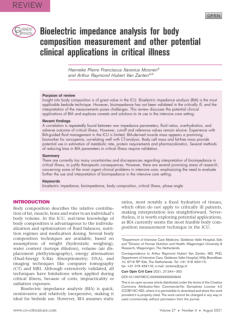
09 - Bioelectric impedance analysis for body composition
measurement and other potential clinical applications in critical
illness
- Published by Current Opinion in Critical Care.
Authors: Hanneke Pierre Franciscus Xaverius Moonen,
and Arthur Raymond Hubert Van Zanten
Bioelectric impedance analysis (BIA) is a valuable tool for
understanding body composition, but its interpretation in
critically ill patients remains challenging. Recent findings
show a correlation between raw impedance parameters,
fluid ratios, overhydration, and adverse outcomes. BIA-
derived muscle mass is a promising biomarker for
sarcopenia, while body cell mass and fat-free mass can
estimate metabolic rate, protein requirements, and
pharmacokinetics. Further research is needed to validate
bioimpedance interpretation in critical care.
10 - Intercostal Muscles Oxygenation and Breathing Pattern during
Exercise in Competitive Marathon Runners
- Published by the International Journal of environmental Research & Public Health - MDPI
Authors: Janne Boute
This study examined the relationship between changes
in ventilatory variables and deoxygenation of
m.intescostales during maximal incremental exercise in
19 male high-level competitive marathon runners.
Results showed that ΔSmO2-m.intercostales correlated
with VO2-peak and increased lung ventilation and
respiratory rate, but not tidal volume. The deoxygenation
of m.intercostales was directly associated with aerobic
capacity and increased lung ventilation and respiratory
rate, but not tidal volume.

Authors: Carol Baines, Don Vicendese, David Cooper,
William McGuiness, Charne Miller
This study evaluated whether continuous glucose
monitoring (CGM) could replace finger prick tests in
diabetic patients undergoing HBOT by comparing CGM,
capillary glucose, and serum BG measurements.
The findings suggest CGM is a valid alternative for in-
chamber BG monitoring during HBOT.

Authors: Lionel Bapteste, Zeinab Kamar, Anthony Mazaud,
Baptiste Balança
The case described in this paper involved postoperative
neurological deficits suggestive of paradoxical gas
embolism, with clinical improvement during hyperbaric
oxygen therapy. No imaging or tests confirmed the
diagnosis; it was inferred from clinical context,
presentation, and course—underscoring the diagnostic
challenge in the immediate postoperative period.

Authors: Igor Barkovic, Vitomir Maricic, Boris Reinic, Frano
Marinelli, Tamara Turk Wensveen
This report details two cases of elite breath-hold divers
experiencing haemoptysis after deep dives. Bronchoscopic
evidence revealed blood originating from all three
segments of the right upper lobe in both male patients.
While the first diver exhibited crackles, pulmonary
oedema, and numerous lung ultrasound comets, the
second diver had fewer comets but no overt oedema or
crackles, suggesting that even without outward signs of
distress, lung injury can occur. The bronchoscopy
confirmed the source of bleeding without damage to
other airways or lung areas.

Authors: Sylvain Boet, Cole Etherington, George Djaiani,
Andrea C Tricco, Lindsey Sikora, Rita Katznelson
This systematic review evaluated hyperbaric oxygen
treatment (HBOT) for COVID-19. Six publications (one
cohort, five case reports/series) covering 37 hypoxaemic
patients were identified; data on intubation and survival
were available for 26. Among them, 24 avoided
intubation and 23 survived. No serious HBOT-related
adverse events were reported, and no randomized trials
exist.

Authors: Michael Davis & John Leach
This critique highlights serious methodological flaws in a
published paper on anxiety and scuba performance. It
points out that combining men and women in the study is
problematic, particularly due to a very small female group.
It also argues that trait anxiety does not accurately predict
behavior, and the study fails to consider important factors
like state anxiety and sex differences. The conclusions are
viewed as weak, suggesting the need for a retraction or
redesign of the study.

Authors: Aaron Demers, Shane Martin, Emil P Kartalov
Heat loss poses serious risks to divers, including
hypothermia and death, making effective thermal
protection critical. Conventional neoprene wetsuits lose
insulation under pressure and hinder mobility when thick.
To address this, the 'K-suit', a thin neoprene base
augmented with custom 3D-printed composite segments
containing hollow glass microspheres, was developed.
Field trials showed the K-suit provided a +4°C greater
internal–external temperature difference than a 7 mm
neoprene suit, while offering ergonomics comparable to a
3 mm suit. These proof-of-concept results suggest
significant potential for improving diver safety and
performance.

Author: Kubra Ozgok-Kangal
This retrospective study of 28 pregnant women treated
with hyperbaric oxygen therapy (HBOT) for acute carbon
monoxide (CO) poisoning found that, despite CO’s high
fetal mortality risk (36–67%), most outcomes were
favorable: 24 infants were born healthy and term, with
normal neurodevelopment up to median age 34 months
(range 8–44). Three adverse events occurred (abortion,
preterm birth, limb malformation), and one fetus was
nonviable before HBOT. Clinical severity did not predict
long-term outcomes, but gestational timing of CO
exposure significantly influenced birth weight (P = 0.029)
and independently correlated with age at walking (P =
0.043, r = 0.436).

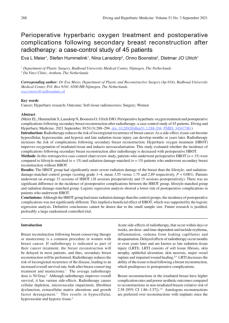
Authors: Eva L Meier, Stefan Hummelink, Nina Lansdorp,
Onno Boonstra, Dietmar JO Ulrich
Radiotherapy for breast cancer reduces locoregional
recurrence but may cause late tissue injury, increasing
complications in secondary reconstruction. Hyperbaric
oxygen treatment (HBOT) enhances oxygenation and
neovascularisation. This retrospective study compared 15
HBOT patients (33 sessions on average) to 30 matched
controls. HBOT patients had more severe radiation
damage (mean grade 3.55 vs. 1.75 and 2.89, P=0.001), yet
showed no significant difference in complication rates.
Logistic regression revealed a lower risk of complications
in the HBOT group.

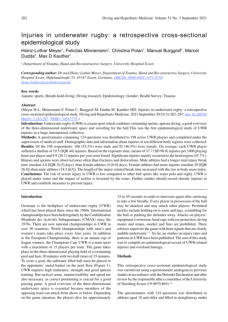
Authors: Heinz-Lothar Meyer, Felicitas Minnemann,
Christina Polan, Manuel Burggraf, Marcel Dudda,
Max D Kauther
This first large-scale international epidemiological study on
underwater rugby (UWR) injuries surveyed 198 active
players (53.5% male, 46.5% female) using a 124-item
questionnaire supervised by medical staff. Players
sustained a median of 19.5 injuries each (IQR 44),
equating to 37.7 injuries per 1000 playing hours and 9.9
per year. Head injuries were most common (45.7%), and
soft-tissue injuries (bruises, sprains) predominated over
fractures/dislocations. Females reported slightly more
injuries (median 20 vs. 18.5 in males), while males had
longer median injury break times (4.8 vs. 4.0 days). Injury-
related break duration increased with higher BMI.

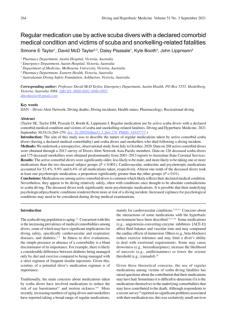
Authors: Simone E Taylor, David McD Taylor, Daisy
Pisasale, Kyle Booth, John Lippmann
This retrospective observational study analyzed medication
use in active comorbid scuba divers and deceased divers
and snorkellers following diving incidents. Active comorbid
divers were older, less likely to be male, and took more
medications than deceased groups. Cardiovascular,
endocrine, and psychotropic medications were most
common. Notably, a significantly higher proportion of
deceased divers took psychotropic medications compared
to other groups.

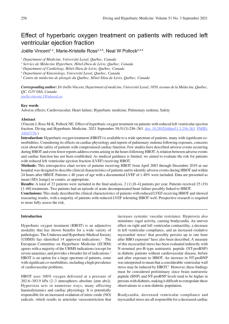
Authors: Joëlle Vincent, Marie-Kristelle Ross, Neal W
Pollock
Hyperbaric oxygen treatment (HBOT) raises safety
concerns for patients with compromised cardiac function
due to its cardiac effects and rare reports of pulmonary
edema. This retrospective study analyzed 23 patients (2
per year on average) with reduced left ventricular ejection
fraction (LVEF ≤ 40%) who received HBOT between 2003
and 2019. Among 25 treatments per patient on average,
two cases of acute decompensated heart failure were
possibly linked to HBOT, highlighting potential cardiac risks
despite limited prior research on post-treatment adverse
events.

Authors: Joëlle Vincent, Marie-Kristelle Ross, Neal W
Pollock
This study examined how breathing techniques affect
oxygen levels and muscle oxygen depletion during heavy
exercise, focusing on continuous exercise and Fartlek-style
sprints. Despite constant oxygen uptake (VO2), oxygen
saturation (SatO2) fell with breath-holding in continuous
exercise. Different responses were noted in muscle oxygen
levels based on the exercise type, showing unique
adaptations from breath-holding.

Authors: Guillermo R. Oviedo, Sergi Garcia-Retortillo, María
Carbó-Carreté, Myriam Guerra-Balic, Natàlia
Balagué, Casimiro Javierre, and Joan Guàrdia-
Olmos
This study is the first to examine cardiorespiratory
coordination (CRC), assessed via principal component
analysis (PCA) of six physiological time series during
maximal treadmill exercise, in adults with Down syndrome
(DS) and in typically developing adults. Results showed
that the DS group required three principal components
(PCs) to explain cardiorespiratory variance, versus two in
controls, due to decoupling of blood pressure variables
(SBP/DBP) from the dominant PC1 cluster.