












Studies of ROV concepts 2026





1 - Inertial Sensor Self-Calibration Module Using Attitude Heading
and Reference System for Autonomous Underwater Vehicle
Navigation
Authors: Abdul Aziz Abd Kadir, Herdawatie Abdul Kadir
This research enhances navigation accuracy in
Autonomous Underwater Vehicles (AUVs), which rely on
Inertial Measurement Units (IMUs) for orientation and
motion tracking but are prone to noise-induced
inaccuracies. To mitigate this, an Inertial Sensor Self-
Calibration Module was developed to dynamically adjust
calibration parameters in real time. A comparative analysis
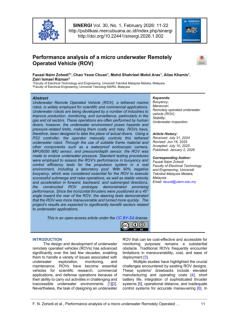
of calibration and filtering techniques, including Magnetic
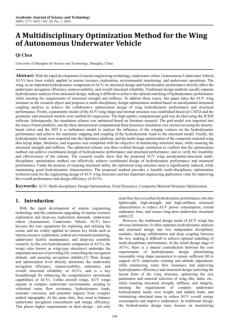
Calibration, EKF variants, and AHRS, revealed the AHRS
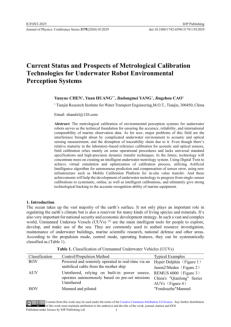
filter as the most precise, reducing angular error by up to
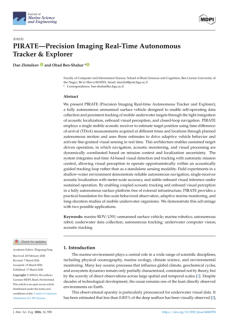
97.81%. These results underscore the AHRS filter's
effectiveness in improving AUV navigation in challenging
underwater conditions, offering broader implications for
ocean exploration and environmental monitoring.
2 - Development of a Cost-Effective UUV Localisation System
Integrable with Aquaculture Infrastructure
Authors: Thein Than Tun, Loulin Huang, and Mark
Anthony Preece
Unmanned Underwater Vehicles (UUVs) are being used
in aquaculture farms for difficult tasks like inspecting fish
net-pens. They are mostly remote-operated, but using
them autonomously faces challenges, mainly high costs
and sensor reliability. A new system using April-Tags for
localization offers a budget-friendly solution for testing
UUV autonomy. It can achieve precise accuracy with
minimal infrastructure changes. This could help
demonstrate the benefits of autonomous UUVs to
stakeholders for future adoption.


Click on the
octopus to return to
the top of the page

3 - Underwater Object Recovery Using a Hybrid-Controlled ROV
with Deep Learning-Based Perception
Authors: Inés Pérez-Edo, Salvador López-Barajas, Raúl
Marín-Prades, and Pedro J. Sanz
Large ROVs/AUVs require costly support infrastructure,
prompting interest in lightweight, modular alternatives.
This article proposes a hybrid-controlled ROV architecture
for known-object recovery, integrating autonomous
perception, natural language interaction via a ROS-based
agent, and low-level control for vehicle dynamics and
autonomous behaviors like approach and grasping.
Evaluated in simulation, a 12×8×5 m test tank, and harbor
scenarios, the system successfully recovered a black box
using a BlueROV2—demonstrating reduced operational
risk, complexity, and cost for underwater interventions.
4 - Design and Development of a Sensor-Enhanced Remotely
Operated Underwater Vehicle (ROUV) Platform for Environmental
Monitoring
Authors: Dimitrios Tziourtzioumis, George Minos,
Triantafyllia Anagnostaki, Eleftherios Kenanidis,
and Theodoros Kosmanis
This study introduces a modular, sensor-enhanced
remotely operated underwater vehicle (ROUV) designed
for environmental monitoring and aquaculture. Equipped
with sensors for temperature, pH, dissolved oxygen (DO),
and electrical conductivity (EC), along with real-time data
acquisition, the system prioritizes modularity,
reproducibility, and robustness. Field tests conducted at
an aquaculture site in the North Aegean Sea during 2025
demonstrated depth-resolved measurements with high
accuracy. The platform achieved stable and repeatable
performance in real-world conditions.

5 - Underwater Antenna Technologies with Emphasis on Submarine
and Autonomous Underwater Vehicles (AUVs)
Authors: Dimitrios G. Arnaoutoglou, Tzichat M. Empliouk,
Dimitrios-Naoum Papamoschou, Yiannis
Kyriacou, Andreas Papanastasiou, Theodoros N.
F. Kaifas, and George A. Kyriacou
This article provides a comprehensive review of antenna
types for future underwater communication and sensing
systems, evaluating their performance for Autonomous
Underwater Vehicles. It examines magnetic induction
coils, electrically short dipoles, wideband traveling-wave
antennas, printed planar antennas, and magnetoelectric
resonators, comparing footprint, operating frequency,
bandwidth, and realized gain. The analysis highlights
trade-offs between miniaturization and radiation efficiency
and underscores the need for innovative designs to
overcome underwater propagation limits.
8 - Reinforcement-Learning-Based Adaptive PID Depth Control for
Underwater Vehicles Against Buoyancy Variations
Authors: Jian Wang, Shuxue Yan, Honghao Bao, Cong
Chen, Deyong Yu, Jixu Li, Xi Chen, Rui Dou,
Yuangui Tang, and Shuo Li
This paper proposes a hybrid control framework
combining Proximal Policy Optimization (PPO) with
adaptive Proportional-Integral-Derivative (PID) tuning to
address buoyancy-induced instability in sampling AUVs.
PPO dynamically adjusts PID parameters online, while
safety mechanisms protect actuators. A dual-error state
and actuator command buffering mitigate system lag and
inertia. Simulations and experiments (pool and field tests)
show superior performance over conventional PID and
pure PPO: faster convergence, lower steady-state error,
and smoother control signals, demonstrating robustness
under real hydrodynamic disturbances.

9 - Resistance Analysis of Remotely Operated Vehicle (ROV)
Indonesia's extensive underwater resources and
infrastructure require advanced tools, such as Remotely
Operated Vehicles (ROVs), for safe, efficient exploration
and maintenance. This study investigates the
hydrodynamic drag characteristics of the locally
developed SN-01 ROV (Segara Nauta) using
Computational Fluid Dynamics (CFD). The results
highlight the critical impact of motion direction and speed
on resistance, informing engine selection and service
speed optimization. Ultimately, the findings support a
more efficient, tailored ROV design for sustainable
maritime operations in Indonesia.
6 - Recent Advances in Underwater Energy Systems and Wireless
Power Transfer for Autonomous Underwater Vehicle Charging
Authors: Ramamurthi Sekar, Narayanamoorthi
Rajamanickam, Hassan Z. Al Garni, Jamal
Aldahmashi, and Ahmed Emara
This article reviews recent advances in underwater
wireless power transfer (UWPT) for autonomous
underwater vehicles (AUVs), driven by growing demand
for long-endurance offshore infrastructure maintenance
and oceanographic surveillance. Conventional recharging
methods hinder true autonomy, making UWPT a
promising alternative. The paper surveys key UWPT
components: marine power sources, power converter
and compensation topologies, and magnetic coupler
designs. It also addresses critical engineering challenges
unique to underwater environments.
7 - ORCA: AI-powered Autonomous Underwater Vehicle for
Subaquatic Exploration
Authors: Oskar Natan, Wiwit Suryanto, Andi Dharmawan,
Rifda Hakimasari, Zaidan Hakim
ORCA is an Autonomous Underwater Vehicle designed
to perform missions independently, addressing navigation,
exploration, and interaction with the underwater
environment. The project emphasizes a complete
development cycle from design to manufacturing, using
Inventor for CAD and fabrication via Computer Numerical
Control (CNC) machining, laser cutting, and 3D printing,
while advancing control systems, Proportional Integral
Derivative (PID) controllers, and vision. It also expands to
environmental perception, object detection, deep
learning, and path-planning, enabling autonomous
navigation, obstacle avoidance, object detection, and
payload manipulation with a gripper.

10 - A Control-Oriented Thruster Management Framework for
Fault-Tolerant Propulsion of Remotely Operated Vehicles
Authors: Lu Wang, Yi Wu, Chao Fang, Jie Gao, Yonggang
Gu, Chao Zhai, and Zhen Zhang
This paper addresses limitations of conventional static
thrust allocation in ROV propulsion, which struggles with
real-world actuator imperfections like cavitation-induced
thrust loss, dead zones, inter-thruster coupling, and partial
failures. Instead of treating propulsion management as a
static force distribution problem, the authors propose a
control-oriented framework that embeds actuator
dynamics and thrust execution uncertainty directly into
the feedback loop. Experiments on an ROV platform show
superior thrust executability, reduced coupling
disturbances, and robust performance during thruster
failure compared to traditional methods.

11 - Volumetric Path Planning and Visualization for ROV-Based
Forward-Looking Sonar Scanning of 3D Water Areas
Authors: Yu-Cheng Chou, and Wei-Shan Chang
This study introduces a deterministic, geometry-driven
framework for volumetric path planning of ROVs
equipped with multibeam forward-looking sonar in
predefined circular and rectangular underwater volumes.
It generates layered planar scan trajectories by integrating
sonar parameters (detection range, horizontal/vertical
beamwidths) and volume geometry, analytically estimates
mission duration using path length and vehicle
kinematics, and proposes a distance-based target position
certainty metric, combined with the active sonar equation,
to assess scan effectiveness and estimate likely target
locations.
12 - Performance analysis of a micro underwater Remotely
Operated Vehicle (ROV)
Authors: Fauzal Naim Zohedi, Chan Yeow Chuan, Mohd
Shahrieel Mohd Aras, Alias Khamis, Zairi Ismael
Rizman
This paper presents an underwater Remote Operated
Vehicle (ROV) designed to replace human divers in
hazardous offshore tasks by mitigating risks and costs
associated with underwater operations. This ROV
incorporates a robust frame, waterproof endoscopic
camera, and pressure/depth sensor to withstand
submersion. Testing in a laboratory pool confirmed stable
performance: 90% negative buoyancy enabled reliable
descent and ascent, while consistent velocity and
acceleration were achieved in forward, backward, and
vertical motion. Angling the horizontal thrusters at 45°
improved maneuverability and turning speed.
13 - A Multidisciplinary Optimization Method for the Wing of
Autonomous Underwater Vehicle
Author: Qi Chen
This paper presents a multidisciplinary design optimization
method that integrates aerodynamic and structural
analyses to enhance design collaboration. A parametric
model of the AUV wing was developed using CATIA, a
software suite created by Dassault Systèmes that is widely
used for computer-aided design (CAD). Following this,
grid generation was carried out in ICEM Surf, a powerful
tool for advanced surface modeling. A computational fluid
dynamics simulation was conducted to evaluate the
hydrodynamic performance. The hydrodynamic loads
were then analyzed and optimized, resulting in a
reduction of the wing structure's mass while maintaining
safety. This approach provides a reliable pathway for
improving AUV performance and design efficiency.
14 - Current Status and Prospects of Metrological Calibration
Technologies for Underwater Robot Environmental Perception
Systems
Authors: Yunyue Chen, Yuan Huang, Jiadongmei Yang,
Jingzhou Cao
The metrological calibration of environmental perception
systems for underwater robots is essential for accurate
marine data. Current challenges include interference in
measurements and a lack of standard calibration
procedures. Future technology aims to develop an
intelligent underwater metrology system using Digital
Twin, AI for sensor error prediction, and Mobile
Calibration Platforms for in-situ value transfer.
18 - 3D Trajectory Tracking Based on Super-Twisting Observer and
Non-Singular Terminal Sliding Mode Control for Underactuated
Autonomous Underwater Vehicle
Authors: Zehui Yuan, Long He, Ya Zhang, Shizhong Li,
Chenrui Bai and Zhuoyan Qi
This paper discusses a control method for three-
dimensional trajectory tracking in underactuated
autonomous underwater vehicles that accounts for
external disturbances and model uncertainties. It
integrates backstepping dynamic surface control, a non-
singular terminal sliding mode, and virtual velocity
commands to stabilize positional errors while addressing
the "differential explosion" issue using first-order low-pass
filters to smooth derivatives. A non-singular terminal
sliding surface enhances the convergence rate and
robustness, allowing finite-time convergence of velocity-
tracking errors. A disturbance observer algorithm provides
high-precision disturbance estimation.
15 - PIRATE - Precision Imaging Real-Time Autonomous Tracker &
Explorer
Authors: Dan Zlotnikov, and Ohad Ben-Shahar
PIRATE (Precision Imaging Real-time Autonomous Tracker
and Explorer) is an unmanned surface vehicle that
autonomously collects data and tracks mobile underwater
targets. It integrates acoustic localization, visual perception,
and closed-loop navigation. Using a mobile acoustic
receiver, PIRATE estimates target positions through time-
difference-of-arrival (TDoA) measurements, guiding its
adaptive behavior. The system synchronizes navigation,
acoustic monitoring, and visual processing dynamically
based on mission context.
16 - Numerical Investigation on Hydrodynamic Characteristics of
Variable Flexible Tube Underwater Object Suction Robot
Authors: Yida Zhu, Fenglei Han, Qing Chang, Wangyuan
Zhao, Shuxuan Liang, and Jiaqi Yu
Remotely operated underwater vehicles (ROVs) are crucial
in underwater robotics, particularly in deep-sea
aquaculture. Conventional suction-tube robots face
challenges in accurately collecting target organisms in
complex reef environments.
This paper introduces an underwater object suction robot
with a variable flexible tube. It highlights the importance
of stable vehicle motion for vision-based tasks, as
hydrodynamic disturbances can impair visual accuracy. A
systematic numerical investigation using computational
fluid dynamics (CFD) simulations assesses the ROV's
hydrodynamic characteristics and provides insights for
motion control strategies to enhance visual robustness.
17 - Study and Feasibility of Underwater Acoustic Data Transmission
Authors: Bessie A. Ribeiro, Fabio C. Xavier, Viviane R.
Barroso, Viviane F. da Silva, Theodoro A. Netto,
and Caroline Ferraz
The increasing demand for deep-water offshore oil and
gas production has driven the need for continuous and
cost-effective monitoring of subsea equipment. Traditional
methods using ROVs and AUVs incur delays and high
operational costs. This study explores the feasibility of
underwater acoustic communication systems for real-time
data transmission, utilizing the BELLHOP ray-tracing model
to simulate transmission loss, multipath effects, and signal-
to-noise ratio (SNR) under various conditions.
19 - UMI-Underwater: Learning Underwater Manipulation without
Underwater Teleoperation
Authors: Hao Li, Long Yin Chung, Jack Goler, Ryan Zhang,
Xiaochi Xie, Huy Ha, Shuran Song, Mark Cutkosky
Underwater robotic grasping is difficult due to degraded
imagery and costly data collection. This system
autonomously gathers underwater grasp demonstrations
via self-supervision and transfers on-land knowledge
through depth-based affordances that bridge domain
gaps and resist lighting shifts. An affordance model
deploys zero-shot underwater via geometric alignment,
then trains an affordance-conditioned diffusion policy.
Pool experiments show gains in grasping performance,
background robustness, and generalization to land-only
objects, outperforming RGB baselines.
20 - Flexible hot-film sensors for underwater wall shear stress
measurement
Authors: Ziqiang Xiang, Qingshan Wu, Guanjun Liu
This study introduces a flexible hot-film sensor for
underwater wall shear stress (WSS) measurement,
addressing the limitations of conventional techniques,
including intrusiveness, low spatial resolution, poor
adaptability to curved surfaces, and high cost. Fabricated
via a low-cost screen-printing process using conductive
carbon paste on a polyimide substrate with waterproof
packaging, the sensor was integrated into a Constant
Temperature Anemometer (CTA) circuit. Calibration in a
turbulent channel flow, using the pressure drop method
and Darcy-Weisbach equation, demonstrated high
performance: the carbon paste showed a stable TCR of
3347 ppm/C degrees, a calibration curve with R² = 0.971,
a resolution of 0.05 Pa, a response time under 0.35 s, and
excellent cyclic stability.
21 - Neural Network-Augmented Actuation Control System
Designed for Path Tracking of Autonomous Underwater-
Transportation Systems Under Sensor and Process Noise
Authors: Faheem Ur Rehman, Syed Muhammad Tayyab,
Hammad Khan, Aijun Li, and Paolo Pennacchi
Underwater-transportation systems hold significant
potential for military and commercial use. This study
applies Neural Network-Augmented Control (NNAC) to
three autonomous underwater systems: Rigid-Connection
(RCTS), Flexible-Connection (FCTS), and Leader–Follower-
Formation (LFFCTS) transportation systems. Using
Extended Kalman Filter (EKF) for state estimation under
noise, NNAC demonstrates robust, adaptive control with
superior trajectory tracking compared to PID controllers.
Among configurations, RCTS achieves the highest tracking
accuracy with lowest power consumption, while FCTS
consumes the most power with comparatively lower
accuracy.
24 - Environment-Aware Optimal Placement and Dynamic
Reconfiguration of Underwater Robotic Sonar Networks Using
Deep Reinforcement Learning
Authors: Qiming Sang, Yu Tian, Jin Zhang, Yuyang Xiao,
Zhiduo Tan, Jiancheng Yu, and Fumin Zhang
This paper introduces a deep reinforcement learning
(DRL) framework for adaptive sonar placement and
dynamic reconfiguration of distributed AUV networks in
underwater dynamic target detection, classification,
localization, and tracking (DCLT).
22 - Collision tests and data acquisition analysis of unmanned
underwater vehicles based on multi-sensor monitoring
Authors: Guanlun Guo, Hao Liu, Min Jiao, Li Min, Wei
Zhou, Hai Tan, and Hui Cao
This study examines UUV large-angle collision dynamics
underwater via experiment-data-simulation methods with
multi-sensor monitoring and fluid-structure models. Results
show axial acceleration drops sharply and load paths
restructure; at 60°, underwater strain falls to one-third of
air values while duration exceeds 30 ms. Fluid synergy
(lubrication, inertia, pressure) optimizes housing response.
The validated scheme supports anti-shock design and
structural health monitoring for marine equipment.
23 - Numerical investigation of thermal wake evolution behind an
underwater vehicle in stratified flow
Authors: Bo Huang, Zhongyan Liu, Xu Liu, Hongyu Fu, Qi
Zhang, Mengchun Pan, Jiafei Hu
A three-dimensional numerical model was developed to
study the thermal wake of an underwater vehicle in
stratified flow under the Boussinesq approximation. The
study found that background stratification suppresses
vertical wake diffusion, causing the thermal wake to
elongate primarily downstream. Propeller rotation and
wake entrainment create a distinct temperature-anomaly
structure that intensifies in the near wake, peaks
downstream, and then decays due to diffusion. The
findings aid in predicting thermal signatures and
identifying wakes of underwater vehicles in complex
ocean environments.
25 - Unified Stochastic Differential Equation Modeling and Fuzzy-RL
Control for Turbulent UWOC
Authors: Bowen Si, Jiaoyi Hou, Dayong Ning, Yongjun
Gong, Ming Yi and Fengrui Zhang
Underwater wireless optical communication (UWOC) for
AUVs suffers from the coupled effects of ocean
turbulence and platform motion, which static models fail
to capture over time, thereby impairing beam tracking.
The paper proposes a dynamic differential equation (SDE)
model derived from the Radiative Transfer Equation via a
diffusion approximation, validated by inverse
Fokker–Planck methods, and a hybrid Fuzzy-Q-learning
controller with a supervisor for deep fades. Simulations
and HIL experiments yield a 3.64 mm median alignment
error and >80% reduction in transient error compared
with PID, enhancing link stability.
26 - MCHS-SLAM: A Multi-Constraint Hybrid Strategy SLAM
Framework for AUV-Based Seafloor Terrain Mapping
Authors: Jianan Qiao, Bin Liu, Yan Huang, Jiancheng Yu,
Xiaolong Ju, and Hao Feng
Autonomous Underwater Vehicles (AUVs) face inevitable
positioning error accumulation during seafloor terrain
mapping due to the lack of underwater satellite
navigation. Additionally, the complex seafloor topography
with alternating flat and undulating regions degrades the
performance of traditional single-constraint SLAM
methods. To overcome these issues, a Multi-Constraint
Hybrid Strategy (MCHS) Simultaneous Localization and
Mapping (SLAM) framework is proposed, which uses a
hierarchical constraint architecture to optimize pose
estimation, local geometric consistency, and global loop
closure detection.
27 - Near-Bottom ROV-Borne Self-Potential Exploration of Seafloor
Massive Sulfi de Deposits on the Southwest Indian Ridge
Authors: Zuofu Nie, Chunhui Tao, Zhongmin Zhu, and
Jianping Zhou
This study used a remotely operated vehicle (ROV) to
conduct a high-resolution self-potential (SP) survey at the
Yuhuang hydrothermal field on the Southwest Indian
Ridge, flying at a near-bottom altitude of ~10 m to detect
seafloor massive sulfide (SMS) deposits. An adaptive octree
mesh enabled efficient 3D inversion, revealing a main
anomaly zone correlated with known mineralization and
an additional zone suggesting undiscovered deposits.
Results aligned well with independent near-bottom
observations and drilling data.
28 - Research on Real-Time Trajectory Planning and Tracking Control
for Multi-ROV Shipwreck Search
Authors: Wenyang Gan, Haozhe Liang and Caixia Cai
Multi-ROV cooperative systems face two key challenges in
sunken ship search missions: overlapping operational
regions cause redundant coverage and blind zones, while
hydrodynamic disturbances and actuator limits degrade
tracking accuracy. To address these, a dynamic window
approach (DWA) with search distance penalties is
introduced for trajectory planning, paired with a cascaded
control architecture, comprising a model predictive
kinematic controller and an adaptive sliding mode
dynamic controller with an extended state observer, for
robust disturbance rejection.
29 - Deep Reinforcement Learning for Autonomous Underwater
Navigation: A Comparative Study with DWA and Digital Twin
validation
Authors: Zamirddine Mari, Mohamad Motasem Nawaf,
and Pierre Drap
Underwater autonomous navigation faces challenges like
GPS absence, poor visibility, and obstacles. Using the
BlueROV2 platform, this study applies deep reinforcement
learning (PPO) with an 84-dimensional observation space
combining target navigation, occupancy grids, and
raycasting for situational awareness. Compared to the
traditional Dynamic Window Approach (DWA), the PPO
policy excels in cluttered environments due to superior
local adaptation and fewer collisions. Validation in both
simulation and real-world tests (with a 3D digital twin for
safety) confirms the policy’s transferability from simulation
to reality, highlighting deep RL’s potential for underwater
robotics.
30 - Multi-Objective Robotics Optimization Using Improved MO-BxR
Algorithms
Authors: Ravipudi Venkata Rao, Harishankar Morazha
Variam, and Joao Paulo Davim
This paper addresses multi-objective robotics optimization,
critical for enhancing robotic performance, efficiency, and
reliability, by enhancing parameter-free BxR metaheuristics
with three novel variants: archive-based, opposition-based,
and self-adaptive multi-population (SAMP). Evaluated on
five real-world robotic problems, including AUV shape
design and manipulator inverse kinematics, the methods
are rigorously benchmarked using GD, IGD, SPC, and HV
metrics, with statistical validation via Friedman tests,
Conover post hoc analysis (Holm-corrected), and
Vargha–Delaney A12 effect sizes over 30 runs.
31 - A Bayesian Optimization-Based AUV Swarm Model in a Double-
Gyre Flow Field
Authors: Tengfei Yang, Ziwen Zhang, Guoqiang Tang,
Yan Yang, Qiang Zhao, Hao Wang, Minyi Xu,
and Shuai Li
Conventional multi-AUV control relies on quasi-steady
assumptions and empirical tuning, causing fragmentation
and low polarization under flow disturbances. The
proposed DGF-OAS model uses heading-aware graph
attention for adaptive weighting, Lennard-Jones potentials
for spacing, embedded double-gyre flows, and Bayesian
optimization of alignment/repulsion terms. Simulations
yield 96% polarization, 15.84% faster task completion, and
97% success rate, outperforming baselines.
32 - Slope Terrain Gait Planning and Admittance Control Method for
Underwater Quadruped Robots Based on Righting Moment
compensation
Authors: Kang Zhang, Hao Zhang, Hong Chen, Guanqiao
Chen, Zongxia Jiao, Yuang Zhang, Wei Chen,
Xinliang Wang, and Junjie Liu
Benthic AUVs, underwater quadruped robots, combine
the efficiency of submersibles with the stability of legged
robots for deep-sea exploration. However, their design
creates a righting moment that resists hull alignment on
steep slopes, leading to propulsion loss when exceeding
hydrostatic pitch limits. To address this, the paper
introduces a control framework featuring optimal force
distribution, adaptive trajectory probing, and admittance
control.
33 - Adaptive Learning from Quantized Signals for AUV Formation
Tracking Control
Authors: Chao Wang, Xiaolei Li, Pengfei Yang, Jiange
Wang, and Yuzhong Wang
This paper addresses AUV formation tracking under
quantized communication/actuation via an adaptive
learning framework extracting policies from quantized
data. Integrated into backstepping with quantized
consensus and hysteresis compensation, Lyapunov
analysis proves bounded signals and convergent errors.
Simulations confirm accurate tracking and adaptability.
34 - A Survey of Machine Learning Algorithms for Autonomous
Vehicles
Authors: Agnieszka Lazarowska, Monika Rybczak,
Mirosław Lacki, Krystian Kozakiewicz, Jozef
Lisowski, and Andrzej Stateczny
This review examines machine learning algorithms
applied to autonomous vehicles (UUVs, USVs, UAVs, and
ground robots) from 2020–2026. It covers four functional
areas: environment perception, Simultaneous Localization
and Mapping (SLAM), collision avoidance/path planning,
and motion control. The analysis includes supervised,
unsupervised, semi-supervised, reinforcement, and deep
reinforcement learning methods, evaluating their
performance and robustness across underwater, surface,
aerial, and land environments. The paper identifies key
challenges and proposes future directions for enhancing
autonomous vehicle safety, autonomy, and reliability.

35 - Hovering Control of ROV Based on Event-Triggered Image
Moments Nonlinear Model Predictive Control
Authors: Ziyang Shen, Yunxiu Zhang, Shengguo Cui,
Peng Zhang, and Siyue Wang
This paper proposes an event-triggered image-moment
nonlinear model predictive control (ETIM-NMPC) method
for vision-based hovering control of remotely operated
vehicles (ROVs). To overcome limitations in constraint
handling and excessive online optimization in
conventional approaches, ETIM-NMPC uses image
moments as visual features, operates in a reduced control-
relevant subspace, and updates the control sequence only
when an event-triggering condition is met. Evaluated in
four simulation scenarios (Ideal, Disturbed, Dynamic-
target, Complex), ETIM-NMPC achieved robust hovering
with translational RMSE < 0.15 m in all directions—meeting
the required accuracy.
36 - Quasi-Static In Situ Deep Learning for Forward-Looking Sonar
Target Detection in Complex Underwater Environments
Authors: Yixuan Chen, Zhenqing Ding, Yu Feng, Jiale He,
Ziqin Xie, Tinggang Xiong, Kai Chen, and Qi Gao
Forward-looking sonar (FLS) target detection for
autonomous underwater vehicles (AUVs) faces
challenges from acoustic distortions, environmental
volatility, and limited annotated data, limiting standard
deep learning approaches. This study introduces a quasi-
static in situ learning paradigm for underwater acoustic
target detection (UATD), combining scene priors with a
lightweight deep learning detector through echo-
intensity-based probability weighting and acoustic
attenuation compensation. The method enhances pixel-
wise images and fuses statistical descriptors with deep
learning predictions for dynamic environmental
adaptation.
37 - Numerical Investigation of Hydrodynamic Performance of an
AUV Moving near the Bottom Wall
Authors: Nguyen Dong and Ngo Van He
This study uses CFD simulations to analyze how near-
bottom operation affects the hydrodynamics of an AUV,
comparing open-water conditions with a near-bottom
case (clearance ratio h/LA = 1.93). Results show that
proximity to the seabed alters pressure fields, wake
structures, and increases total resistance and flow
separation. These findings help improve AUV design,
control, and operation for shallow-water or seabed
missions.
38 - BDAT-Planner: Bioinspired Dynamic Adaptive Threshold Planner
for Underwater Collision Avoidance of AUVs
Authors: Boyang Zhang, Zhicheng Zhang and Weixing
Feng
This paper introduces the BDAT-Planner, a bioinspired
dynamic adaptive threshold framework for autonomous
underwater vehicles (AUVs) to achieve robust, intelligent
collision avoidance in complex, unknown underwater
environments. Unlike conventional spiking methods that
rely on fixed thresholds, limiting adaptability to dynamic
interference, the proposed BDAT mimics biological neural
systems by enabling per-neuron dynamic threshold
adjustment in the spiking dynamic adaptive actor network
(SDAAN), thereby maintaining neural homeostasis and
balancing excitation/inhibition.
39 - Mathematical Modeling and Simulation of a Hybrid
additive–Subtractive ROV with Experimental Validation for Reef
Exploration
Authors: Miguel F. Delgado-Pamanes, Bruno Silva-Morales,
Luis A. Reyes-Osorio, Octavio Garcia-Salazar,
Marisol Vázquez-Tzompantzi, and Aldo Jonathan
Munoz-Vazquez
This paper presents a mathematical and numerical
framework for designing and analyzing an ROV for
shallow-water reef exploration. The open-frame vehicle
uses a sealed housing and four-thruster system for
omnidirectional, low-speed maneuverability.
Hydrodynamics are modeled via incompressible RANS
equations solved numerically, with thruster flow captured
through an MRF formulation that resolves thrust directly
without artificial sources.
40 - Object manipulation of the variable topology truss system
Authors: Andrew Jang-Ho Bae, Myeongjin Choi, Haorui Li,
Mark Yim, TaeWon Seo
This paper introduces an object manipulation strategy for
the Variable Topology Truss (VTT) system, a truss robot
with actuated members and passive joints. The proposed
hybrid control framework regulates both position and
force simultaneously without explicit decoupling. At the
actuator level, a force feedback controller compensates for
friction, while at the task level, a static model computes
member forces to achieve desired end-effector forces.
Experiments on a single module and full system validate
force-tracking performance, and two configurations
demonstrate object manipulation with combined position
and force tracking.
41 - A Study of the Three-Dimensional Localization of an Underwater
Glider Hull Using a Hierarchical Convolutional Neural Network
Vision Encoder and a Variable Mixture-of-Experts Transformer
Authors: Jungwoo Lee, Ji-Hyun Park, Jeong-Hwan
Hwang, Kyoungseok Noh, and Jinho Suh
This paper introduces a deep learning-based perception
framework for detecting underwater gliders and
estimating their 3D pose (position and heading) using
camera-sonar fusion. To address challenges in harsh
underwater environments, such as visual degradation and
motion disturbances, it combines a hierarchical CNN
vision encoder (for robust, multi-level feature extraction)
with a transformer architecture enhanced by a variable
mixture-of-experts mechanism (to boost representational
power without sacrificing efficiency). The system enables
precise, collision-free ROV navigation for automated glider
recovery and sensor inspection.
42 - Multi-Source Sensor Fusion Localization Method for
Autonomous Underwater Vehicles Based on Deep Learning
Authors: Xin Pan, Guoli Feng, Haiyan Zeng, and
Qunhong Tian
This study introduces a deep-learning-based multi-sensor
fusion framework to enhance Autonomous Underwater
Vehicle (AUV) localization, addressing limitations of single-
sensor and traditional multi-sensor methods.
The framework integrates high-frequency data from INS
and DVL for continuous position propagation, while USBL
and Sonar provide periodic corrections. Three models
(DNN, LSTM, BSsMSLNN) were evaluated with results
showing the proposed framework reduces long-term
error accumulation and improves localization accuracy.
The BSsMSLNN-based method achieved the best
performance in trajectory fitting, RMSE, and R², offering a
viable solution for high-precision AUV navigation in GPS-
denied environments.
43 - E2E-AUD: An End-to-End Adaptive Underwater Detection
Framework Integrating Physical Priors and Frequency-Adaptive
Learning.
Authors: Wenhao Zhou, Junbao Zeng, Shuo Li, and
Yuexing Zhang
Underwater detection is critical for Autonomous
Underwater Vehicles (AUVs) but faces challenges like
image degradation, target deformation, and dense small
objects. Traditional methods separate image
enhancement and use fixed-shape convolutions, leading
to poor handling of irregular targets and fine details. The
proposed E2E-AUD framework integrates a lightweight
enhancement module (UnitModule) for joint optimization,
employs linear deformable convolution (LDConv) for
adaptive target modeling, and uses Haar wavelet
downsampling (HWD) to preserve texture details.

44 - Design, Kinematic Analysis and Experimental Validation of a
New Graded Guidance and Locking Mechanism for Deepwater
Multi-Way Quick Connector
Authors: Haixia Gong, Wei He, Qin Si, Yusong Dai,
Fuqiang Zu and Liquan Wang
This study introduces a novel deep-water multi-way quick
connector (MQC) prototype featuring a tiered tolerance
guidance mechanism, an L-shaped helical cam locking
system, and a real-time visual attitude indicator. Finite
element analysis and physical testing demonstrated its
capability to handle extreme misalignments (25 mm offset,
5° horizontal and 15° axial rotation) at 10 mm/s docking
speed without exceeding elastic stress limits. The L-shaped
locking system, analyzed using advanced contact
mechanics models, eliminated impact forces and
maintained plastic strain (0.00926) well below the ASME
failure threshold (0.0865), even under 10,000 psi
separation loads.
45 - Direct X-Rudder Path-Following Control for Underactuated
AUVs via TIB-CSAC
Authors: Jiehui Tan, Yushan Sun, Liwen Zhang, Puxin
Chai, and Zhan Liu
This study introduces a direct X-rudder control method for
underactuated autonomous underwater vehicles (AUVs)
using Task-Informed Inductive-Bias Conservative Soft
Actor–Critic (TIB-CSAC) to enhance path-following
performance under varying path geometries and
velocities. The method learns control policies directly from
current and subsequent path segments, eliminating the
need for complex guidance laws and controller tuning. A
task-informed inductive-bias encoder improves state
representation efficiency, while a multi-head conservative
value evaluation mechanism addresses long-tail task
difficulties during training.
46 - YOLO-CAB: An Efficient Deep Learning-Based Underwater
Object Detection Method for Autonomous Underwater
Vehicles
Authors: Runze Li, Changdong Yu, Shuaiyu Bao, Zijian Li,
and Jinyi Yao
Existing underwater object detection methods struggle
with low recall and inaccurate localization due to light
scattering, absorption, and low target-background
contrast. To overcome these challenges, The authors
propose YOLO-CAB, a YOLOv13-based detector that
enhances feature extraction, boundary perception, and
localization accuracy. Key innovations include the Context-
Aware Large Selective Kernel (CALSK) module for adaptive
spatial feature enhancement, the Spatial Boundary
Attention Module (SBAM) for refining target boundaries,
and the Momentum-based Category-Aware Weighted
Intersection over Union (MCAWIoU) loss to improve
localization and confidence for challenging samples.
47 - Underwater Robot Object Detection Algorithm Based on
YOLOv11
Authors: Yongqing Shi, Wei Chen, Duo Wan and Lu Han
Underwater target recognition is challenging due to
scattering, absorption, and illumination variability. This
study introduces a degradation-aware YOLOv11s-based
framework to enhance underwater robotic detection by
improving feature reconstruction, attention mechanisms,
and bounding-box regression. Key innovations include: (1)
Spatial Channel Reconstruction Convolutions (SCConv) to
reduce redundancy and capture target deformations, (2)
Shuffle Attention to refine fine-grained features, and (3)
Focaler-IoU for stable regression.
48 - Target product grabbing of factory robotic arm based on digital
twin technology
Authors: Lu Che, Xin Xu, Weipeng Mu, and Peng Wang
In smart manufacturing, factory robotic arm target
grabbing is critical for material transfer, yet current systems
suffer from low gripping accuracy and weak anti-
interference. To address this, this study proposes a digital
twin-based robotic arm grabbing model, leveraging
virtual-real collaborative optimization. The method
integrates cross-platform communication (via rosSocket
middleware), a high-fidelity digital twin (built with
SolidWorks/Unity3D), collision detection for planning
efficiency, and composite algorithms (RRT-Connect + tool
calibration).
49 - Development of a Bio-robotic Swimmer Based on the
Maneuverability of the California Sea Lion
Authors: Nicholas Marcouiller, Shraman Kadapa, Anthony
Drago, Frank E. Fish, Magan L. Leftwich, Harry G.
Kwatny, and James L. Tangorra
The development of unmanned underwater vehicles
(UUVs) for complex environments, like coastal regions,
requires new maneuvering techniques. Researchers have
developed a bio-robotic system modeled after the
California sea lion, focusing on its swimming and
maneuverability. The system features an articulatable head
and pelvis, flexible fore flippers generating 3D forces, and
adjustable hind flippers. Tests show the system can use
hydrostatic and hydrodynamic forces to move in 3D
space, serving as a research platform for evaluating how
body articulation and flipper movements influence
underwater locomotion.