










Scientific papers 1990 - 1993









This report explains experimentations made on 32 US
Navy divers immersed in a water at 3 celcius degrees for
periods up to 8 hours. Electrical resistance heated and
warm water perfused gloves were tried. However, hands
and feet remained dry by communication with the drysuit
Date of publication: September 1990

Authors: Edward D. Thalmann, Buckingham , & Spaur
This report explains experimentations made in correction
of the US Navy saturation procedures published in 1978
that had triggered occasional vestibular decompression
sickness (DCS) cases after upward excursions from storage
depths between 800 and1000 feet of seawater.
Date of publication: June 1990

Authors:
C. J. Lambertsen, J. M. Clark
This document explains experimentations made on
animals to determine whether toxic events accumulated
over a relatively long oxygen exposure reversed on return
to normoxia at the same rates as those of shorter oxygen
exposures.
Date of publication: June 1991

Authors: B. A. Hills & P. B. James
This paper describes experimentations that demonstrated
that microbubbles impair the blood-brain barrier integrity
to protein, causing focal edema.
Year of publication: 1991

Authors: B. Gardette, J.Y. Massimelli, M. Comet, C. Gortan,
H.G. Delauze:
This paper describes COMEX procedures used in
November 1992 to reach 701 msw, which is still the
world record.
This successful experimental dive aimed to demonstrate
that the use of Hydreliox enhances the divers’
effectiveness and working capabilities and provides
improved safety and comfort for human intervention on
undersea oil production facilities.

Authors:
A Boussuges, p. Ambrosi, G. Habib, D. Cartran,
B. Gardette, JM Sainty:
This document discusses the detection and assessment of
venous gas emboli (bubbles) resulting from
decompression in divers. It highlights the use of ultrasonic
methods, particularly continuous-wave Doppler and
echocardiography, to detect these bubbles. It also
addresses the subjectivity and potential inaccuracies in
grading bubble signals, the need for better detection
methods in sport diving, and the authors' efforts to
evaluate and propose a methodology for using 2D
echocardiography and pulsed Doppler to quantify
circulating bubbles.

Author: James M Chimiak
This document explains procedures for the use of nitrox.
Date of publication: June 1991

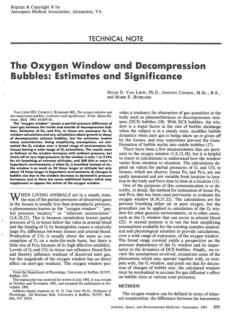
The "oxygen window" causes a partial pressure difference
of inert gas between the inside and outside
decompression bubbles. Estimates of PO2 and PCO2 in
tissue are necessary for O2 window calculations and any
calculations about the growth or decay of decompression
sickness bubbles, but the estimates involve many
uncertainties.
Using simplifying assumptions, the authors estimated the
O2 window range of environments for tissues having a
wide range of O2 extractions

Author: Paul K Weathersby
In this study, published in 1991, the risk of decompression
sickness (DCS) during dives on various nitrogen/oxygen
breathing mixes is analyzed using likelihood maximazation

Authors: M. Jette, K. Sidney, G Blumchen
This article summarizes and presents energy expenditure
values in METS and watts units. Despite its limitations, the
MET concept provides a convenient method to describe
an individual's functional capacity or exercise tolerance as
determined by progressive exercise testing and to define a
repertoire of physical activities in which a person may
participate safely without exceeding a prescribed intensity
level.

Author: A L Harabin
This report contains a summary of all known results from
controlled human exposures to hyperbaric O2 at the time
of its publication in January 1993. The data were
collected to analyze and develop predictive models
relating to the risk of developing a symptom of central
nervous system O2 toxicity as a function of time, depth,
and exposure conditions.

This report, published in 1993, discussed the
decompression model ZH-L8 from professor Buhlman.
The decompression algorithm ZH-8 was based on eight
compartments, as suggested. It gave rise to sport diving
decompression tables known under the name "Buhlman
Tables", and massively used by many European sport
divers. Many pioneer manufacturers of diving computers
also used it. It has been followed by the ZH-12 and the
ZH-16, which many diving computer manufacturers still
use.

Authors: Carlos R Gordon, Avi Shupak
The salivary flow rate and composition of 2 groups of 31
subjects, one group at each extreme of the seasickness
susceptibility scale, were compared. No significant
differences were found between the two groups in flow
rates and electrolyte concentrations of whole resting and
stimulated saliva. Analyse activity and rate of secretion in
resting saliva were significantly higher in subjects
susceptible to seasickness as compared with non-
susceptible subjects. Also, the total protein rate of
secretion in resting saliva was significantly higher in the
susceptible group.

Authors:
judith Aharon-Peretz, YohaiAdir, Carlos R. Cordon, Shahar
Kol, Nachum Cal, Yefruda Melamed
Forty-one percent of the dives were performed within the
decompression limits of the US Navy standard
decompression tables. Risk factors were fatigue,
circumstances suggesting dehydration, and extreme
physical effort. The most common presenting symptoms
were paresthesias, weakness of the legs, lower back pain,
or abdominal pain. Full recovery was achieved in 79% of
the patients. Spinal symptoms appeared immediately on
surfacing in six of the eight patients who continued to
have multiple neurological sequelae.

Author: K Todnem, H Nyland, H Skeidsvoll, R Svihus, P
Rinck, B K Kambestad, T Riise, J A Aarli.
The increased hyperbaric pressure influences the nervous
system during deep dives. The divers may experience
hand tremors, postural instability, gastrointestinal
problems, somnolence, and cognitive dysfunction. The
neurological symptoms and signs that may occur have
been termed high-pressure neurological syndrome
(HPNS). This syndrome has been known for more than
twenty years.

Authors: J How, A Vijayan, T M Wong
The Singapore Mass Rapid Transit (MRT) projectstarted
compressed air work in Oct 1984. Eleven km of
underground tunnels out of 20 km were built using this
method. Cases of decompression sickness (DCS)
arising from compressed air work are rare with working
pressures less than 1 bar gauge. However, there were 10
cases of DCS in the MRT project who were exposed to less
than 1 bar pressure. The authors present their clinical
features and attempt to explain the observations in
relation to theories of bubble nuclei formation, gas
loading and rate of decompression.

Publisher: American Academy of Underwater Sciences
Proceedings of a workshop held at Duke University
Medical Center in Durham, USA, in March 1991.

Proceedings of a workshop held in La Jola, California,
USA, in May 1991.
This workshop was sponsored by the National Science
Foundation, Polar Biology, and the American Academy of
Underwater Sciences.

Author: O. Hyldegaard, M. Møller, J. Madsen
This paper relates to experiments in which air bubbles
were injected into the spinal white matter of rats and
studied at 1 bar after decompression from exposure to air
at 3.1 bar (absolute) for 4 hours to observe the effects of
heliox, pure oxygen, and nitrous oxide/oxygen breathing
on bubble reduction.

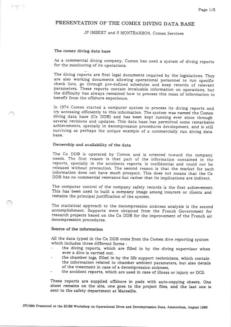
Authors: JP Imbert & S Montbarton
In 1974, Comex began using a computer system to
process its dive reports and to access this information
efficiently. The system was named the Comex Diving
Database and ran until the end of the company's diving
activities, with several revisions and updates. This database
enabled remarkable achievements, notably the
development of decompression procedures that are still in
use today. It can be seen as an example of a commercially
operated diving database.

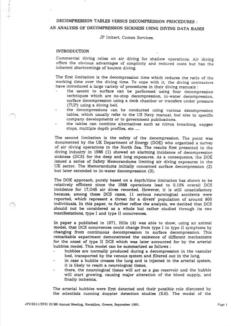
Author: JP Imbert
In this presentation, Jean Pierre Imbert demonstrates that
by utilizing commercial diving databases, distinguishing
between the two types of decompression sickness, and
applying the arterial bubble model, it is evident that
surface decompression has a "natural" safe limit, closely
aligning with the guidelines set by the UK Department of
Energy Safety Memorandums. Exceeding this limit
generally results in a higher incidence of type 2
decompression sickness compared to continuous
decompression.

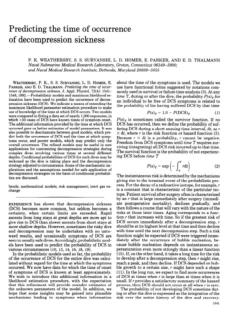
Authors: P. K. Weathersby, S. S. Survanshi, L.D. Homer, E.
Parker, and E. D. Thalmann
The researchers previously used probabilistic models and
maximum likelihood estimation to predict decompression
sickness (DCS). They improved their method by including
when DCS symptoms occur, which made their predictions
more accurate in a study of nearly 1,000 exposures. This
improvement helps to distinguish better between models
that can predict both the timing and occurrence of DCS
symptoms and those that only predict occurrences.

Authors: P.K. Weathersby, S.S. Survanshi, R.Y. Nishi,
E.D.Thalmann
Probabilistic models for decompression sickness (DCS)
require accurate data on diving profiles and DCS incidents
to effectively predict DCS risks. Over 400 experimental
dives from the U.S., U.K., and Canada since 1977 have
been compiled, checked, and prepared for these models.
This report outlines the data sources, review and
formatting process, and provides summaries of the data
collection.

Authors:
Norihiro Miyamoto, Nobuo Matsui, Itaru Inque, Hisao Seo,
Kazuhiko Nakabayashi, and Hironori Oiwa
This study investigates the mechanism behind increased
urine flow (hyperbaric diuresis) in men exposed to a
hyperbaric environment. Five male subjects participated in
a dry saturation dive experiment, where they were
exposed to a helium-oxygen environment at 16-21 ATA
for four days. Blood and urine samples were collected at
various intervals. The results suggest that hyperbaric
diuresis is caused by both reduced antidiuretic hormone
and increased atrial natriuretic polypeptide secretion.

Authors:
Einar Thorsen, Kaire Segadal, Brit Kambestad, Amund
Gulsvik
This study measured pulmonary function in 152
professional saturation divers and a control group of 106
subjects. Various lung function parameters were assessed
and compared with reference values from Scandinavian
studies, British submariners, and the European Community
for Coal and Steel (ECCS). The findings suggest minor
airway dysfunction and transient lung function changes
after saturation dives, indicating cumulative long-term
effects of diving on pulmonary function.

Author: K Todnem, H Nyland, B K Kambestad, J A Aarli
This study investigated recorded neurological signs and
symptoms in 156 air and saturation divers compared to
100 controls. Divers exhibited significantly more general
neurological symptoms and abnormal findings than
controls, with prominent issues in concentration and
memory and signs of distal spinal cord or nerve root
dysfunction and polyneuropathy. These symptoms and
findings were significantly correlated with diving
exposure, DCS prevalence, and age.

Authors:
H.Y. Tao, H.J. Chen, H. Zhang, J. Guo, and F.K. Rong
lThis study investigated the effects of saturation-excursion
diving at pressures equivalent to 250 and 300 meters on
the urinary excretion of atrial natriuretic polypeptide
(ANP), antidiuretic hormone (ADH), and electrolytes in
four male divers. The divers were exposed to high-
pressure environments for two days, and urine samples
were collected day and night before, during, and after the
exposure. The study concluded that the increase in
nocturnal urine flow (nocturia) was primarily due to
stimulated ANP secretion.

Authors: R. Holden, C. D. G. Morsman, and C. M. Lane
The study conducted ocular fundus fluorescein
angiography on 26 divers with at least ten years of safe
diving practices and seven controls. The results showed
no significant difference in the incidence of macular
abnormalities between these groups and those from a
previous study. The findings suggest that adhering to safe
diving practices provides some protection against macular
abnormalities associated with decompression sickness in
divers.

A workshop was held at the USAF Armstrong Laboratory
in October 1990 to address altitude decompression
sickness (DCS), an operational limitation in aviation and
space activities. The event gathered over 50 participants
from the Department of Defense, NASA, and universities.
The workshop aimed to document the current
understanding of DCS and its operational significance,
especially as future military aircraft crews are expected to
encounter higher altitudes. The conclusions from this
document have to be linked to the transfer to altitude or
traveling by aircraft after diving

Authors:
Tim D. Oury, Ye-Shih Ho, Claude A. , and James D. Crapo
This paper investigates the role of extracellular superoxide
anion (O2-) in central nervous system (CNS) oxygen
toxicity using transgenic mice that overexpress human
extracellular superoxide dismutase (ECSOD) in the brain.
When exposed to hyperbaric oxygen, transgenic mice
showed higher mortality compared to nontransgenic
mice. The findings suggest that NO is a crucial mediator in
CNS oxygen toxicity and that ECSOD increases this toxicity
by inhibiting O2-mediated inactivation of NO.

Authors: E. Thorsen, K. Segadal, B.K. Kambestad
This study investigates the prolonged effects of deep
saturation diving on pulmonary function by measuring
various lung parameters before and after 17 different
diving operations to depths ranging from 5 to 450 meters
of seawater. The divers' pulmonary function was assessed
through static and dynamic lung volumes, transfer factor
for carbon monoxide (TLCO), and closing volume. The
conclusions are that hyperoxia, hyperbaric, and venous
gas micro embolism all contribute to changes in
pulmonary function after a single saturation dive,
potentially explaining some long-term effects on divers'
lung health.

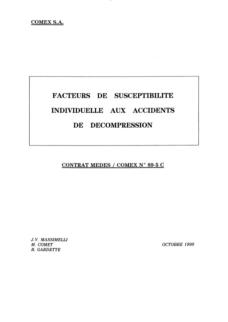
Author: J.Y. Massimelli, M. Comet, B. Gardette
This study conducted by CNES/COMEX in September
1988 investigated the influence of individual
characteristics on the risk of decompression accidents,
such as age, weight, body fat percentage, sex, physical
training level, history of decompression accidents, and
specific biological parameters. Two groups of professional
divers were compared to understand how individual
characteristics affect the risk of decompression accidents.
The study was intended as a preliminary step towards a
larger research effort to gain knowledge to be used in
preventing decompression accidents in diving activities.

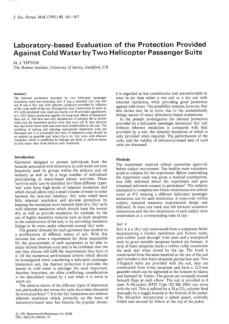
Author: Mike Tipton
This study evaluated the thermal protection effectiveness
of two helicopter passenger immersion suits in cold water
conditions. It compared the performance of a standard
'dry' suit (Suit A) with a 'dry' suit that has additional
insulation through inflation (Suit B), highlighting the
superior performance of Suit B in maintaining body
temperature and comfort during immersion. Additionally,
the text discusses the importance of realistic testing
conditions for selecting appropriate immersion suits.

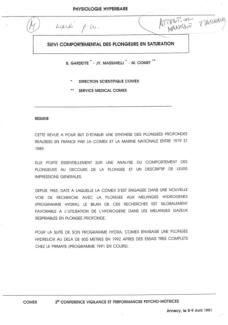
Authors: B. Gardette, J.Y. Massimelli, M. Comet
This paper summarizes the deep diving activities COMEX
and the French Navy conducted in France between 1979
and 1989. It focuses on the behavior and general
impressions of the divers during these dives. Additionally, it
discusses the favorable outcomes of using hydrogen in
breathing gas mixtures for deep diving as part of COMEX's
research program (HYDRA). The document also mentions
plans for a deep dive beyond 600 meters using a
hydreliox mixture in 1992, following comprehensive tests
in 1991.

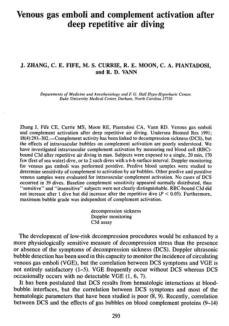
Authors: J. Zhang, C.E. Fife, Currie, R.E. Moon, C.A.
Piantadosi, and R.D. Vann
This study investigates the relationship between
intravascular complement activation and decompression
sickness (DCS) in humans, specifically the effects of
repetitive air diving on complement activation by
measuring RBC-bound C3d levels and monitoring for
venous gas emboli. It aims to convey the findings that no
cases of DCS occurred and that complement activation, as
indicated by RBC-bound C3d, increased after repetitive
dives but was independent of bubble grade.


12 - Effect of inert gas switching at depth on decompression
outcome in rats
- Published by the US Naval Medical Research Institute
Authors: R.S. Lillo, M.E. MacCallum
The investigation aimed to see if changing inert gases at
depth impacts decompression results in rats. The study
involved rats exposed to different gas mixtures at depths
between 125 and 175 feet for one hour. After this, they
switched gases while maintaining depth, followed by
rapid decompression. The findings showed that the risk
of decompression sickness varied depending on the
gases used, with different effects on gas exchange rates.
This study utilized animal models to explore how gas
switching affects decompression risk and pressures,
offering insights that are not fully understood.

Authors: JP Imbert, X. Fructus, S. Montbarbon
Commercial diving uses a wide variety of procedures,
some of which can be questioned on the basis of
the pressure changes they introduce. Models were
used to analyze data from the Comex data base on
yo-yo diving, surface decompression diving, repetitive
diving and split-level diving. It was found that the
arterial bubble model provides a simple explanation for
the occurrence of Type II decompression sickness in
yo-yo diving and surface decompression diving. This
result shows the limit of the U.K. Department
of Energy approach in restricting in-water
decompression exposures in the North Sea U.K. sector.
15 - Short and repetitive decompression in air diving procedures:
The commercial diving experience
- Published by the Undersea & Hyperbaric Medical Society (Author-provided).

Author: W Sterk
This text discusses a workshop on diving and
decompression data systems. It reviewed various diving
databases, highlighted concerns about data accuracy,
and emphasized the need for clear objectives. Electronic
dive profile recorders were introduced as a solution,
sparking important discussions among practitioners.
22 - The Netherlands national diving center database
- Published by the European Underwater Barometric society (EUBS)

Authors: M. Anthony Shuker, Frank Bowser-Riley &
Stephen N. Davies
The central theme of the text is the investigation of how
certain drugs, specifically those modeled on strychnine,
can interfere with High Pressure Neurological Syndrome
(HPNS). The text argues that these drugs may exert their
effects not only through inhibitory glycinergic
transmission, as previously suggested, but also by
affecting NMDA receptor-mediated transmission. This
dual mechanism offers a more comprehensive
understanding of how these substances can mitigate the
neurological impacts associated with HPNS.
44 - Possible NMDA antagonist properties of drugs that affect high
pressure neurological syndrome
- Published by Macmillan Press Ltd


Click on the octopus
to return to the top
of the page

Hydra 10 represents the culmination of a series of
experimental dives that began in 1968 and concluded
with the deepest dive on record, conducted in November
1992, when Théo Mavrostomos reached a depth of 701
meters.
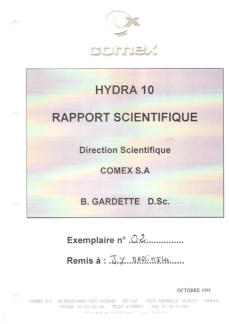
This document is the original version published, detailing
all the medical information available immediately after the
operation. It was initially limited to scientific COMEX
personnel only. Given that 34 years have passed and
COMEX Diving no longer exists, we believe that this
document can now be made publicly available.
Note that this document is in French

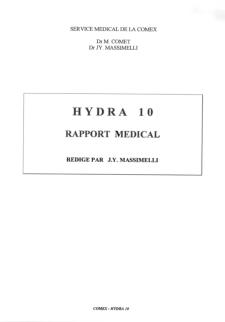
This document is the initial version of the medical report
for the Hydra 10 experimental dive, which was
published to a limited audience.
As a reminder, Hydra 10 allowed diver Theo
Mavrostomos to reach a depth of 701 m in November
1992.

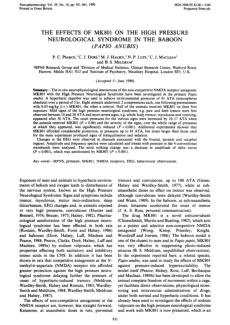
Authors: PC Pearce, CJ Dore, MJ Halsey, NP Luff, CJ
Maclean, & BS Meldrum
This study investigated the effects of the NMDA receptor
antagonist MK801 on High Pressure Neurological
Syndrome (HPNS) in baboons (Papio anubis) exposed to
extreme pressures (up to 61 ATA) in a hyperbaric
chamber. Eight animals underwent two compressions
each—one with MK801 pretreatment (0.03 mg/kg, i.v.)
and one as a control. MK801 significantly delayed the
onset of HPNS symptoms (e.g., tremor, myoclonus,
vomiting) by ~17 ATA (P=0.06) and reduced their severity
(P<0.001), providing protection even at pressures up to 81
ATA. However, higher doses caused sedation. EEG
analysis revealed a decrease in delta wave amplitude with
pressure (P<0.001), which MK801 mitigated (P<0.001).

Author:
David L. Martin
High pressure nervous syndrome (HPNS) causes tremors
and seizures at extreme depths, possibly via excessive
neurotransmission. This study investiged astroglial release
mechanisms of excitatory/inhibitory transmitters in vitro
under pressure, plus amino acid analysis (glutamate,
aspartate, taurine, GABA) from hyperbaric samples. Results
showed release of taurine, cAMP, and ATP is highly
sensitive to osmolality/cell volume changes (even 2.5%
affects taurine) but insensitive to hydrostatic pressure.
Osmotic sensitivity may aid responses to blood osmolarity
shifts like dehydration. Thus, pressure likely does not
induce HPNS by directly altering astrocytic release, though
indirect physical distortions of astrocytes could contribute.

Author: K Todnem, H Nyland, H Skeidsvoll, R Svihus, P
Rinck, B K Kambestad, T Riise, J A Aarli
This study examined 40 commercial saturation divers
(mean age 34.9) 1–7 years after deep dives (190–500 m).
Compared with 100 controls, divers reported significantly
more neurological symptoms (concentration difficulties,
paraesthesia) and showed more abnormal neurological
findings consistent with lumbar spinal dysfunction plus a
higher rate of abnormal EEGs; these were strongly
correlated with diving exposure and decompression
sickness. Four divers (10 %) had cerebral dysfunction
episodes. No group differences appeared in evoked
potentials or brain MRI. Conclusion: deep diving may
cause long-term nervous-system effects.

Authors: B. Wardley-Smith, C. Dore, S. Hudson, and K.
Wann
This study evaluated the effectiveness of common
anticonvulsants (phenytoin, carbamazepine,
phenobarbitone, and diazepam) against high-pressure
nervous syndrome (HPNS) in rats. Only phenobarbitone
significantly delayed the onset of tremor and seizures (by
11–33% and 10%, respectively). The other drugs showed
no effect on any HPNS symptoms, including seizures,
suggesting conventional anticonvulsants may offer limited
benefit for HPNS in humans and that HPNS seizures may
be atypical.