















Click on the
octopus to return to
the top of the page


The resolutions and conventions from the International Maritime
Organization (IMO) are available free of charge and can be downloaded
using the links provided in our document titled “Internet links to IMO
resolutions and maritime facts,” located in the subsection “UN
conventions and national laws” within the main section “Documents.”
However, the organization also provides paid documents whose purpose
is to group and better explain the various resolutions and conventions.
Catalogs that list these documents are available in English, French,
Spanish, Arabic, Chinese, and Russian at the following address:
https://www.imo.org/en/publications/pages/imo-epublications.aspx
International Maritime Organization (IMO)
International Organization for Standardization (ISO)

The standards and guidelines from the International Organization for
Standardization (ISO) are unfortunately not free of charge, despite the
belief that they should be. The organization publishes lists of its
standards in process at this address:
https://www.iso.org/iso-update.html.
Please note the following documents among those listed between June
and July 2026:
•
ISO 19011:2026 es Guidelines for auditing management systems
•
ISO 24131-4:2026 en Internal protection by polymeric lining for
ductile iron pipes — Requirements and test methods — Part 4:
Ceramic epoxy lining
•
ISO 19697:2026 en Ships and marine technology — Navigation and
ship operations — Electronic inclinometers
•
ISO 4027:2026 fr Fasteners — Hexagon socket set screws with
truncated cone point
•
ISO 20650:2025 fr Inland navigation vessels — Small floating
working machines — Requirements and test methods
•
ISO 24037:2026 en Ships and marine technology — Requirements
and guidance for training, qualification and competency of
submersible system crew and other key personnel
•
ISO 25175:2026 en Marine technology — Standard test methods
for performance of reverse osmosis (RO) and nanofiltration (NF)
membrane elements
•
ISO 1969:2004 ar Fibre ropes — Polyethylene — 3 and 4 strand
ropes
•
ISO 10325:2026 en fr Fibre ropes — High modulus polyethylene
— 8-strand braided ropes, 12-strand braided ropes and covered
ropes
•
ISO 18692-1:2026 en fr Fibre ropes for offshore stationkeeping —
Part 1: General specification
•
ISO 23802:2026 en Gas cylinders — Seamless tubes, composite
tubes and large tubes permanently mounted in a frame — Periodic
inspection and testing
•
ISO 12480-5:2026 en Cranes — Safe use — Part 5: Bridge and
gantry cranes
•
ISO 10087:2022/Amd 1:2026 en fr Small craft — Craft
identification — Coding system — Amendment 1
•
ISO 41002:2026 fr en Facility management — Development of the
facility management organization
•
ISO/PAS 25171:2026 en Educational organizations — Management
systems — Guidance for auditing ISO 21001
•
ISO 25247:2026 en fr Treatment of aquaculture effluent in closed
and semi-closed aquaculture systems — Principles, methods and
Guidance
•
ISO/TS 44005:2026 en Collaborative business relationship
management system — Guidance on leadership for collaborative
working
•
ISO 8743:2026 en fr Fasteners — Grooved pins — Half-length
centre grooves
•
ISO 13809:2026 en Fasteners — Hexalobular socket set screws
•
ISO 25451:2026 en Ships and marine technology — Technical
requirements and guidelines for seafloor mapping with uncrewed
marine vehicles
•
ISO 21154:2026 en Ships and marine technology — Boil off-rate
measurement method for cargo containment system of LNG ships
•
ISO 21805:2023/Amd 1:2025 fr Guidance and recommendations on
design, selection and installation of vents to safeguard the structural
integrity of enclosures protected by gaseous fire-extinguishing
systems — Amendment 1
•
ISO 22028-5:2026 en Photography and graphic technology —
Extended colour encodings for digital image storage, manipulation
and interchange — Part 5: High dynamic range and wide colour
gamut encoding for still images (HDR/WCG)
•
ISO 32:1977 ar Gas cylinders for medical use — Marking for
identification of content
•
ISO 17734-1:2026 en Workplace air — Determination of
organonitrogen compounds in air using liquid chromatography and
mass spectrometry — Part 1: Isocyanates using dibutylamine
derivatives
•
ISO 9000:2026 es fr en Quality management — Fundamentals and
vocabulary
The International Chamber of Shipping (ICS), founded in 1921, is a
global trade association representing shipowners and operators
(website: https://www.ics-shipping.org/ ). It advocates for suitable
practices in the shipping industry and represents about 80% of the
world's merchant fleet across 40 countries. The ICS offers both free
and paid guidelines for various types of vessels, among which is the
paid document below, that have been recently published:

International Chamber of Shipping (ICS)
The Oil Companies International Marine Forum (OCIMF)
The Oil Companies International Marine Forum (OCIMF), founded in
April 1970, is a prominent authority on marine safety and includes over
100 member companies. It holds consultancy status at the
International Maritime Organization (IMO) and focuses on the safe and
environmentally responsible transportation of crude oil, oil products,
petrochemicals, and gas. It also promotes similar standards in
offshore marine operations management and develops guidelines for
the design, construction, and operation of tankers, barges, and
offshore vessels, incorporating human factors in all its activities. Its
publications can be accessed at https://www.ocimf.org/publications/ .
No new paid documents have been published since the previous
update of our website. However, we recommend visiting this
organization's rich library. Among the latest paid documents published,
please note the one below:
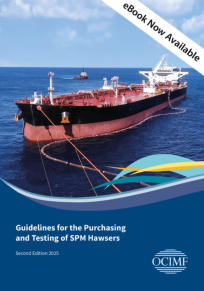
“Guidelines for the Purchasing and Testing
of SPM Hawsers - Second Edition 2025”
This publication provides detailed guidance on
the specification, purchasing, testing, and
design particulars of mooring hawsers.
This second edition includes rope design
particulars and compliance certificates.
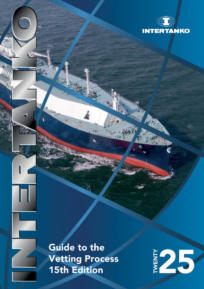
“Guide to the Vetting Process 15th Edition”
This publication, now in its 15th edition, provides
guidance on ship inspections and the vetting
process and is designed to assist tanker crews
and personnel ashore to better understand, and
to be better prepared for, vetting inspections.

International Association of Independent Tanker Owners
(INTERTANKO)
INTERTANKO is a trade association that represents independent tanker
owners globally. It deals with operational, technical, legal, and
commercial issues affecting its members. The organization offers a
database of free and paid documents to its members. Nonmembers
can also buy the paid documents at the following address:
https://www.intertanko.com/info-centre/intertanko-
publications/infocentrebooklistings .
Among these paid documents, note the guidelines below:

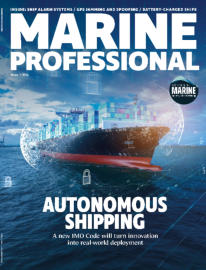
“Marine Professional” is the official
membership magazine of the IMarEST.
It is published quarterly and available to all
members in digital and print format.
The Institute of Marine Engineering Science and
Technology (IMarEST)
The Institute of Marine Engineering, Science and Technology
(IMarEST) is an international, multidisciplinary professional body that
unites marine engineers, scientists, and technologists. The organization
offers news and paid articles, accessible via the "Resources" button on
their website's navigation bar ( https://www.imarest.org/ ).
Among these publications, note the magazine below:
The International Maritime Health Association (IMHA)
The International Maritime Health Association (IMHA) is a non-
governmental organization dedicated to improving health services for
seafarers, fishermen, and port workers. It promotes high healthcare
and safety standards at sea and provides links to guidelines from
international organizations such as the EU, ILO, and IMO. Additionally,
the organization sells the books such as the one below:
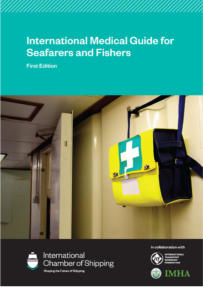
“International Medical Guide for Seafarers
and Fishers”
This medical guide from the International
Chamber of Shipping, is suitable for use on all
ships and fishing vessels worldwide, as well as
in onshore safety departments, medical
assistance centers, and training institutions
supporting seafarers and fishers.


The Nautical Institute (NI)
The Nautical Institute (NI) is an international professional organization
dedicated to advancing professionalism, best practices, and safety in
the maritime industry. It comprises four departments: membership
and branches, information and publishing, research and relationships,
and qualifications. The institute's website features a bookshop where,
among other documents, the following maritime-related books are sold.

International Labour Organization (ILO)
The International Labour Organization (ILO), a specialized agency of the
United Nations, promotes social and economic justice through
international labour standards. It provides free resolutions and
conventions and sells documents, the catalog of which is available at
https://www.ilo.org/research-and-publications#flagship
NORSOK standards
The NORSOK standards are developed by the Norwegian petroleum
industry. Their purpose is to ensure safety, enhance value, and promote
cost-effectiveness in petroleum industry developments and operations.
These standards aim to replace oil company specifications and serve
as references in regulatory authorities’ regulations.
Website: https://standard.no/en/sectors/petroleum/norsok-standards/
To the best of our knowledge, no new documents on diving, ROVs, or
AUVs were published during the period under consideration (April 26 -
July 26). An amendment to the U-100 standard "Diving Operations"
was released for public inquiry, with a deadline of February 5 for
comments. However, the version sold is still the 2023 version.
Also, note the following new announcements regarding documents for
petroleum activities.

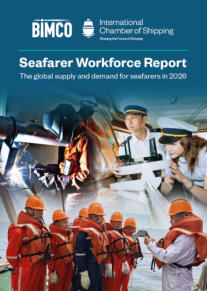
Seafarer Workforce Report:
This document is the industry standard
resource for those seeking the market
intelligence needed to develop crewing and
training strategies fit for the future. Prepared by
BIMCO and ICS, this comprehensive report
details the global seafarer workforce supply and
demand situation.
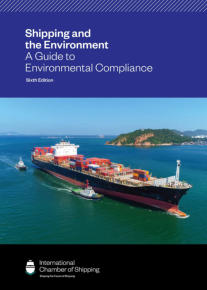
Shipping and the Environment: A Guide to
Environmental Compliance, Sixth Edition
This book provides an accessible entry point into
the constantly evolving regulations and
operational considerations that make shipping an
even greener industry. This guide helps crew
and shoreside staff understand not only what
environmental requirements are in place but
why these regulations matter.
No paid books have been published since our last update. However,
please note the following free-access articles published between June
and July 2026:
•
Increased trade among 2026 shipping trends
Author: Iain MacIntyre
•
Can nuclear fuel the maritime transition?
Author: Nick Savvides
•
Waterjets: the propeller alternative embraced by the Indian Navy
Author: Samantha Andrews
•
Fins for forecasts: why your next research partner could be a shark
Author: Samantha Andrews
•
When starting air turns explosive
Author: Charlie Bartlett
•
Ethics in maritime: the accelerator, not the brake
Author: John Bensalhia
•
Inside the race to biobank marine life
Samantha Andrews
•
AI transforming energy-efficient hull design
Author: Iain MacIntyre
•
Iran conflict throws spotlight on seafarer health and wellbeing
Author: Clarissa Wright
•
Climate change sees octopus blooming in the UK
Author: Samantha Andrews
•
Smart towing to the rescue in Norway ahead of SOLAS update
Author: Clarissa Wright
•
A stuck anchor leads to a fatal accident
Author: Charlie Bartlett
•
Breakwaters: a new design, a new haven for marine life
Author: Yves De Leeneer
•
The True Cost of Hull Biofouling: Fuel, Time and Carbon Penalties
Author: Luciano Ramos
•
Into deep waters – the future for offshore wind farms
Author: Jon Ruszka
•
Floating Offshore Wind: what lies beneath
Author: Claudia Scragg,
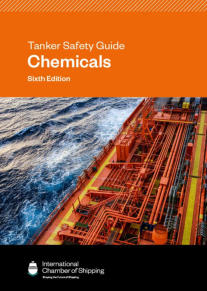
Tanker Safety Guide (Chemicals):
This guide is the trusted publication for chemical
tankers since 1971. This sixth edition continues
to translate the regulatory requirements of
MARPOL Annex II into practical on-board
procedures for safe and environmentally
responsible operations. It is recommended that
it be on board all ships carrying hazardous and
noxious chemicals in bulk.
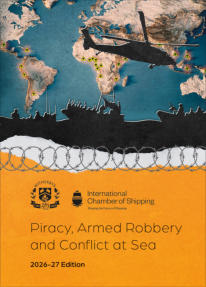
Piracy, Armed Robbery and Conflict at Sea -
2026-27 Edition:
The article presents a thorough guide for
seafarers detailing essential measures to
safeguard against piracy, armed robbery, and
conflicts at sea. It emphasizes the importance
of prevention, preparedness, response
strategies, and recovery processes.
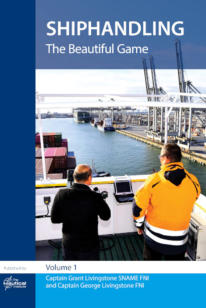
The document "Shiphandling: The Beautiful
Game" discusses common challenges, such as
navigation in restricted visibility or channels,
turning in confined waters and ports,
maintaining situational awareness, and avoiding
the distractions that have become more common
with technological advances.
The full list of publications can be opened by
clicking on the image of the cover to the side.
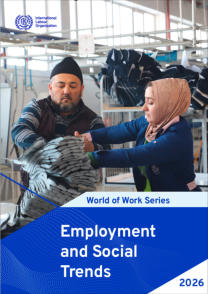
The ILO "World of work series - Employment
and Social Trends 2026" examines the state
of global labour markets, highlighting stable
headline employment alongside stalled progress
in job quality and widening inequalities.
The report analyses productivity, demographic
and economic pressures shaping work in the
year ahead and outlines the challenges to
achieving more inclusive growth.
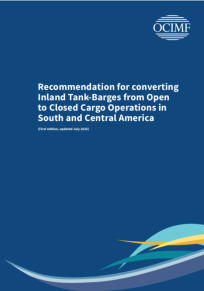
“Recommendation for converting Inland
Tank-Barges from Open to Closed Cargo
Operations in South and Central America”
This paper gives guidance to regional barge
companies in South and Central America on how
to build or convert their inland barges for cargo
operations under closed conditions, to improve
safety and conform to international standards.
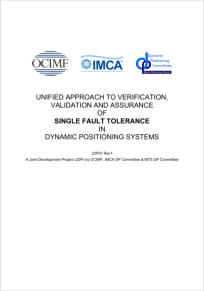
“Unified Approach to Verification,
Validation and Assurance of Single Fault
Tolerance in Dynamic Positioning Systems”
This guidance provides a transparent
framework that shows the relationships and
responsibilities between stakeholders involved in
the design, verification and validation process
for dynamic positioning (DP) systems of
Equipment Classes 2 and 3.
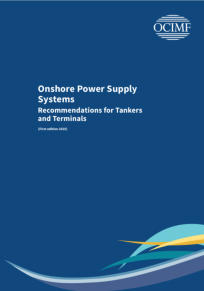
“Onshore Power Supply Systems -
Recommendations for Tankers and
Terminals”
The Onshore Power Supply (OPS) offers
environmental benefits by allowing ships to use
shore power instead of diesel generators,
lowering emissions and improving air quality.
This paper provides guidance for OPS design,
implementation, and operation.
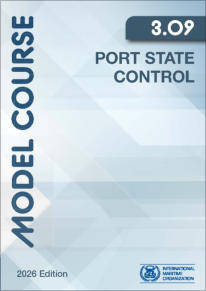
Port State Control:
This course aims to facilitate training for port
State control officers (PSCOs) in accordance
with the relevant IMO and International Labour
Organization (ILO) instruments specified in
Procedures for port State control, 2023
(resolution A.1185(33)), as amended.
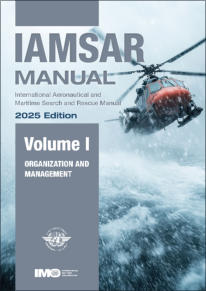
International Aeronautical and Maritime
Search and Rescue Manual (IAMSAR) -
Volume I:
This manual reviews the global Search and
Rescue (SAR) system, emphasizing the
importance of establishing and enhancing
national and regional SAR frameworks. It also
highlights the necessity for collaboration
between neighboring states.
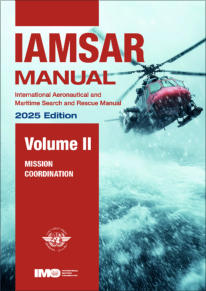
International Aeronautical and Maritime
Search and Rescue Manual (IAMSAR) -
Mission coordination - Volume II:
The Mission Coordination volume assists
personnel who plan and coordinate SAR
operations and exercises.
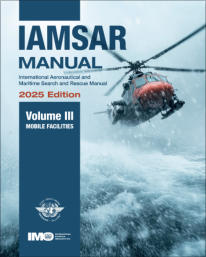
International Aeronautical and Maritime
Search and Rescue Manual (IAMSAR) -
Volume III:
This manual discusses the purpose and
application of Mobile Facilities, which are
designed to be carried by rescue units, aircraft,
and vessels.
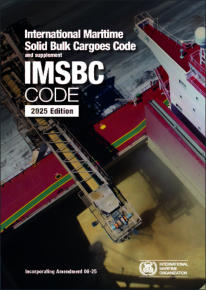
International Maritime Solid Bulk Cargoes
Code and supplement:
The International Maritime Solid Bulk Cargoes
Code (IMSBC Code) was adopted on December 4,
2008, and became mandatory as of January 1,
2011, under the SOLAS Convention.
The current edition includes Amendment 08-25,
which is available for voluntary application
starting January 1, 2026,
International Code of Safety for Ships using
Gases or other Low-flashpoint Fuels (IGF
Code):
The basic philosophy of the IGF Code is to
provide mandatory provisions for the
arrangement, installation, control, and monitoring
of machinery, equipment, and systems using
gases or low-flashpoint fuels to minimize the
risk to the ship, its crew, and the environment.
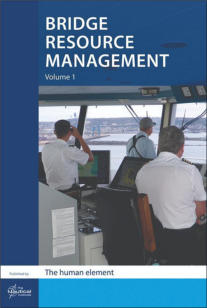
“Bridge Resource Management, Vol 1: The
human element”
This document complements the IMO Model
Course 1.22, focusing on the importance of
teamwork among individuals from diverse
backgrounds. It also emphasizes leveraging
unique capabilities while acknowledging human
vulnerabilities.
The Norwegian Underwater Intervention (NUI) is known for publishing
various papers, some of which are included in our database.
At the date of publication of this edition, no new paid documents have
been found on the organization's website (https://www.nui.no).
Additionally, NUI is recognized for organizing seminars, the most recent
of which was held in Bergen at the beginning of November. The
organization has released the following "PowerPoint" (or similar
software) presentations from this seminar, now in PDF format.
Unfortunately, the technicians did not record the presenter's voice, so
essential elements for fully understanding the discussion are missing.
•
Opening diving seminar 2025
Presentator: Rolf Røssland
•
EU Capability Development in the Underwater Domain 2025
Presentator: Conor Kirwan
•
Diving Safety Standards in Focus - Comparing NORSOK Standard.
Presentator: Tim Wakefield
•
Subsea Hyperbaric Repairs – Full-Habitat dry welding, Micro-Habitat
Dry Welding, and Wet Welding - DCN
Presentator: Earl Toups
•
Bacalhau Project, a multi-national surface supplied Diving operation
in Brazil.
Presentators: R.Jørgensen, R.Thomaz
•
Tunnel Interventions
Presentator: Armin Sidali
•
Advances in Telemedicine and urgent medical intervention
Presentators: Ian Drysdale, Steve Sheppard
•
Resuscitation in a diving bell
Presentators: Andrew Tabner, Graham Johnson, Phil Bryson
•
IMCA DMT skills fade
Presentators: Phil Bryson, Simon Meadows
•
Brotherhood Below, Mental Strenght Beneath the Surface
Presentators: Abbie Coutts and Stuart Cowie
•
Mental Health Offshore: building an inclusive healthier industry
Presentator: Amanda Sordes
•
IMCA update
Presentator: Ali Macleod
•
ADCI Updates
Presentators: Don Wilkins, & Phil Newsum
•
Havtil (Norwegian Ocean Industry Authority)
Presentator: Oyvind Loennechen
•
UK-HSE: Incidents and enforcement; Counterfeit certificates;
Changes in legislation and guidance; RNPP survey; The future.
Presentators: Mark Renouf & Phil Crombie
•
Stakeholder update IOGP
Presentator: Jord Lucas
•
Joining Hands for a New Chapter in the Future of Underwater
Operations
Presentator: Chen Liping
•
DSV Marked's new world order
Presentator: Ian McIntosh
•
See beyond the surface, The offshore industry's digital evolution
Presentator: Lino Brogneri
•
Lessons learned from saturation operations 2025
Presentators: JP Imbert, Phil Bryson
•
Closing diving seminar
Presentator: Rolf Røssland

NUI AS (Norwegian Underwater Intervention)
NORSOK Z-015 on temporary equipment is
undergoing a systematic review to ensure the
quality of the standard. Standards Norway
invited the industry to give feedback on the
standard by 20 March. Therefore, we can
expect the new document to be published
soon, depending on the feedback received.
NORSOK M-001 has been revised
This document concerns materials selection
for hydrocarbon production and processing
facilities, as well as supporting systems for
fixed offshore installations, including subsea
production systems. The standard has now
been revised to ensure its relevance in the
industry.
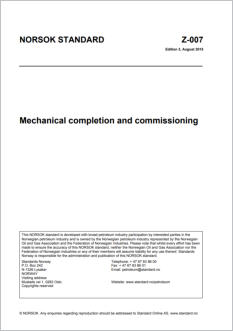
NORSOK Z-007 Mechanical completion and
commissioning, is revised and open for public
enquiry.
The authors invite the industry to provide
their comments and feedback by 29 May.
To access the draft, you will need to sign in.
New users will need to register. You can do
this by clicking the 1st page picture aside.
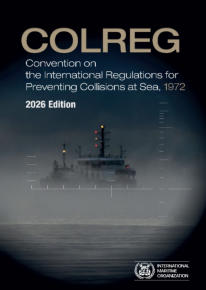
Convention on the International Regulations
for Preventing Collisions at Sea, 1972:
This edition contains the consolidated text of the
1972 Convention and all amendments adopted by
the Maritime Safety Committee and resolutions
adopted by the Assembly of the International
Maritime Organization, including the latest
amendments from resolution A.1085(28), which
entered into force on 1 January 2016.
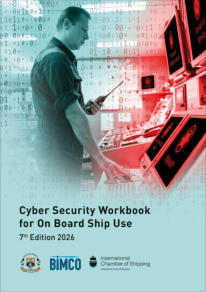
Cyber Security Workbook for On Board Ship
Use:
This workbook has been designed as a practical,
straightforward guide to support the master and
officers on board a ship. It is designed to
facilitate understanding and good collaboration
between individual ships, onshore IT
departments, and equipment manufacturers.
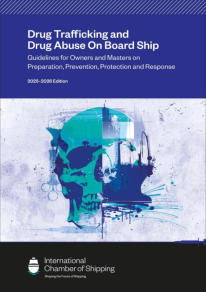
Drug Trafficking and Drug Abuse On Board
Ship:
These guidelines provide essential guidance for
shipping companies, ports, masters, ships'
officers, cargo owners, government officials,
customs and the maritime industry as a whole.
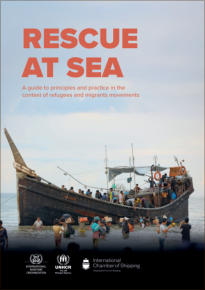
Rescue at Sea
A guide to principles and practice in the context
of refugees and migrants movements. It is
intended for Masters, ship owners, Government
authorities, insurance companies, and other
interested parties involved in rescue-at-sea
situations.
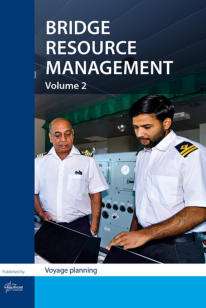
“Bridge Resource Management, Vol 2:
Voyage Planning”
this second volume focuses on the technical
aspects of BRM and ‘what good looks like’ in
voyage planning. Featuring contributions from a
range of cargo and passenger ship experts, this
book shows how a collaborative plan and
prudent use of technology can bring every
voyage to a safe and successful conclusion.